



Ramadan is a deeply meaningful time in the UAE. It is a month of reflection, patience, discipline, and responsibility. While these values guide daily life, they become even more important on the road.

Every year, traffic authorities across the country remind motorists that Driving during Ramadan in the UAE requires extra care due to changes in routine, sleep patterns, and physical well-being.
Despite repeated awareness campaigns, road incidents tend to increase during the holy month, particularly in the hours leading up to Iftar.
Understanding the risks, avoiding common driving mistakes, and following proven Ramadan road safety tips can help ensure that everyone reaches home safely.
This guide highlights the most common Ramadan driving mistakes, explains why they happen, and shares essential safety insights every UAE driver should know.
Why Driving Feels Different During Ramadan
During Ramadan, daily schedules shift significantly. Many people wake up early for Suhoor, stay up late for prayers, and adjust working hours. These changes directly impact alertness, reaction time, and emotional control while driving.
Authorities consistently highlight UAE traffic safety Ramadan concerns because fasting can amplify stress and fatigue, especially during long commutes.
Reduced hydration levels, hunger, and lack of sleep increase fasting and driving risks, making even experienced drivers more vulnerable to errors.
Understanding these changes is the first step toward practicing safe driving during fasting.
Also read: Ramadan 2026 UAE Traffic: Peak Hours & Smart Routes
The Most Common Road Safety Mistakes During Ramadan
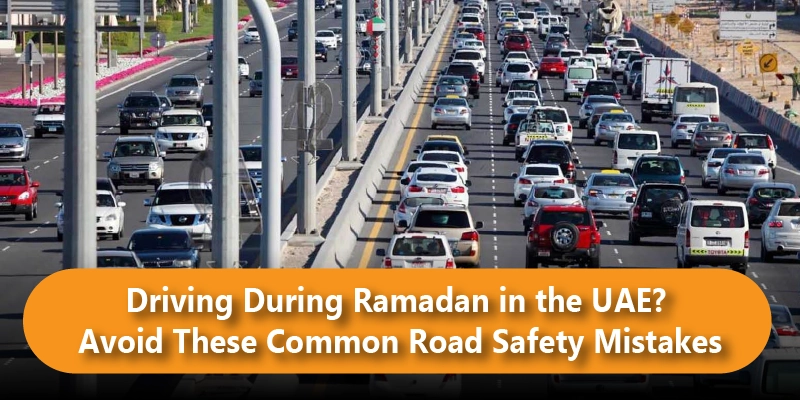
One of the biggest mistakes drivers make during Ramadan is rushing to reach home before Iftar. As sunset approaches, roads become congested, tempers shorten, and risky behaviors increase. Speeding, aggressive lane changes, and sudden braking are all common during this period.
Another major issue is fatigue. Drivers often underestimate how much reduced sleep affects focus. Drowsy driving slows reaction time and impairs judgment, making accidents more likely. These fasting and driving risks are particularly dangerous on highways and long-distance routes.
Road rage is another growing concern. Hunger and exhaustion can reduce patience, leading to confrontations, tailgating, and unnecessary horn use. Avoiding road rage Ramadan is essential not just for safety but for maintaining the spirit of the holy month.
Ignoring traffic rules under the assumption that enforcement is relaxed is another serious mistake. In reality, UAE traffic fines Ramadan are strictly enforced, and authorities increase patrols during peak hours.
Essential Ramadan Road Safety Tips Every Driver Should Follow
Adapting driving habits during Ramadan can dramatically reduce accident risks. Following these Ramadan road safety tips ensures safer journeys for everyone on the road.
Planning trips earlier in the day helps avoid the high-risk pre-Iftar rush. Allowing extra travel time reduces stress and discourages speeding. Maintaining a calm driving mindset supports safe driving during fasting and improves decision-making.
Hydration after Iftar plays a crucial role in next-day alertness. Proper rest between Suhoor and work hours also helps minimize fatigue-related mistakes. These small lifestyle adjustments contribute directly to Ramadan accident prevention UAE efforts.
Also Read: Ramadan Relief: Salik Introduces Toll Discounts to Ease Dubai Traffic
Ramadan Driving Risk Awareness
| Risk Factor | How It Affects Driving | Safety Recommendation |
| Fatigue | Slower reaction time and poor judgment | Get adequate sleep and take breaks |
| Hunger | Increased irritability and impatience | Avoid rushing and stay calm |
| Dehydration | Reduced focus and alertness | Hydrate well after Iftar |
| Traffic congestion | Higher collision risk | Plan trips outside peak hours |
| Emotional stress | Road rage and aggressive driving | Practice patience and courtesy |
This awareness supports nationwide UAE road awareness campaign goals aimed at reducing accidents during Ramadan.
Ramadan Driving Myths That Put Lives at Risk
One common myth is that traffic laws are relaxed during Ramadan. This is incorrect. UAE traffic safety Ramadan enforcement remains firm, and fines are often issued without warning during peak hours.
Another misconception is that driving slower than usual guarantees safety. In reality, inconsistent speeds and hesitation can confuse other drivers and cause rear-end collisions.
Some motorists believe short trips are harmless. However, studies show that many Ramadan-related accidents happen close to home, when drivers let their guard down. Understanding these realities strengthens Ramadan accident prevention UAE awareness.
Dubai-Specific Driving Challenges During Ramadan
Dubai experiences heavy traffic throughout the year, but Ramadan introduces unique pressure points. Delivery vehicles increase, taxi demand rises, and last-minute shopping trips intensify congestion.
Following Dubai driving safety tips such as maintaining safe distances and avoiding distractions becomes even more critical.
Authorities often deploy additional patrols near mosques, malls, and residential areas. Respecting pedestrian crossings and slowing down in community zones reflects both legal compliance and social responsibility.
Conclusion: Road Safety Is an Extension of Ramadan Values
Ramadan teaches patience, discipline, and mindfulness. These values should guide every journey taken during the holy month. By understanding Driving during Ramadan UAE challenges, respecting traffic laws, and following practical Ramadan road safety tips, drivers can significantly reduce risks.
Practicing safe driving during fasting is not just about avoiding accidents or fines. It is a reflection of personal responsibility and respect for others.
When drivers slow down, stay alert, and remain patient, they help ensure that Ramadan remains a time of peace and safety for all.
Also read: Ramadan Rush Hours: How UAE Traffic Changes Daily
Frequently Asked Questions
1. Why do accidents increase during Ramadan in the UAE?
Changes in sleep patterns, fasting-related fatigue, and pre-Iftar rush contribute to higher fasting and driving risks.
2. Are traffic fines reduced during Ramadan?
No. UAE traffic fines Ramadan are strictly enforced, with increased monitoring in high-risk zones.
3. What time is most dangerous for driving during Ramadan?
Late afternoon until Iftar is the highest-risk period due to congestion and driver fatigue.
4. How can drivers manage stress while fasting?
Planning trips early, staying patient, and understanding avoiding road rage Ramadan techniques help reduce stress.
5. What is the best way to prevent accidents during Ramadan?
Adequate rest, hydration after Iftar, and following Ramadan accident prevention UAE guidelines are key.
Stay Updated with Miss Auto UAE
Your Reliable Source for Ramadan Road Safety Awareness
At Miss Auto UAE, we are dedicated to keeping motorists informed with the latest road safety updates, expert insights, and awareness-driven articles tailored for UAE roads.
From Dubai driving safety tips to national traffic safety initiatives, our content empowers drivers to stay informed and drive responsibly.
Follow Miss Auto UAE for timely news, expert perspectives, and essential driving guidance throughout Ramadan and beyond.
Drive with patience. Drive with awareness. Drive safe this Ramadan.
Reader Insight: Why Responsible Driving Matters More in Ramadan
Driving during Ramadan is not just about personal safety. It is about protecting families, delivery riders, pedestrians, and fellow motorists who are equally affected by fasting and fatigue.
Every patient decision behind the wheel supports the broader UAE road awareness campaign and reinforces community values.
When drivers choose calm over haste and courtesy over aggression, they contribute to safer roads and a more compassionate society.


