

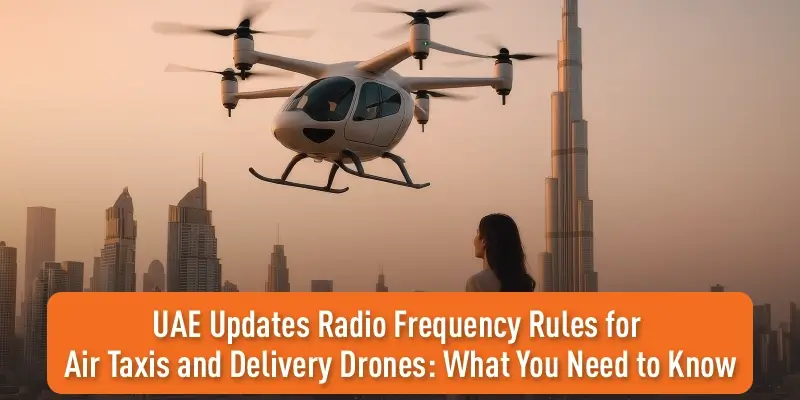

As the UAE accelerates its transformation into a global leader in smart mobility and autonomous transportation, authorities have introduced updated UAE radio frequency rules for air taxis and delivery drones. The revised regulations establish a clear framework for how next-generation aerial vehicles communicate safely and efficiently while operating in UAE airspace.

The new regulatory update supports the country’s vision of integrating advanced air mobility into everyday transportation by ensuring reliable, interference-free communication between air taxis, delivery drones, ground stations, and air traffic management systems.
With commercial drone deliveries and electric air taxis expected to become part of the UAE’s transport ecosystem in the coming years, these updated radio frequency standards will play a vital role in ensuring safe, secure, and coordinated operations.
Whether you’re an aviation professional, drone operator, technology enthusiast, logistics company, or simply interested in the future of transportation, here’s everything you need to know about the UAE’s latest radio frequency regulations.
UAE Radio Frequency Rules for Air Taxis – Quick Overview
| Category | Details |
|---|---|
| Primary Keyword | UAE radio frequency rules air taxis |
| Regulation Type | Updated Radio Frequency Framework |
| Issued By | UAE Telecommunications & Digital Government Regulatory Authority (TDRA) |
| Applies To | Air Taxis & Delivery Drones |
| Objective | Safe and Reliable Wireless Communications |
| Focus Areas | Frequency Allocation, Communication Reliability, Aviation Safety |
| Supports | Advanced Air Mobility & Autonomous Aviation |
| Long-Term Goal | Safe Integration of Air Taxis and Delivery Drones Across the UAE |
UAE Strengthens the Future of Autonomous Aviation
The UAE continues leading the region in adopting innovative transportation technologies by updating the radio frequency framework for air taxis and unmanned aerial delivery systems.
Reliable radio communication is essential for autonomous aircraft to exchange real-time information with operators, navigation systems, and air traffic authorities. The revised rules ensure these communications remain secure, stable, and free from harmful interference.
The updated framework also supports the UAE’s broader strategy of building a safe, intelligent, and sustainable transportation ecosystem powered by advanced technologies.
Purpose of the Updated UAE Radio Frequency Rules
The revised regulations have been introduced to support the growing adoption of advanced aerial mobility while maintaining the highest aviation safety standards.
The updated framework aims to:
- Ensure reliable communication for air taxis.
- Support safe delivery drone operations.
- Reduce radio signal interference.
- Improve aviation communication standards.
- Enable secure autonomous flight operations.
- Strengthen future smart mobility infrastructure.
- Support innovation within the UAE aviation sector.
The regulations provide the communication foundation necessary for future commercial air mobility services.
Why Radio Frequencies Matter for Air Taxis and Delivery Drones
Unlike traditional vehicles, autonomous aircraft rely heavily on wireless communication systems throughout every stage of flight.
Radio frequencies enable:
- Communication with ground control.
- Air traffic coordination.
- Flight monitoring.
- Remote command and control.
- Emergency communication.
- Real-time operational updates.
Stable communication channels help ensure aircraft operate safely while avoiding interference with other wireless systems.
Key Features of the Updated Regulations
The UAE’s revised radio frequency framework focuses on establishing a safe operating environment for advanced aviation technologies.
Key highlights include:
- Dedicated radio frequency allocations.
- Improved communication reliability.
- Better protection against signal interference.
- Enhanced operational safety.
- Support for autonomous aviation technologies.
- Standardised communication requirements.
- Greater coordination between aviation stakeholders.
These measures prepare the UAE for large-scale deployment of air taxis and commercial drone services.
Supporting the UAE's Smart Mobility Vision
The updated radio frequency rules form an important part of the UAE’s wider smart mobility strategy.
The country continues investing in:
- Autonomous transportation.
- Artificial intelligence.
- Smart infrastructure.
- Urban air mobility.
- Intelligent transport systems.
- Sustainable transportation solutions.
- Digital transformation initiatives.
Together, these investments position the UAE as one of the world’s leading innovators in future mobility.
Benefits for the Aviation and Logistics Industry
The updated regulations create opportunities for multiple sectors that rely on advanced aviation technologies.
Key benefits include:
- Safer autonomous aircraft operations.
- Improved communication efficiency.
- Better regulatory clarity.
- Increased investor confidence.
- Enhanced logistics capabilities.
- Faster future deployment of air taxis.
- Stronger aviation innovation ecosystem.
The framework supports both public safety and continued technological advancement.
How Delivery Drone Operations Will Benefit
As drone-based logistics continue to expand, dependable communication systems become increasingly important.
The updated regulations help delivery drone operators by:
- Improving flight reliability.
- Supporting safer urban operations.
- Reducing communication disruptions.
- Enhancing operational coordination.
- Increasing regulatory compliance.
- Enabling scalable commercial drone services.
Reliable communications are essential as drone deliveries become more common across smart cities.
UAE Continues Building the Future of Urban Air Mobility
The UAE has consistently introduced forward-looking initiatives that prepare the country for next-generation transportation.
The updated radio frequency framework complements ongoing developments involving:
- Air taxi trials.
- Autonomous drone services.
- Smart city infrastructure.
- Advanced aviation technologies.
- Intelligent air traffic management.
- Sustainable transport innovation.
These initiatives support the UAE’s ambition to become a global hub for advanced air mobility.
What Industry Stakeholders Should Expect
Businesses operating within the aviation and drone sectors can expect:
- Updated communication standards.
- Clearer regulatory guidance.
- Improved spectrum management.
- Enhanced aviation safety measures.
- Better coordination with authorities.
- Support for future autonomous operations.
- Continued investment in smart mobility.
The framework creates greater confidence for companies developing innovative aerial transportation services.
Why These Regulations Matter
The future of transportation extends beyond roads. Air taxis and autonomous delivery drones will soon become an important part of urban mobility.
Reliable radio communication serves as the backbone of these technologies, enabling aircraft to navigate safely, communicate effectively, and operate efficiently within increasingly busy airspace.
By updating its radio frequency regulations, the UAE continues laying the foundation for safe, connected, and intelligent aviation that benefits businesses, residents, and visitors alike.
Pros and Cons
Pros
The updated UAE radio frequency rules for air taxis improve communication reliability, enhance aviation safety, reduce signal interference, support autonomous flight operations, strengthen drone regulations, encourage technological innovation, and accelerate the UAE’s smart mobility ambitions.
Cons
Implementing the updated framework may require technology upgrades, regulatory compliance efforts, and continued coordination between aviation authorities, operators, manufacturers, and communication service providers as the advanced air mobility sector continues to evolve.
Final Insights
The updated UAE radio frequency rules for air taxis represent another major milestone in the country’s journey toward becoming a global leader in advanced air mobility and autonomous aviation.
By establishing reliable communication standards for air taxis and delivery drones, the UAE is creating a safer environment for future aerial transportation while supporting innovation across aviation, logistics, and smart city development.
As autonomous aircraft become increasingly integrated into urban transportation, robust communication systems will remain essential for ensuring operational safety, public confidence, and efficient airspace management.
Whether you’re involved in aviation, drone technology, logistics, smart mobility, or simply following the UAE’s latest technological advancements, these updated regulations demonstrate the country’s commitment to building the future of transportation through innovation and safety.
Stay Updated with the Latest UAE Aviation & Smart Mobility News
Stay informed with the latest UAE aviation regulations, smart mobility initiatives, autonomous aviation developments, air taxi projects, delivery drone updates, drone regulations, transportation innovations, aviation technology trends, and government policy changes shaping the future of mobility across the Emirates.
From advanced air mobility and intelligent transport systems to autonomous aviation and smart infrastructure, we bring you reliable insights covering the latest developments transforming the UAE’s transportation landscape.
Guest Blog Submission
Are you passionate about aviation technology, drone innovation, autonomous transportation, smart mobility, logistics, aviation regulations, urban air mobility, or the UAE technology sector?
Join our growing contributor community and share your expertise with readers across the UAE.
We welcome guest articles covering:
- Air taxis
- Delivery drones
- Aviation regulations
- Smart mobility
- Autonomous aviation
- Drone technology
- Urban air mobility
- UAE transport innovation
Become a contributor and help shape conversations around the future of intelligent transportation in the UAE.
Frequently Asked Questions
What are the new UAE radio frequency rules for air taxis?
The updated regulations establish communication standards and radio frequency allocations that enable safe and reliable operation of air taxis and delivery drones within UAE airspace.
Why were the regulations updated?
The rules were updated to support the growing adoption of advanced air mobility technologies while ensuring secure, interference-free communications and maintaining aviation safety.
Who is affected by the new regulations?
The updated framework applies to companies developing or operating air taxis, delivery drones, drone manufacturers, aviation technology providers, logistics companies, and other stakeholders involved in autonomous aviation.
How do radio frequencies improve air taxi safety?
Radio frequencies enable continuous communication between aircraft, ground stations, navigation systems, and air traffic management, helping ensure safe and coordinated flight operations.
How do the updated rules support delivery drones?
The regulations improve communication reliability, reduce signal interference, enhance operational safety, and provide a stronger regulatory foundation for commercial drone delivery services.
How do these regulations support the UAE's smart mobility goals?
The updated radio frequency framework supports the UAE’s vision of integrating autonomous aviation, smart transportation, and innovative mobility solutions into the country’s future urban infrastructure.

