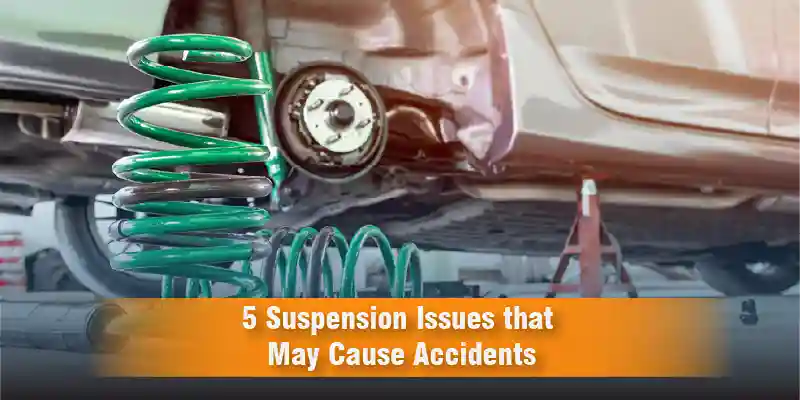

When drivers think about road safety, brakes, tires, and airbags often take center stage. However, one of the most critical yet overlooked safety systems in any vehicle is the suspension. Your suspension system does far more than provide a comfortable ride. It ensures stability, keeps your tires firmly planted on the road, and allows precise steering control. Ignoring suspension problems can quietly turn your car into a serious accident risk.

Across UAE roads, where high speeds, extreme temperatures, and varied driving conditions are common, suspension issues causing accidents are more prevalent than many drivers realize. Understanding these problems early can make the difference between a safe journey and a dangerous situation.
Below are five major suspension problems that can significantly increase accident risks if left unattended.
1. Worn Shock Absorbers
Shock absorbers play a crucial role in controlling how your vehicle reacts to bumps, uneven roads, and sudden braking. They prevent excessive bouncing and ensure that all four tires maintain consistent contact with the road surface.
Worn shock absorbers reduce your car’s ability to handle sudden movements. When shocks are compromised, your vehicle may bounce excessively after hitting a bump or dip, especially at higher speeds. This bouncing can lead to longer braking distances, poor tire grip, and unstable steering responses.
On UAE highways, where sudden lane changes and emergency braking are common, worn shocks can cause loss of control, especially during sharp turns or abrupt stops. Over time, worn shocks also accelerate tire wear, further compounding safety risks.
2. Broken Suspension Springs
Suspension springs support the weight of your vehicle and help absorb road impacts. They maintain the correct ride height and ensure balanced weight distribution across all wheels.
Broken suspension springs are particularly dangerous because they can cause your vehicle to lean or sag on one side. This imbalance affects steering precision and braking stability. A broken spring can also lead to uneven tire contact, increasing the likelihood of skidding or rolling during sudden maneuvers.
In severe cases, a snapped spring may damage surrounding suspension components or even puncture a tire. Driving with broken springs significantly increases the chance of accidents, especially on uneven roads or during high-speed driving.
3. Faulty Struts
Struts are a vital structural component of your suspension system. They combine shock absorption with structural support, playing a key role in steering alignment and vehicle stability.
Faulty struts can make your vehicle feel loose, unstable, or difficult to control. Drivers may notice excessive body roll during cornering, nose-diving when braking, or vibrations through the steering wheel.
When struts fail, your car’s alignment is compromised, reducing steering accuracy and making it harder to respond quickly in emergency situations. On busy UAE roads, this lack of control can easily result in collisions, especially during sudden traffic slowdowns or evasive actions.
4. Worn Suspension Bushings
Suspension bushings are small but essential components made from rubber or polyurethane. They act as cushions between metal parts, absorbing vibrations and reducing noise while allowing controlled movement of suspension arms.
Worn suspension bushings may not seem serious at first, but they can drastically affect handling and safety. As bushings deteriorate, suspension components begin to move excessively, causing clunking noises, unstable steering, and poor alignment.
This excessive movement can lead to delayed steering response, unpredictable handling, and increased body roll. Over time, worn bushings can damage other suspension parts, increasing repair costs and accident risks. In emergency driving situations, even a slight delay in steering response can have serious consequences.
5. Misaligned Suspension System
Proper alignment ensures that your wheels are positioned correctly relative to each other and the road. A misaligned suspension system affects steering accuracy, tire wear, and overall vehicle stability.
Misalignment often occurs due to potholes, curb impacts, or worn suspension components. When alignment is off, your vehicle may pull to one side, feel unstable at high speeds, or have uneven tire wear.
Driving with a misaligned suspension reduces traction, especially during braking and cornering. This lack of stability is a major contributor to suspension issues causing accidents, particularly on highways where precise control is essential.
Why Suspension Health Matters on UAE Roads
The UAE’s driving conditions place unique stress on suspension systems. High temperatures can accelerate wear on rubber components, while long highway commutes and urban stop-and-go traffic increase strain on shocks, struts, and bushings.
Ignoring early warning signs such as unusual noises, excessive bouncing, uneven tire wear, or steering instability can turn minor suspension issues into major safety hazards. Regular inspections and timely repairs are not just about comfort but about protecting lives.
Conclusion: Safety Starts with a Strong Suspension System
Your Suspension Is More Than Comfort, It’s Your Safety Shield
A healthy suspension system is essential for maintaining control, stability, and confidence on the road. Worn shock absorbers, broken suspension springs, faulty struts, worn suspension bushings, and a misaligned suspension system are not just mechanical problems, they are serious safety threats that can lead to accidents without warning.
Proactive suspension care ensures your vehicle responds precisely when it matters most. Regular inspections, early diagnosis, and professional repairs can dramatically reduce the risk of suspension issues causing accidents, especially under demanding UAE driving conditions.
When it comes to safety, suspension maintenance is not optional, it’s essential.
Frequently Asked Questions
Common signs include excessive bouncing, uneven tire wear, steering instability, clunking noises, or your car pulling to one side. These symptoms often indicate suspension issues causing accidents if ignored.
Yes. Worn shock absorbers reduce tire contact with the road, increase braking distance, and make handling unpredictable, especially during emergency maneuvers.
No. Broken suspension springs compromise vehicle balance and steering control, significantly increasing accident risk and potential damage to other components.
Given local driving conditions, a suspension inspection is recommended every 20,000 to 30,000 kilometers or immediately if you notice handling changes.
Alignment helps correct steering and tire wear issues, but it does not repair underlying problems like faulty struts or worn suspension bushings. A full suspension inspection is always advised.
Stay Informed with Miss Auto UAE
At Miss Auto UAE, we believe that informed drivers make safer choices. That’s why we regularly share the latest automotive news, expert insights, and safety-focused articles to help you understand your vehicle better and drive with confidence.
Stay connected with Miss Auto UAE for trusted updates on car maintenance, road safety, and expert automotive guidance tailored for UAE drivers. Because your safety starts with the right knowledge.