

When it comes to vehicle performance and longevity, few things are as critical as maintaining clean engine oil. Whether you drive a reliable Toyota Camry or a high-performance luxury sedan, neglecting oil health can silently damage your engine over time. What may seem like a minor delay in servicing can quickly escalate into costly repairs and reduced efficiency.

Why Engine Oil Gets Dirty Faster Than You Think
Modern engines operate under extreme heat and pressure. Over time, engine oil breaks down due to:
- Heat and oxidation
- Contaminants like dust and debris
- Combustion byproducts (carbon deposits)
- Moisture buildup
As oil degrades, it loses its ability to lubricate, cool, and protect engine components effectively, leading to serious wear and tear.
Warning Signs You Should Never Ignore
Recognizing early symptoms can save your engine from long-term damage. Some common signs of bad engine oil include:
- Dark, thick, or gritty oil texture
- Decreased fuel efficiency
- Engine knocking or unusual noise
- Overheating engine
- Oil warning light on dashboard
Ignoring these signs can lead to severe engine oil problems car owners often face, including engine seizure or failure.
Also Read: How Often Should You Change Your Car Engine Oil? Expert Guide
How Dirty Oil Damages Your Engine
Dirty oil doesn’t just lose effectiveness, it actively harms your engine:
- Increased friction: Leads to faster wear of moving parts
- Sludge buildup: Blocks vital oil passages
- Overheating: Reduced cooling efficiency
- Corrosion: Contaminants damage internal components
This is why following proper engine oil change tips is essential for every car owner.
Step-by-Step: How to Fix Dirty Engine Oil
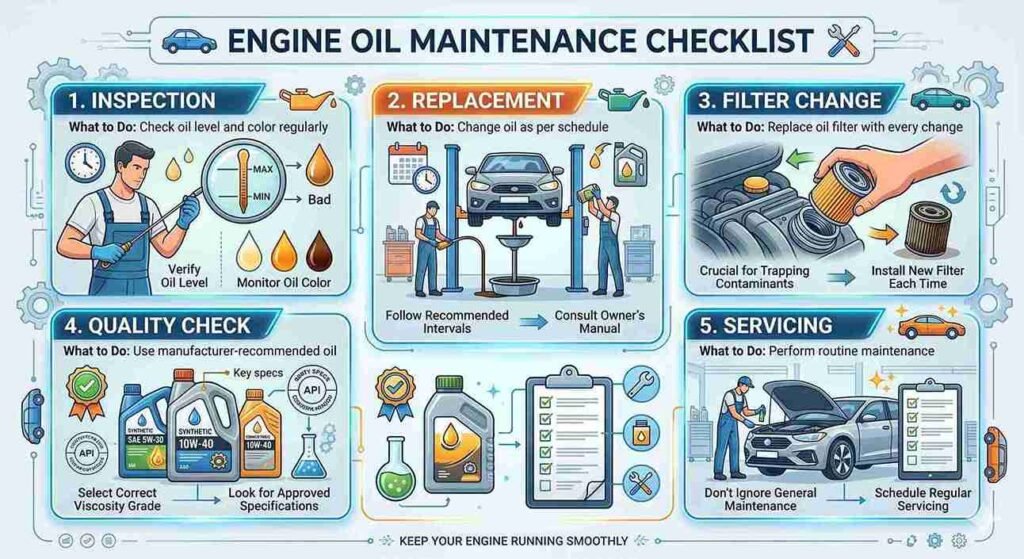
1. Check Oil Condition Regularly
Inspect oil color and level using the dipstick.
2. Follow Recommended Change Intervals
Always follow manufacturer guidelines for when to change engine oil.
3. Use High-Quality Oil
Choose the right grade and type for your vehicle.
4. Replace Oil Filter
A clean filter ensures contaminants are removed effectively.
5. Schedule Regular Servicing
Professional checks help prevent hidden issues and extend engine life.
Engine Oil Maintenance Checklist
Features Overview: Why Clean Oil Matters
| Feature | Benefit |
| Lubrication | Reduces friction between engine parts |
| Cooling | Prevents overheating |
| Cleaning | Removes sludge and deposits |
| Protection | Prevents corrosion and wear |
| Efficiency | Improves fuel economy |
Essential Tips for Better Engine Health
- Stick to a consistent oil change schedule
- Avoid using low-quality or incorrect oil
- Monitor driving conditions (extreme heat requires more care)
- Combine oil checks with regular car engine maintenance tips
- Don’t delay servicing even if the car feels normal
Common Myths About Engine Oil
Myth 1: Oil only needs changing when it looks dirty
Truth: Oil degrades internally even before visible changes
Myth 2: All engine oils are the same
Truth: Different engines require specific oil grades
Myth 3: Skipping one oil change won’t matter
Truth: Even one delay can accelerate engine wear
Benefits of Timely Oil Maintenance
- Extends engine lifespan
- Improves fuel efficiency
- Reduces repair costs
- Enhances overall performance
- Maintains vehicle resale value
Regular maintenance combined with proper engine oil change tips ensures your vehicle runs smoothly for years.
Also Read: Engine Oil Service in UAE: What Dubai Car Owners Must Know
Key Takeaways
- Dirty oil can severely damage your engine if ignored
- Early detection of signs of bad engine oil prevents costly repairs
- Regular oil changes are essential for performance and efficiency
- Proper maintenance improves long-term vehicle reliability
Final Thoughts: Protect Your Engine Before It’s Too Late
Your engine is the heart of your vehicle, and clean oil is its lifeline. Ignoring oil health may save time today but will cost significantly more tomorrow.
By staying proactive and following the right maintenance practices, you can ensure your car performs at its best while avoiding unnecessary breakdowns.
FAQs
1. How often should I change engine oil?
Typically every 5,000 to 10,000 km, depending on your vehicle and oil type.
2. What are the risks of dirty engine oil?
It can cause engine wear, overheating, and even complete failure.
3. Can I drive with bad engine oil?
It’s not recommended, as it can lead to serious engine damage.
4. Does oil quality really matter?
Yes, using the correct high-quality oil ensures optimal engine performance.
5. What happens if I delay an oil change?
Delays can lead to sludge buildup, reduced efficiency, and costly repairs.
Stay Informed with Miss Auto UAE
Stay ahead with the latest automotive insights, expert maintenance tips, and industry updates.
Reach out to Miss Auto UAE for trusted guidance that helps you make smarter car care decisions and keep your vehicle in peak condition.
Guest Blog Submission Invitation
Are you passionate about car care and maintenance?
Be a part of the Miss Auto UAE blog community and share your expertise with a growing audience of automotive enthusiasts.
Contribute valuable insights, tips, and experiences to help others maintain their vehicles more effectively.