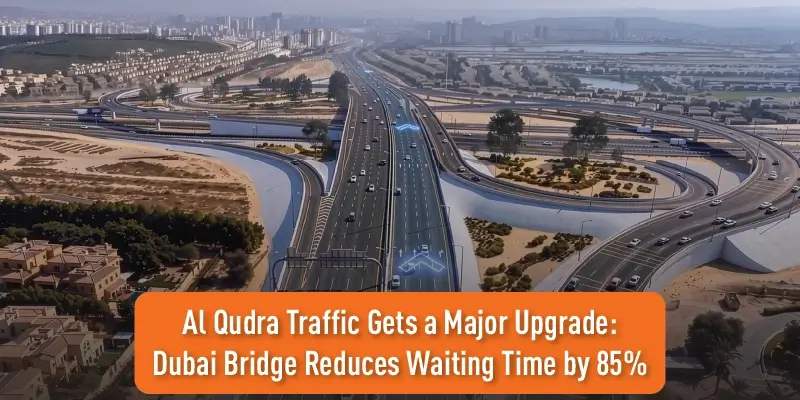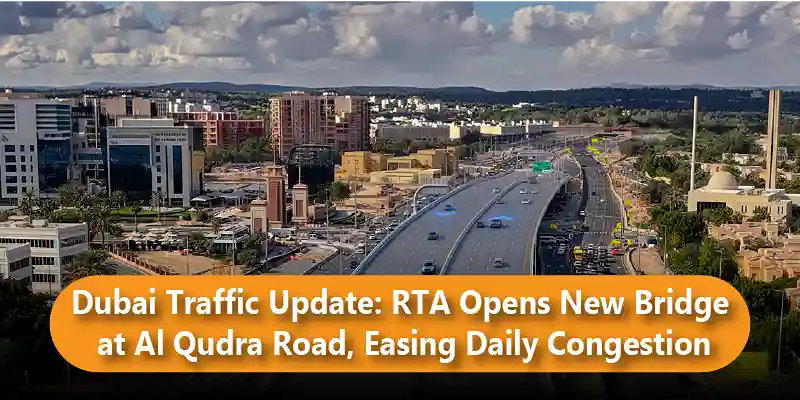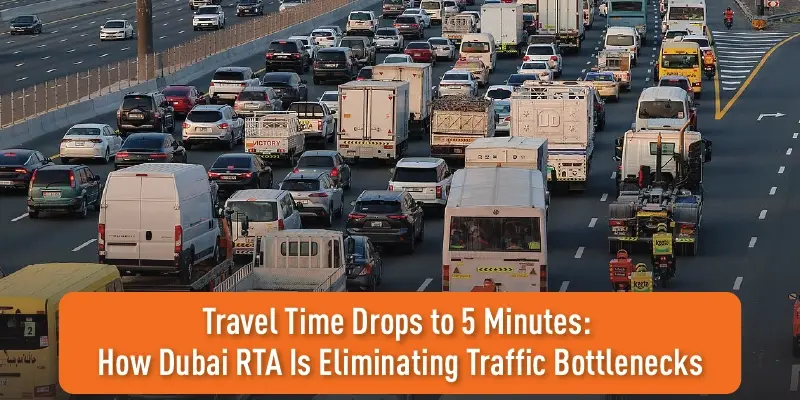
Dubai’s Roads and Transport Authority (RTA) continues to transform urban mobility with its latest road infrastructure upgrades, reducing travel times from 20 minutes to just 5 minutes in key areas. Through new bridges, tunnels, and smarter road designs, the project eases congestion, improves traffic flow, and delivers faster, safer, and more efficient journeys for thousands of motorists every day.

As Dubai continues to grow, investing in modern road infrastructure has become essential to meeting the increasing demands of residents, businesses, and visitors. The latest Dubai RTA road project enhances connectivity between key residential and commercial districts, reduces congestion at busy intersections, and creates a smoother, more reliable commuting experience for thousands of motorists every day.

More than simply cutting travel times, the project demonstrates Dubai’s long-term commitment to intelligent urban planning and sustainable mobility. By improving road capacity, streamlining traffic movement, and preparing for future growth, the initiative strengthens the emirate’s vision of building a world-class transport network that prioritises efficiency, safety, and seamless connectivity.

Dubai's Latest Road Upgrade Brings Faster Journeys Across Oud Metha

Dubai continues to strengthen its reputation as one of the world’s leading smart mobility cities with another major infrastructure milestone. The latest Dubai RTA traffic bottleneck initiative is delivering significant improvements across one of the emirate’s busiest road corridors, helping thousands of motorists enjoy quicker and more efficient daily journeys.

As part of the ongoing Oud Metha and Al Asayel Streets Development Project, the Roads and Transport Authority (RTA) has opened a new three-lane bridge designed to improve connectivity and reduce delays across key intersections. The development supports Dubai’s expanding residential communities, commercial centres, healthcare facilities, and business districts while preparing the road network for future demand.

Dubai RTA Traffic Bottleneck Project – Quick Overview

Category Details
Authority Dubai Roads and Transport Authority (RTA)
Project Oud Metha & Al Asayel Streets Development Project
Current Progress 90% Complete
Major Upgrade New three-lane bridge, additional bridge and two tunnels
Travel Time Reduced from 20 minutes to 5 minutes
Capacity Increase 50% increase on Oud Metha Street
Communities Served Zabeel, Al Jaddaf, Oud Metha, Umm Hurair
Expected Beneficiaries More than 420,000 residents by 2030

Why Dubai RTA Is Redesigning Key Traffic Corridors

Dubai’s rapid urban development requires road networks that can accommodate increasing traffic volumes while maintaining safety and efficiency. Instead of relying solely on road widening, the RTA is redesigning major corridors to eliminate traffic conflict points and improve the overall flow of vehicles.

The project introduces grade-separated infrastructure, including bridges, tunnels, dedicated turning lanes, and upgraded service roads that allow different traffic movements to operate independently. This engineering approach improves network efficiency, reduces delays at intersections, and creates a more resilient transport system capable of supporting Dubai’s long-term growth.

According to the RTA, the development forms part of the wider Sheikh Rashid Corridor Development Programme, helping deliver a smarter, safer, and more connected road network.

A New Three-Lane Bridge Now Open

One of the most significant milestones is the opening of a new three-lane bridge connecting Al Khail Road to Al Asayel Street via Al Wasl Club Street.

The bridge accommodates approximately 3,600 vehicles per hour, allowing motorists to bypass one of the area’s busiest intersections. By providing a direct route between major roads, it eases congestion, distributes traffic more efficiently, and improves access to surrounding residential and commercial areas.

This new connection immediately enhances traffic movement while laying the foundation for the remaining stages of the project.

Smoother and More Predictable Journeys

One of the biggest advantages of the upgraded corridor is the improvement in journey reliability. Once the remaining infrastructure is completed, motorists travelling through the area will experience significantly shorter and more consistent travel times.

By separating traffic movements through bridges and tunnels, the project minimises bottlenecks and reduces stop-and-go driving. The result is smoother traffic flow, shorter queues during peak hours, and a more predictable commuting experience for thousands of daily road users.

More Infrastructure Improvements Still to Come

While the newly opened bridge is already benefiting motorists, additional upgrades are scheduled for completion by the end of August.

These include:

Together, these improvements will strengthen connectivity between:

The completed project will further improve mobility across one of Dubai’s busiest transport corridors.

Supporting More Than 420,000 Residents

The development has been designed with Dubai’s future growth in mind.

By 2030, the upgraded corridor is expected to serve more than 420,000 residents living and working in communities including:

The improvements will also enhance accessibility to key destinations such as Latifa Hospital, Al Wasl Club, nearby schools, business centres, and residential neighbourhoods, making daily travel easier for commuters, visitors, and emergency services alike.

Increased Road Capacity Means Better Traffic Flow

A major outcome of the project is the significant increase in road capacity.

Once completed, Oud Metha Street’s carrying capacity will increase from approximately 10,400 vehicles per hour to 15,600 vehicles per hour—a 50% improvement.

Greater capacity enables traffic to move more freely during peak periods, reducing queues, improving travel reliability, and allowing the corridor to accommodate future demand without compromising efficiency.

Intelligent Road Design for a Growing City

Dubai continues to demonstrate that effective traffic management is about smarter engineering rather than simply building wider roads.

The latest project combines bridges, tunnels, redesigned intersections, dedicated turning lanes, and improved service roads to create uninterrupted traffic flow. By removing conflict points before vehicles reach busy junctions, the upgraded network reduces delays, improves safety, and maximises the efficiency of existing road space.

This innovative approach reflects international best practices in urban transport planning and supports Dubai’s ambition to remain at the forefront of smart city development.

Benefits for Motorists

The upgraded infrastructure offers a range of practical benefits for everyday road users beyond shorter travel times.

Drivers can expect reduced waiting at intersections, smoother lane transitions, improved driving comfort, and more reliable daily commutes. Better traffic distribution also helps lower fuel consumption, reduces vehicle wear caused by repeated braking and acceleration, and contributes to lower emissions by minimising unnecessary idling.

Collectively, these improvements create a safer, more efficient, and environmentally responsible driving experience.

Building Dubai's Future Mobility Network

The Oud Metha and Al Asayel Streets Development Project is part of Dubai’s broader strategy to build an integrated transport ecosystem where modern road infrastructure, intelligent traffic management, and future mobility technologies work seamlessly together.

By investing in long-term infrastructure today, Dubai is preparing its transport network to support continued economic growth, increasing population, and evolving mobility needs. The project complements ongoing investments in public transport, smart traffic systems, and sustainable urban development, reinforcing the emirate’s position as a global leader in connected mobility.

Final Thoughts

The latest Dubai RTA traffic bottleneck project represents another major step towards creating a faster, safer, and more efficient road network.

With new bridges, upcoming tunnels, improved road capacity, and smarter traffic management, the development is transforming one of Dubai’s busiest corridors into a modern transport route designed for long-term growth. As the remaining phases are completed, motorists can look forward to more reliable journeys, improved road safety, and a transport network that continues to set global benchmarks for urban mobility.

Stay Connected with the Latest Dubai Traffic & RTA News

Stay informed with the latest Dubai traffic updates, RTA road projects, transport infrastructure developments, smart mobility initiatives, traffic regulations, road safety campaigns, public transport news, and automotive developments across the UAE.

From major road openings to future mobility innovations, we provide reliable insights to help motorists stay informed and plan smarter journeys.

Guest Blog Submission

Are you an expert in transportation, urban planning, civil engineering, smart mobility, or automotive innovation?

We welcome original guest articles covering:

Become a contributor and share your expertise while helping readers stay informed about the future of transportation in the UAE.

Frequently Asked Questions

What is the Dubai RTA traffic bottleneck project?

It is a major road infrastructure initiative designed to improve traffic flow across the Oud Metha and Al Asayel corridor through new bridges, tunnels, upgraded intersections, and smarter road layouts.

Once the project is fully completed, journeys that previously took around 20 minutes are expected to take approximately five minutes during normal traffic conditions.

The development increases Oud Metha Street’s carrying capacity by 50%, from around 10,400 to 15,600 vehicles per hour.

The project serves Zabeel, Al Jaddaf, Oud Metha, Umm Hurair, and nearby destinations including Latifa Hospital and Al Wasl Club.

The development includes a newly opened three-lane bridge, an additional bridge, two tunnels, upgraded intersections, dedicated turning lanes, and improved service roads.

These developments improve road efficiency, enhance safety, reduce congestion, support future urban growth, and contribute to Dubai’s long-term vision of creating a world-class, smart mobility network.

Author

  • Max Wheeler

    Max Wheeler is a automotive writer known for insightful car reviews, maintenance guides, and industry updates. His goal is to help drivers stay informed and confident on the road.

Shares: