

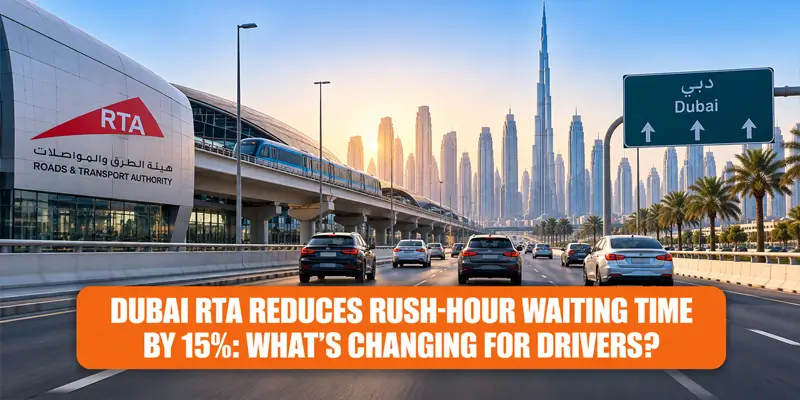

For drivers navigating Dubai during peak hours, even a small reduction in waiting time can make a noticeable difference to the daily commute. Dubai’s Roads and Transport Authority (RTA) has completed a series of traffic improvements at Al Qiyadah Intersection towards Abu Hail and Salah Al Din Streets, with the upgrades reducing waiting time during peak periods by up to 15%.

The improvement includes a new left-turn lane from Al Ittihad Road for traffic travelling from Dubai, along with changes to the intersection layout and traffic signals. According to RTA, the measures are designed to increase traffic capacity, improve intersection efficiency and streamline movement between Al Ittihad Road and the surrounding local road network.
The development is part of a broader effort to improve Dubai’s road network as traffic volumes continue to grow. So, what exactly has changed, and how could these Dubai traffic updates affect motorists?
What Has Dubai RTA Changed?
The latest improvement focuses on one of the critical points where traffic movement can become slower during busy periods. Al Qiyadah Intersection connects traffic moving along Al Ittihad Road with surrounding local roads, making efficient turning movements particularly important during peak hours.
One of the most significant changes is the introduction of a new left-turn lane from Al Ittihad Road for motorists travelling from Dubai. This additional lane is intended to provide more space for turning traffic and reduce pressure on existing lanes.
RTA has also modified the intersection’s layout and traffic signal arrangements. These changes are designed to make vehicle movements more efficient and reduce unnecessary delays at the junction.
For motorists, the objective is straightforward: smoother movement through the intersection, less time spent waiting and better traffic flow during the busiest parts of the day.
Why Is Rush-Hour Waiting Time Important?
Dubai’s roads experience significant traffic volumes during morning and evening commuting periods. The challenge is not always the number of vehicles on a road; bottlenecks at intersections can also have a major impact on journey times.
A vehicle may move relatively smoothly along a main road but then spend several signal cycles waiting to turn or pass through a congested intersection. When this happens repeatedly, even a short delay at one location can add considerably to the total journey.
The Dubai RTA rush hour waiting time reduction therefore matters because intersection improvements can have an effect beyond the junction itself. Better vehicle flow can help reduce queues approaching the intersection and make surrounding roads operate more efficiently.
How Could the 15% Reduction Affect Drivers?
The reported reduction is up to 15% during peak periods on the affected routes. It does not mean that every driver across Dubai will experience a 15% shorter commute, nor does it eliminate rush-hour congestion throughout the emirate.
Instead, the improvement targets specific traffic movements around Al Qiyadah Intersection. Drivers who regularly use this corridor could benefit from shorter waits and more efficient turning movements.
For commuters travelling during peak hours, the difference may be particularly useful when repeated delays at the same junction are part of their daily routine. More efficient signal operation and additional turning capacity can also help prevent queues from building as quickly.
This is an important distinction when considering the latest RTA waiting time reduction: the benefit is location-specific, but it forms part of a much wider strategy to improve traffic performance across Dubai.
Dubai RTA Traffic 2026: Part of a Bigger Road Strategy
The Al Qiyadah upgrade is not an isolated effort. Throughout 2026, RTA has been implementing a range of traffic improvements across Dubai.
In February, RTA announced more than 45 traffic enhancement measures across eight strategic locations. The programme includes road widening, intersection upgrades, new links and improvements to entry and exit points. RTA said the projects were intended to reduce congestion and shorten journey times by between 15% and 30% at targeted locations.
RTA also launched traffic “Quick Wins” at 28 locations during the summer of 2026. The measures cover school zones, development areas and other parts of the emirate, with the work scheduled during the summer period to reduce disruption to motorists.
This shows that Dubai RTA traffic 2026 is increasingly focused on targeted improvements rather than relying only on major long-term infrastructure projects.
More Lanes, Better Intersections and Smarter Traffic Flow
Road expansion remains an important part of Dubai’s traffic strategy. In August 2026, RTA completed a two-kilometre widening on Sheikh Zayed Road near Burj Khalifa/Dubai Mall Metro Station, adding a seventh lane for traffic travelling from Abu Dhabi towards the World Trade Centre Intersection.
The project increased road capacity by 17% and is expected to reduce journey times by up to 10% during peak hours.
Another major development involved Emirates Road, where RTA opened two additional lanes for traffic travelling from Sharjah towards Wadi Al Amardi. The five-kilometre expansion is designed to improve mobility between Dubai and the Northern Emirates and support increasing daily travel demand.
Together, these projects highlight how RTA is combining lane expansion, intersection redesign and targeted traffic solutions to improve network performance.
What Does This Mean for Rush Hour Traffic in Dubai?
For daily commuters, the biggest takeaway is that traffic management is becoming increasingly targeted. Rather than treating congestion as one large problem, RTA is identifying specific bottlenecks and applying solutions suited to each location.
At one junction, that could mean adding a turning lane. At another, it could involve widening a road, modifying signals or constructing a bridge. This approach can help improve traffic flow without requiring major reconstruction of every road.
However, motorists should not expect Dubai’s rush-hour congestion to disappear. Traffic levels are influenced by commuting patterns, road incidents, weather, school schedules and changing travel demand.
The latest Dubai traffic updates therefore represent incremental improvements that can collectively make everyday journeys more efficient.
How Drivers Can Make the Most of the Improvements
Infrastructure improvements can reduce delays, but driver behaviour also plays an important role in maintaining smooth traffic flow.
Drivers approaching the upgraded Al Qiyadah Intersection should pay attention to lane markings and follow the updated road layout. When a new turning lane is introduced, using the correct lane early can prevent last-minute lane changes and unnecessary slowing.
It is also important to maintain a safe following distance and avoid sudden braking when traffic begins to move. At busy intersections, aggressive lane changes may create additional bottlenecks rather than helping drivers reach their destination faster.
Using navigation applications before starting a journey can also help motorists identify congestion and select alternative routes when necessary.
Dubai Driver Traffic Tips for a Smoother Commute
One of the simplest ways to deal with rush hour traffic Dubai conditions is to plan ahead. Checking traffic conditions before leaving can help drivers understand whether their normal route is moving efficiently.
Allowing additional travel time during morning and evening peaks is also advisable, particularly when travelling through major corridors connecting Dubai with neighbouring emirates.
Drivers should also remain alert to temporary changes caused by roadworks, accidents or special events. Even when a road has recently been upgraded, traffic conditions can change quickly depending on the time and direction of travel.
Most importantly, motorists should follow lane directions, speed limits and traffic signals. Road improvements are designed to increase efficiency, but their effectiveness depends partly on drivers using the redesigned road network correctly.
What Other RTA Road Improvements Are Underway?
Dubai’s road development programme extends beyond individual intersections. RTA is continuing to improve strategic corridors, bridges and connections across the emirate.
A major example is the Al Mustaqbal Street Development Project, which includes bridges and tunnels designed to increase capacity and improve connectivity. A newly opened 500-metre, two-lane bridge provides a direct connection from Dubai World Trade Centre and One Central towards Al Mustaqbal Street and reduces travel time during major events.
RTA is also developing dedicated bus and taxi lanes across several important streets. The project covers 14.5 kilometres and is intended to improve the reliability of public transport while supporting Dubai’s wider sustainable mobility objectives.
These projects demonstrate that road planning is increasingly being connected with public transport, smart mobility and long-term urban development.
Will the 15% Reduction Improve Every Driver's Journey?
Not necessarily. The reported 15% reduction applies to peak-period waiting times on the affected routes around Al Qiyadah Intersection. Drivers using other roads should not assume that their journey times will automatically fall by the same amount.
However, improvements at key intersections can have wider benefits if they reduce queues and prevent traffic from backing up into surrounding roads.
The longer-term impact will depend on traffic demand, driver behaviour and how the surrounding road network responds to the additional capacity.
What Should Drivers Expect Next?
The latest improvement provides another indication of how Dubai is approaching traffic management in 2026. Instead of relying solely on major highways and large-scale projects, RTA is also focusing on smaller, targeted interventions that can deliver measurable improvements at congestion hotspots.
As Dubai’s population, business activity and vehicle numbers continue to grow, these types of upgrades will remain important for maintaining efficient mobility.
For motorists, staying informed about new lane configurations, road closures and completed projects can make daily travel easier and more predictable.
Quick Look: Dubai RTA Rush-Hour Improvements
The Al Qiyadah Intersection upgrade introduces a new left-turn lane from Al Ittihad Road for traffic travelling from Dubai. Changes to the intersection layout and traffic signals are designed to improve vehicle movement and increase operational efficiency. RTA reports that peak-period waiting time on the affected routes has been reduced by up to 15%.
The project forms part of a wider programme of RTA road improvements across Dubai, including lane expansions, intersection upgrades, bridges and other traffic solutions.
Final Thoughts
The latest reduction in Dubai RTA rush hour waiting time is a positive development for motorists who regularly travel through Al Qiyadah Intersection towards Abu Hail and Salah Al Din Streets.
While a 15% reduction at one location will not solve every congestion problem in Dubai, it demonstrates how targeted infrastructure changes can make busy intersections more efficient. The addition of a dedicated left-turn lane, revised intersection layout and traffic signal improvements are practical measures designed around real traffic conditions.
With several other road upgrades taking place across the emirate, Dubai’s approach to traffic management in 2026 is becoming increasingly focused on capacity, connectivity and smarter traffic movement.
Stay Updated with Miss Auto
Want to stay ahead of the latest Dubai traffic updates, road developments and automotive news?
Miss Auto brings you the latest UAE motoring stories, road improvement updates, driving tips, vehicle launches and automotive trends. From Dubai RTA traffic 2026 developments to practical advice for everyday motorists, Miss Auto helps drivers stay informed and make smarter decisions on the road.
Follow Miss Auto for more updates on Dubai roads, traffic developments and everything happening in the UAE automotive world.
FAQs
What is the latest Dubai RTA traffic improvement?
RTA has completed improvements at Al Qiyadah Intersection towards Abu Hail and Salah Al Din Streets, including a new left-turn lane from Al Ittihad Road and changes to the intersection layout and traffic signals.
How much has rush-hour waiting time been reduced?
Peak-period waiting time on the affected routes has been reduced by up to 15%, according to RTA.
Which area benefits from the latest RTA upgrade?
The improvements focus on Al Qiyadah Intersection towards Abu Hail and Salah Al Din Streets, connecting with Al Ittihad Road and the local road network.
Will the 15% reduction apply across Dubai?
No. The reported reduction applies to the specific routes affected by the Al Qiyadah Intersection improvements. Other areas may benefit from separate RTA projects.
What can Dubai drivers do to avoid rush-hour delays?
Drivers can check live traffic conditions before travelling, plan alternative routes, follow lane markings and allow additional time during peak periods.
Is RTA carrying out more road improvements in 2026?
Yes. RTA has announced more than 45 traffic enhancement measures as part of its 2026 plan, alongside other road-widening, intersection and connectivity projects.


