

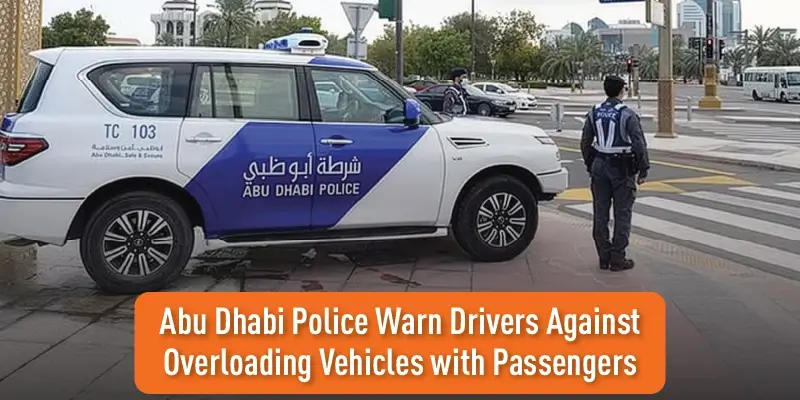

Road safety remains one of the highest priorities across the UAE, and authorities continue to strengthen awareness campaigns to reduce preventable traffic accidents. In its latest road safety advisory, Abu Dhabi Police has issued a strong warning against overloading vehicles with passengers, reminding motorists that exceeding a vehicle’s approved seating capacity can significantly increase the risk of serious injuries and fatal crashes.

Overloaded vehicles not only compromise passenger safety but also reduce vehicle stability, affect braking performance, and make it more difficult for drivers to maintain control during emergencies. In many cases, extra passengers are left without seat belts, exposing them to greater danger during collisions.
To encourage safer driving practices, Abu Dhabi Police has reiterated the legal penalties for violating passenger capacity regulations, including fines, black points, and vehicle impoundment. This guide explains everything drivers need to know about the latest warning, penalties, safety risks, legal requirements, and practical tips to avoid violations while protecting everyone on board.
Abu Dhabi Police Overloaded Vehicles Warning – Quick Overview
| Category | Details |
|---|---|
| Authority | Abu Dhabi Police |
| Primary Focus | Preventing passenger overloading |
| Violation | Carrying more passengers than permitted |
| Fine | AED 500 |
| Black Points | 4 |
| Vehicle Impoundment | 7 Days |
| Purpose | Improve UAE road safety and reduce accident risks |
Why Are Abu Dhabi Police Warning Against Overloaded Vehicles?
Every vehicle is designed and tested to safely carry a specific number of passengers. When drivers exceed this approved limit, the vehicle’s handling characteristics change significantly, increasing the likelihood of accidents.
According to Abu Dhabi Police, overloaded vehicles create several serious safety concerns, including:
- Reduced driver visibility
- Increased stopping distance
- Poor vehicle stability
- Higher rollover risk
- Reduced steering control
- Passengers travelling without seat belts
- Greater risk of severe injuries during collisions
Authorities emphasise that even a short journey can become dangerous when a vehicle carries more passengers than it was designed to accommodate. Following approved seating limits is therefore a key part of maintaining UAE road safety.
What Is Considered Passenger Overloading?
Passenger overloading occurs whenever a vehicle carries more occupants than the manufacturer-approved seating capacity.
Examples include:
- Carrying extra passengers without available seats
- Allowing passengers to sit in luggage compartments
- Seating passengers on laps
- Transporting children without proper seating arrangements
- Carrying passengers who cannot wear seat belts
Every passenger should occupy a designated seat equipped with an approved seat belt.
Why Is Passenger Overloading Dangerous?
Passenger overloading is far more than a traffic violation, it is a serious road safety issue that puts everyone inside the vehicle, as well as other road users, at risk. Every vehicle is designed and tested to safely carry a specific number of occupants. Exceeding this limit affects the vehicle’s stability, braking performance, tyre condition, and overall handling. In a country where high-speed highways are common, even a minor mistake in an overloaded vehicle can quickly result in a severe collision. This is why the latest Abu Dhabi Police driver warning urges motorists to follow passenger capacity limits and comply with vehicle safety regulations in the UAE.
Reduced Vehicle Control
Car manufacturers carefully engineer suspension systems, steering components, and braking systems based on the vehicle’s maximum passenger capacity. When too many passengers are on board, the extra weight alters the vehicle’s centre of gravity, making it more difficult to accelerate, steer, and maintain stability through corners. During sudden lane changes or emergency manoeuvres, overloaded vehicles are more likely to lose control, increasing the likelihood of accidents.
Increased Braking Distance
An overloaded vehicle requires considerably more distance to come to a complete stop because the braking system has to work harder to slow down the additional weight. This becomes especially dangerous on high-speed roads and motorways, where drivers have only seconds to react to unexpected hazards. Longer stopping distances can easily lead to rear-end collisions and multi-vehicle accidents, particularly during busy traffic conditions or adverse weather.
Seat Belt Safety
Every seat in a vehicle is equipped with a seat belt for a reason. When more passengers travel than the vehicle is designed to accommodate, some occupants are forced to sit without proper restraints or share seats. In the event of sudden braking or a collision, unrestrained passengers can be thrown around the cabin, significantly increasing the risk of serious or fatal injuries, not only to themselves but also to other occupants. Wearing a seat belt remains one of the most effective ways to reduce injuries in road accidents.
Higher Accident Severity
The consequences of a crash are often much more severe when a vehicle is overcrowded. Additional passengers increase the forces involved during an impact, while limited seating space reduces the protection offered by airbags and other built-in safety systems. Emergency responders may also face greater challenges when rescuing multiple occupants from an overloaded vehicle. For these reasons, authorities treat passenger overloading as a significant threat to public safety.
Driver Distraction
Overcrowded vehicles often create a noisier and more uncomfortable environment for the driver. Passengers who are not properly seated may move around the cabin, obstruct the driver’s view, or interfere with safe driving. These distractions reduce concentration and slow reaction times, making it harder to respond quickly to changing road conditions. Maintaining a calm and properly seated passenger environment helps drivers stay focused and improves overall road safety.
These risks clearly explain why authorities continue to enforce strict vehicle safety regulations in the UAE and regularly issue Abu Dhabi Police driver warning campaigns. By respecting the approved seating capacity, ensuring every passenger wears a seat belt, and avoiding unnecessary overloading, motorists can help reduce accidents and contribute to safer roads across the UAE.
Penalties for Overloading Vehicles in Abu Dhabi
Drivers found carrying more passengers than permitted face strict penalties under UAE traffic laws.
| Violation | Penalty |
|---|---|
| Carrying Excess Passengers | AED 500 Fine |
| Black Points | 4 |
| Vehicle Impoundment | 7 Days |
These penalties are intended to discourage unsafe driving practices while protecting passengers and other road users.
How Passenger Overloading Affects Road Safety
Overloaded vehicles affect more than just the driver.
Potential consequences include:
- Reduced tyre performance
- Suspension damage
- Poor weight distribution
- Longer emergency stopping distance
- Increased rollover potential
- Limited driver visibility
- Higher likelihood of losing vehicle control
Every additional passenger increases the strain on the vehicle’s safety systems, particularly during emergency situations.
Safety Tips for Drivers
To comply with traffic rules Abu Dhabi and improve road safety, motorists should follow these simple guidelines.
Check Seating Capacity
Always follow the maximum passenger capacity specified by the vehicle manufacturer.
Ensure Every Passenger Has a Seat Belt
Each passenger should occupy an approved seat and wear a seat belt throughout the journey.
Avoid Carrying Extra Passengers
Never allow passengers to travel in cargo areas or on laps.
Secure Children Properly
Use appropriate child restraint systems based on age and height.
Plan Larger Trips Carefully
If travelling with a large family or group, consider using a larger vehicle instead of exceeding passenger capacity.
Abu Dhabi Police Continue Promoting Safer Roads
The latest warning forms part of Abu Dhabi Police’s ongoing road safety awareness campaigns aimed at reducing preventable accidents across the emirate.
Authorities continue encouraging motorists to:
- Follow traffic regulations
- Respect vehicle capacity limits
- Ensure every passenger wears a seat belt
- Drive responsibly
- Protect children using approved safety seats
Road safety remains a shared responsibility, and compliance with traffic laws helps create safer journeys for everyone.
Final Insights
The latest Abu Dhabi Police overloaded vehicles warning serves as an important reminder that exceeding your vehicle’s passenger capacity is far more than a traffic offence, it is a serious safety risk. Carrying additional passengers reduces vehicle control, increases braking distances, and leaves occupants vulnerable if they are unable to use seat belts.
By following approved seating limits, ensuring every passenger is properly restrained, and complying with vehicle safety regulations in the UAE, motorists can help prevent avoidable accidents while contributing to safer roads across the country. Responsible driving protects not only your passengers but also every other road user.
Stay Connected with the Latest UAE Driving & Automotive News
Stay informed with the latest updates on Abu Dhabi Police road safety campaigns, UAE traffic regulations, driving laws, vehicle maintenance, smart mobility, electric vehicles, RTA services, transport infrastructure, and automotive industry developments across the UAE.
Guest Blog Submission
Passionate about road safety or the UAE automotive industry?
We welcome original articles on traffic regulations, UAE road safety, driving tips, vehicle maintenance, electric vehicles, smart mobility, transport infrastructure, and future automotive trends.
Share your expertise and become part of our growing contributor community.
Frequently Asked Questions
Why are Abu Dhabi Police warning against overloaded vehicles?
Because carrying more passengers than a vehicle is designed for, it increases the risk of accidents, reduces vehicle control, and leaves some occupants without seat belts.
What is the penalty for carrying too many passengers in Abu Dhabi?
Drivers can face an AED 500 fine, 4 black points, and 7-day vehicle impoundment for exceeding the approved passenger capacity.
Why is passenger overloading dangerous?
Overloading affects braking, steering, vehicle stability, and increases the likelihood of serious injuries during collisions.
Can passengers travel without seat belts if the vehicle is full?
No. Every passenger must occupy a designated seat and wear a seat belt. Travelling without proper restraints significantly increases injury risk.
How can drivers avoid passenger overloading violations?
Drivers should always follow the vehicle’s approved seating capacity, ensure every passenger has a seat belt, use child restraints where required, and arrange a larger vehicle if additional seating is needed.


