

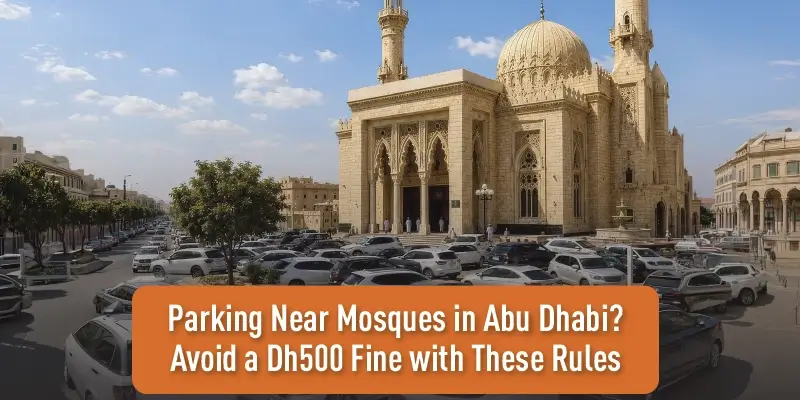

Abu Dhabi authorities are reminding motorists to follow the Abu Dhabi mosque parking rules after an increase in illegal parking near mosques during busy prayer times. Drivers who park in unauthorised locations, block other vehicles, or obstruct traffic risk receiving fines starting from Dh500, while certain parking violations may attract even higher penalties under UAE traffic regulations.

Whether you’re attending Friday prayers, visiting a mosque during Ramadan, or parking nearby for any reason, this guide explains everything you need to know about the latest mosque parking regulations in Abu Dhabi.
Abu Dhabi Mosque Parking Rules – Quick Overview
| Category | Details |
|---|---|
| Primary Keyword | Abu Dhabi mosque parking rules |
| Advisory Issued By | Abu Dhabi Police |
| Applicable Area | Mosques Across Abu Dhabi |
| Fine for Blocking Vehicles | Dh500 |
| Main Objective | Improve Road Safety & Traffic Flow |
| Focus Areas | Legal Parking, Traffic Compliance, Public Safety |
| Target Audience | Motorists & Worshippers |
| Long-Term Goal | Safer Roads and Better Traffic Management |
Abu Dhabi Police Warn Drivers About Illegal Mosque Parking
Abu Dhabi Police have launched a renewed awareness campaign urging motorists to park responsibly near mosques, especially during Friday prayers and other peak prayer times.
Authorities emphasise that illegal parking creates unnecessary congestion, blocks access for emergency services, inconveniences worshippers, and increases the risk of accidents. Drivers are therefore encouraged to use only designated parking spaces and comply with all traffic regulations.
Dh500 Fine for Blocking Other Vehicles
One of the most common violations occurs when motorists park behind other vehicles, preventing them from leaving.
According to Abu Dhabi Police, this offence carries a Dh500 fine under UAE traffic regulations. Blocking access to parked vehicles not only inconveniences other motorists but also disrupts traffic flow around busy mosque areas.
Common Mosque Parking Violations
Authorities have highlighted several parking behaviours that frequently occur during busy prayer periods.
These include:
- Parking behind other vehicles.
- Parking on sidewalks.
- Blocking entrances and exits.
- Parking on main roads.
- Parking in undesignated areas.
- Obstructing emergency vehicle access.
- Causing traffic congestion near mosques.
Avoiding these violations helps maintain safe and efficient traffic movement for everyone.
Why Following Mosque Parking Rules Matters
Proper parking is essential for ensuring safe access to places of worship while protecting all road users.
By following the Abu Dhabi mosque parking rules, motorists help:
- Reduce traffic congestion.
- Improve pedestrian safety.
- Maintain emergency access.
- Prevent road obstructions.
- Ensure smoother vehicle movement.
- Enhance public safety around mosques.
Responsible parking benefits both worshippers and the wider community.
Tips to Avoid Parking Fines
Drivers visiting mosques should follow these simple guidelines:
- Use only designated parking areas.
- Arrive early during busy prayer times.
- Never block another vehicle.
- Avoid parking on sidewalks.
- Do not stop on main roads.
- Follow traffic signs and road markings.
- Respect instructions from traffic officers.
These small precautions can help motorists avoid unnecessary fines while supporting safer roads.
Supporting Safer Roads Across Abu Dhabi
Road safety remains a top priority for Abu Dhabi authorities.
Regular awareness campaigns encourage responsible driving behaviour, legal parking practices, and greater compliance with UAE traffic laws. These initiatives contribute to smoother traffic flow, improved public safety, and a better overall experience for residents and visitors alike.
Benefits of Following Abu Dhabi Mosque Parking Rules
Complying with parking regulations offers several advantages.
Key benefits include:
- Avoid costly traffic fines.
- Improve road safety.
- Reduce congestion.
- Protect pedestrians.
- Ensure emergency vehicle access.
- Support organised traffic movement.
- Promote responsible driving behaviour.
- Enhance community safety.
What Drivers Should Remember
Before parking near any mosque, motorists should always ensure they are using a legal parking space.
Drivers should remember to:
- Park only in authorised locations.
- Avoid obstructing other vehicles.
- Follow traffic signs.
- Respect pedestrian pathways.
- Leave sufficient access for emergency services.
- Observe all parking regulations.
Simple parking decisions can make a significant difference to road safety.
Why This Advisory Matters
Mosques often experience high traffic volumes during Friday prayers and religious occasions.
Illegal parking not only creates inconvenience but can also delay emergency response vehicles and increase accident risks. By following the Abu Dhabi mosque parking rules, motorists contribute to a safer, more organised road environment for everyone.
Pros and Cons
Pros
Following the Abu Dhabi mosque parking rules helps drivers avoid fines, improves traffic flow, enhances pedestrian safety, supports emergency vehicle access, reduces congestion, and promotes responsible road use throughout the emirate.
Cons
Limited parking availability during peak prayer times may require motorists to arrive earlier or walk a short distance to nearby designated parking areas.
Closing Remarks
The latest reminder from Abu Dhabi Police reinforces the importance of responsible parking near mosques. By following designated parking regulations and avoiding common violations, motorists can avoid Dh500 parking fines, reduce congestion, and help maintain safe access for worshippers, pedestrians, and emergency vehicles.
As Abu Dhabi continues strengthening road safety and traffic management, every driver has a role to play in creating safer and more organised streets. Whether attending Friday prayers or visiting a mosque at any time, choosing a legal parking space is a simple step that benefits the entire community.
Stay Connected with the Latest UAE Traffic & Road Safety News
Stay informed with the latest Abu Dhabi Police announcements, parking regulation updates, UAE traffic laws, road safety campaigns, transport initiatives, parking fines, public safety advisories, and infrastructure developments across the UAE.
From traffic regulation updates and parking rule changes to smart mobility initiatives and road safety awareness campaigns, we bring you reliable insights to help you stay informed and drive responsibly.
Guest Blog Submission
Do you enjoy exploring the latest automotive innovations, vehicle technologies, and emerging mobility trends across the UAE?
Join our growing contributor community and share your expertise with readers across the UAE.
We welcome guest articles covering:
- UAE traffic rules
- Road safety campaigns
- Parking regulations
- Abu Dhabi Police initiatives
- Smart mobility
- Transport updates
- Parking safety
- UAE automotive newsUAE automotive news
Become a contributor and help promote safer roads and responsible driving across the UAE.
Frequently Asked Questions
What are the Abu Dhabi mosque parking rules?
Motorists must park only in designated parking spaces near mosques and avoid blocking roads, sidewalks, entrances, exits, or other vehicles.
What is the fine for blocking another vehicle near a mosque?
Drivers who block another parked vehicle can receive a Dh500 fine under UAE traffic regulations.
Can I park on the sidewalk near a mosque?
No. Parking on sidewalks is a traffic violation and may result in additional penalties.
Why are authorities enforcing these parking rules?
The regulations help improve road safety, reduce congestion, protect pedestrians, and ensure emergency vehicles can access mosque areas without obstruction.
When is illegal parking most common?
Authorities report that parking violations are most common during Friday prayers and other busy prayer times when parking demand is highest.v
How can motorists avoid parking fines near mosques?
Drivers should always use designated parking areas, follow traffic signs, avoid blocking other vehicles or roads, and comply with all Abu Dhabi traffic rules.


