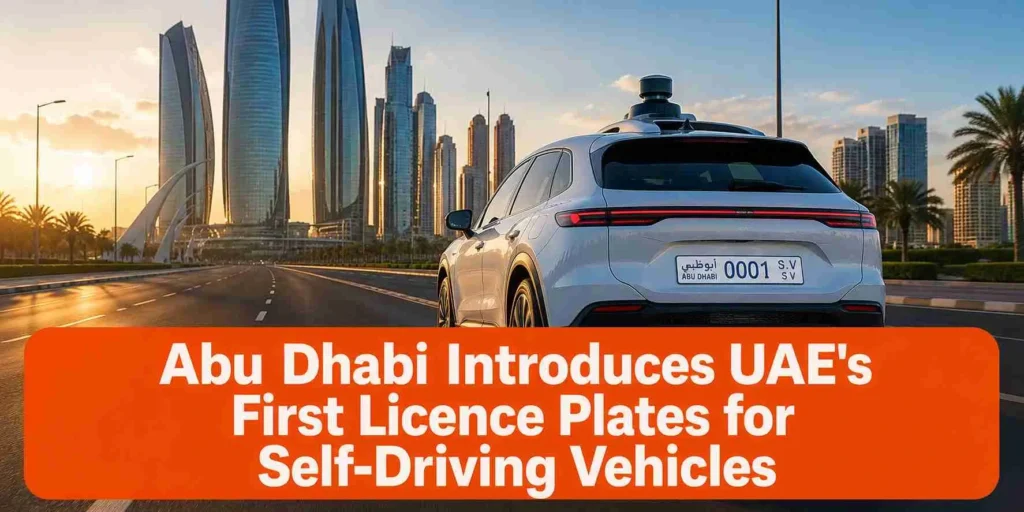
The UAE continues to strengthen its position as a global leader in smart mobility with Abu Dhabi introducing the country’s first licence plates specifically designed for self-driving vehicles. This landmark initiative represents another major milestone in the emirate’s journey toward autonomous transportation, supporting safer roads, smarter mobility solutions, and the future of connected transport.

The new licence plates will enable authorities, emergency services, and road users to easily identify autonomous vehicles operating on public roads while supporting the safe expansion of self-driving technology across the emirate. The initiative aligns with the UAE’s long-term vision of embracing artificial intelligence, smart infrastructure, and sustainable transportation.
Whether you’re an automotive enthusiast, fleet operator, technology professional, or daily commuter, understanding Abu Dhabi’s autonomous vehicle licence plate system provides valuable insight into the future of transportation in the UAE.
Abu Dhabi Self-Driving Vehicle Licence Plates – Quick Overview
| Category | Details |
|---|---|
| Primary Keyword | Abu Dhabi self-driving vehicle licence plates |
| Vehicle Type | Autonomous & Self-Driving Vehicles |
| Initiative | UAE’s First Dedicated Licence Plates |
| Objective | Improve Vehicle Identification & Road Safety |
| Authority | Abu Dhabi Integrated Transport Centre (ITC) |
| Focus | Smart Mobility & Autonomous Transportation |
| UAE Vision | AI-Powered Transportation & Sustainable Mobility |
Why Abu Dhabi Introduced Dedicated Licence Plates for Autonomous Vehicles
As autonomous vehicle technology continues to evolve, governments require clear regulations to ensure safe interaction between self-driving vehicles, traditional vehicles, pedestrians, and emergency responders.
The newly introduced licence plates aim to:
- Clearly identify autonomous vehicles
- Support road safety initiatives
- Improve emergency response
- Strengthen autonomous vehicle regulations
- Assist law enforcement agencies
- Enable smarter traffic management
- Encourage autonomous vehicle testing
- Support future mobility innovation
The initiative demonstrates Abu Dhabi’s commitment to becoming one of the world’s leading smart mobility hubs.
What Are Autonomous Vehicle Licence Plates?
Unlike conventional registration plates, autonomous vehicle licence plates are specially designated for vehicles operating with self-driving technology.
These plates help authorities distinguish autonomous vehicles from conventional vehicles operating on UAE roads.
The system also supports:
- Vehicle monitoring
- Regulatory compliance
- Traffic data collection
- Safety inspections
- Testing programme management
As autonomous mobility expands, dedicated identification becomes increasingly important.
10 Key Highlights of Abu Dhabi's Self-Driving Vehicle Licence Plate Initiative
1. UAE's First Official Autonomous Vehicle Licence Plates
Abu Dhabi becomes the first emirate in the UAE to introduce dedicated registration plates for self-driving vehicles.
This marks a significant milestone in the country’s autonomous mobility roadmap.
Key Benefits
- National first
- Future-ready regulations
- Safer road integration
- Global innovation leadership
2. Improved Road Safety
Clearly identifying autonomous vehicles allows other road users and emergency personnel to understand the vehicle’s operating capabilities.
Safety Advantages
- Easier vehicle recognition
- Better traffic awareness
- Improved emergency response
- Enhanced accident management
Road safety remains one of the primary objectives of the initiative.
3. Supports Autonomous Vehicle Testing
Dedicated licence plates help authorities monitor autonomous vehicle trials while ensuring compliance with safety regulations.
Benefits Include
- Controlled testing
- Data collection
- Performance monitoring
- Regulatory oversight
4. Encourages Smart Mobility Innovation
The initiative supports companies developing AI-powered transportation technologies.
Expected beneficiaries include:
- Autonomous vehicle manufacturers
- Technology startups
- Mobility providers
- Research institutions
Innovation remains central to Abu Dhabi’s transportation strategy.
5. Better Traffic Management
Autonomous vehicles generate valuable data that can improve traffic flow and urban mobility planning.
Potential improvements include:
- Smarter intersections
- Reduced congestion
- Predictive traffic control
- Intelligent transport systems
Future cities rely heavily on connected mobility solutions.
6. Strengthens UAE Driverless Vehicle Regulations
Introducing dedicated licence plates creates a clear legal framework for autonomous vehicle deployment.
Regulatory improvements include:
- Vehicle identification
- Registration standards
- Operational compliance
- Safety requirements
Clear regulations encourage responsible innovation.
7. Supports Artificial Intelligence Integration
Autonomous vehicles represent one of the most advanced applications of artificial intelligence within transportation.
AI enables:
- Lane keeping
- Obstacle detection
- Traffic prediction
- Collision avoidance
- Navigation optimisation
Licence plates become part of the broader AI transportation ecosystem.
8. Builds Public Confidence
Clearly marked autonomous vehicles increase transparency and help the public become more familiar with self-driving technology.
Benefits include:
- Improved awareness
- Greater public trust
- Easier identification
- Enhanced acceptance
Public confidence is essential for widespread adoption.
9. Attracts Global Technology Investment
Innovative transport regulations position Abu Dhabi as an attractive destination for autonomous mobility companies.
Potential opportunities include:
- Research centres
- Technology partnerships
- International investments
- Pilot programmes
Smart mobility continues attracting global attention.
10. Supports UAE Sustainability Goals
Autonomous mobility can improve transportation efficiency while supporting long-term environmental objectives.
Potential environmental benefits include:
- Reduced congestion
- Lower emissions
- Optimised driving behaviour
- Improved energy efficiency
The initiative complements the UAE’s sustainable transportation vision.
How Dedicated Licence Plates Benefit Different Road Users
The introduction of autonomous vehicle licence plates offers advantages for multiple stakeholders.
Benefits for Drivers
- Improved awareness
- Safer interactions
- Better understanding of autonomous vehicles
Benefits for Authorities
- Easier vehicle identification
- Improved regulatory oversight
- Better enforcement
Benefits for Emergency Services
- Faster vehicle recognition
- More effective incident response
- Enhanced road safety
Benefits for Technology Companies
- Clear testing framework
- Regulatory support
- Improved public acceptance
Future of Autonomous Vehicles in the UAE
The UAE continues investing heavily in next-generation transportation technologies.
Future developments may include:
- Autonomous taxis
- Driverless public buses
- Smart logistics vehicles
- Connected highways
- AI-controlled traffic systems
- Smart city transportation networks
Abu Dhabi’s licence plate initiative lays the foundation for these future innovations.
Why This Matters for UAE Drivers
Even drivers who do not own autonomous vehicles will benefit from smarter transportation systems.
Potential long-term benefits include:
- Safer roads
- Reduced traffic congestion
- Better road management
- Improved transportation efficiency
- Faster emergency response
- Smarter infrastructure
Autonomous mobility will gradually become part of everyday life across the UAE.
Advantages and Challenges of Autonomous Vehicle Licence Plates
Pros
- Improves road safety
- Supports smart mobility
- Enhances vehicle identification
- Strengthens regulations
- Encourages innovation
- Improves emergency response
- Builds public confidence
- Supports sustainable transportation
Cons
- Initial implementation costs
- Regulatory updates required
- Public education needed
- Infrastructure expansion required
What Drivers Should Know
As autonomous vehicles become more common in the UAE:
- Follow updated traffic regulations.
- Stay informed about autonomous vehicle laws.
- Drive cautiously around testing vehicles.
- Understand smart mobility developments.
- Respect designated testing zones.
- Watch for future transport announcements.
Being informed helps drivers safely share the road with emerging vehicle technologies.
Autonomous Vehicle Components Supporting Safe Operation
| Component | Purpose |
|---|---|
| AI Computer | Vehicle Decision Making |
| Cameras | Road Monitoring |
| LiDAR Sensors | Obstacle Detection |
| Radar Systems | Distance Measurement |
| GPS Navigation | Route Planning |
| Smart Software | Driving Control |
| Dedicated Licence Plate | Vehicle Identification |
| Connectivity Systems | Real-Time Communication |
Who Should Be Interested?
This initiative is particularly relevant for:
- Technology enthusiasts
- Automotive professionals
- Fleet operators
- Smart city developers
- Daily commuters
- Government agencies
- Logistics companies
- Investors in autonomous mobility
Final Verdict
The introduction of Abu Dhabi’s first licence plates for self-driving vehicles marks another significant step in the UAE’s smart mobility transformation. By creating a dedicated identification system for autonomous vehicles, Abu Dhabi is improving road safety, supporting innovation, strengthening regulations, and preparing for the widespread adoption of AI-powered transportation.
As autonomous technology continues to advance, initiatives like these will help build public confidence, encourage responsible innovation, and position the UAE among the world’s leading nations in intelligent transportation. For drivers, businesses, and technology developers alike, this is a clear indication that the future of mobility is already taking shape across the Emirates.
Stay Updated with the Latest UAE Automotive News
Stay informed with the latest autonomous vehicle developments, smart mobility initiatives, transportation regulations, vehicle technology updates, electric vehicle news, road safety guides, and automotive innovations from across the UAE.
From industry announcements and government initiatives to expert automotive insights and emerging technologies, we bring you the latest developments shaping the future of transportation.
Guest Blog Submission
Dedicated to automotive innovation about autonomous vehicles, smart mobility, electric vehicles, automotive technology, artificial intelligence, transportation innovation, or the UAE automotive industry?
Join our growing contributor community and share your expertise with readers across the UAE and beyond.
We welcome guest articles covering:
- Autonomous vehicle technology
- Smart mobility
- Electric vehicles
- AI in transportation
- Road safety
- Connected vehicles
- Automotive innovation
- UAE transport regulations
Become a contributor and help shape conversations about the future of mobility.
Frequently Asked Questions (FAQs)
What are Abu Dhabi self-driving vehicle licence plates?
They are dedicated registration plates introduced to identify autonomous vehicles operating on public roads, supporting safer road management and regulatory compliance.
Why has Abu Dhabi introduced licence plates for autonomous vehicles?
The initiative improves vehicle identification, enhances road safety, supports autonomous vehicle testing, and strengthens the UAE’s smart mobility framework.
Will autonomous vehicles become more common in the UAE?
Yes. The UAE continues investing in artificial intelligence, smart infrastructure, and autonomous transportation as part of its long-term mobility strategy.
How do dedicated licence plates improve safety?
They allow authorities, emergency responders, and other road users to quickly recognise autonomous vehicles, improving traffic management and emergency response.
Are autonomous vehicles legal in the UAE?
Autonomous vehicle testing and deployment are being introduced under government regulations and approved frameworks, with dedicated initiatives supporting safe adoption.
What does this initiative mean for UAE drivers?
Drivers can expect smarter transportation systems, improved road safety, better traffic management, and the gradual integration of autonomous vehicles into everyday mobility.