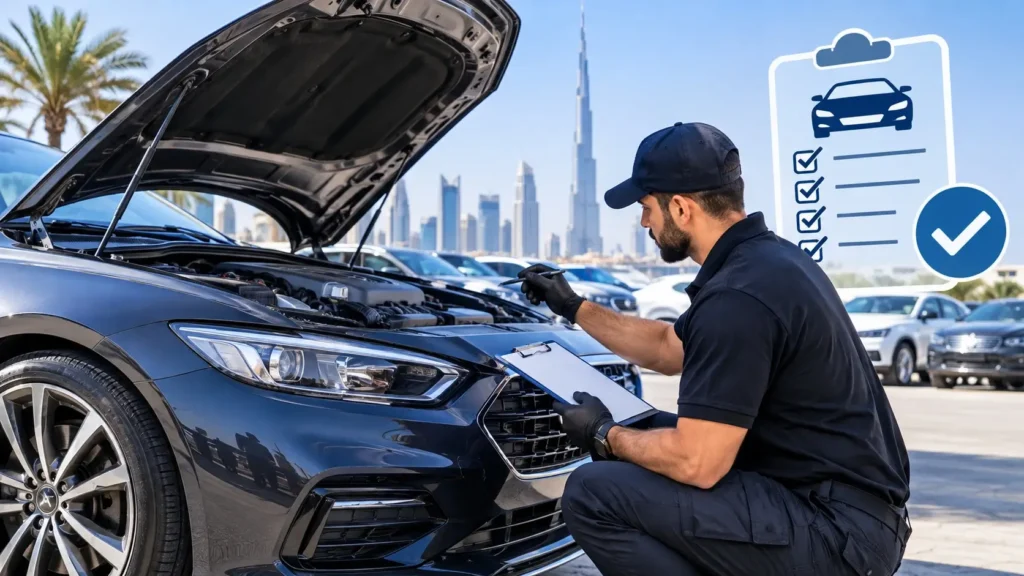
Buying a used car in Dubai can be a great way to save money while getting the vehicle you want. The UAE has a wide range of used cars, from affordable daily drivers to luxury SUVs, sports cars, and high-performance vehicles. However, finding a car that looks perfect on the outside does not always mean it is in good mechanical condition.Some vehicles may have hidden accident damage, engine problems, transmission issues, electrical faults, or previous repairs that are not immediately visible. These problems can lead to expensive repairs after the purchase.Whether you are buying from a private seller, dealership, or used car showroom, it is important to inspect the vehicle carefully before making a payment. Getting a professional car inspection in Dubai can help identify hidden problems and give you greater confidence before purchasing.
1. Check the Vehicle History Before Buying

Before visiting the seller, start by checking the vehicle’s history. This helps you understand the car’s background and identify potential issues.

Ask the seller for the Vehicle Identification Number (VIN), also known as the chassis number. You can use this number to look for available accident records through official UAE channels, including:

You should also ask the seller about previous accidents, major repairs, ownership history, and whether the car has ever experienced flooding.

Remember that a clean online history result does not guarantee that a vehicle has never been involved in an accident. Some incidents may not appear in available records.

2. Inspect the Exterior and Paint Condition

The exterior condition of a used car can reveal signs of previous accidents or poor-quality repairs.

When inspecting the vehicle, check the following:

Pay particular attention to mismatched paint and uneven panel gaps. These may indicate that certain parts of the vehicle have been repaired or replaced following an accident.

A professional paint and body inspection can help identify repairs that are difficult to notice during a normal viewing.

3. Check the Engine Condition

The engine is one of the most important components to inspect before purchasing a used car. Engine problems can be expensive, especially in luxury and performance vehicles.

Ask the seller to let you see the vehicle during a cold start. Starting the engine when it is cold can help reveal problems that may disappear after the vehicle warms up.

Check for:

Also check the engine oil and coolant condition. Dirty fluids, low fluid levels, or visible contamination may indicate maintenance issues.

For a more detailed assessment, professional car engine inspection in Dubai can help identify potential engine problems before you purchase the vehicle.

4. Inspect the Transmission and Gearbox

Transmission problems are another major concern when buying a second-hand car in Dubai.

Whether the vehicle has an automatic, manual, or dual-clutch transmission, make sure the gearbox operates smoothly.

During the test drive, pay attention to:

For automatic vehicles, the gear changes should feel smooth and consistent. Any unusual behaviour should be investigated before completing the purchase.

Do not ignore minor transmission symptoms. Small problems can sometimes develop into expensive repairs.

5. Check the Air Conditioning System

A properly working air conditioning system is essential when driving in the UAE, where temperatures can become extremely high.

A car with weak air conditioning may have problems with its compressor, condenser, cooling fans, refrigerant system, or other components.

Before buying, check:

   Whether the system produces unpleasant smells.

You can also arrange a professional car AC inspection in Dubai to identify potential problems before purchasing the vehicle.

6. Inspect the Chassis and Look for Accident Damage

The chassis is a critical part of a vehicle because it supports the structure and helps maintain overall stability and safety.

Previous major accidents can damage the chassis, even when the exterior has been repaired and repainted.

Look for warning signs such as:

A vehicle with serious structural damage may present safety concerns and affect its resale value.

A professional car chassis inspection in Dubai can help identify structural problems and previous accident repairs that may not be visible during a basic inspection.

7. Check the Tyres, Brakes, and Suspension

Tyres, brakes, and suspension components directly affect vehicle safety and driving performance.

Start by checking all four tyres for uneven wear, cracks, bulges, and damage. Also check the tyre manufacturing dates and make sure the tyres are suitable for the vehicle.

During the test drive, pay attention to:

Uneven tyre wear can sometimes indicate alignment or suspension problems.

Do not forget to inspect the brake discs, pads, and suspension components. These parts may require replacement and should be considered when evaluating the vehicle’s asking price.

8. Check the Interior and Electrical Systems

A clean interior can make a used car look attractive, but you should also make sure all interior features work correctly.

Inspect the following:

Check the seats, steering wheel, pedals, and carpets for excessive wear. Compare the interior condition with the displayed mileage.

If the mileage is relatively low but the interior shows significant wear, ask the seller for an explanation and supporting service records.

9. Check the Battery and Computer Diagnostics

Modern vehicles contain electronic systems that control many important functions. Some faults may not be visible during a normal inspection.

An OBD computer diagnostic scan can help identify stored fault codes and potential problems with the engine, transmission, sensors, and other electronic systems.

Before buying, consider checking:

Keep in mind that clearing warning lights does not necessarily mean the underlying problem has been repaired.

A professional diagnostic assessment can provide additional information about the vehicle’s electronic and mechanical condition.

10. Review the Service History and Maintenance Records

A vehicle with a proper maintenance history can give you a better understanding of how it has been maintained.

Ask the seller for service records, maintenance invoices, and previous repair documents.

Look for:

Compare the recorded mileage across service invoices and inspection documents.

Missing service records do not automatically mean the car is in poor condition, but they make it more difficult to verify its maintenance history.

11. Take the Car for a Proper Test Drive

Never purchase a used car without experiencing how it drives, provided the seller permits a road test.

A test drive can help identify problems that are difficult to notice when the vehicle is stationary.

During the drive, check:

  1. Whether the engine starts smoothly.
  2. Whether acceleration feels normal.
  3. Whether the gearbox changes gears properly.
  4. Whether the steering feels stable.
  5. Whether the brakes respond correctly.
  6. Whether the suspension makes unusual noises.
  7. Whether the AC maintains cooling.
  8. Whether any warning lights appear.

Try the vehicle at different speeds and on different road surfaces where it is safe and permitted.

If the seller refuses a reasonable test drive or independent inspection, consider this a reason to delay the purchase until you are comfortable with the available information.

12. Verify the Documents Before Making Payment

Mechanical condition is not the only thing that matters when buying a used car in Dubai. You should also verify that the vehicle’s paperwork is correct.

Check the following:

Make sure the seller has the legal authority to transfer ownership.

For official requirements, consult the Dubai driving and vehicle ownership guide before completing the transaction.

Why Should You Get a Professional Pre-Purchase Car Inspection?

Checking a used car yourself is a good starting point, but some mechanical and structural problems require professional inspection equipment and experience.

A vehicle may look clean, drive smoothly, and have no visible warning lights while still having hidden problems.

At Top Wheels Performance, we provide professional mobile pre-purchase car inspection services in Dubai and across the UAE. Our inspectors come to the vehicle’s location, making the process more convenient for buyers.

Our inspection packages include checks covering:

We also provide detailed digital inspection reports with photos to help buyers understand the vehicle’s condition before making a decision.

You can explore our pre-purchase car inspection in Dubai to learn more about our inspection packages.

Final Used Car Buying Checklist for Dubai

Before making your final decision, use this simple checklist:

Completing these checks can help you make a more informed decision and reduce the risk of purchasing a vehicle with expensive hidden problems.

Frequently Asked Questions

What should I check before buying a used car in Dubai?

Before buying a used car, check its accident history, service records, engine, transmission, chassis, tyres, brakes, AC, electrical systems, and overall mechanical condition. It is also recommended to arrange an independent pre-purchase inspection.

You can use the vehicle’s VIN or chassis number to search for available accident records through official UAE platforms such as MOI, EVG, and TAMM for applicable vehicles. Remember that not every accident or repair will necessarily appear in these records.

Yes. A professional inspection can identify mechanical faults, previous accident repairs, electrical problems, and hidden damage that may not be noticeable during a basic viewing or test drive.

The inspection duration depends on the vehicle, its condition, and the selected inspection package. Ask your inspection provider for the expected time when booking.

Author

Shares: