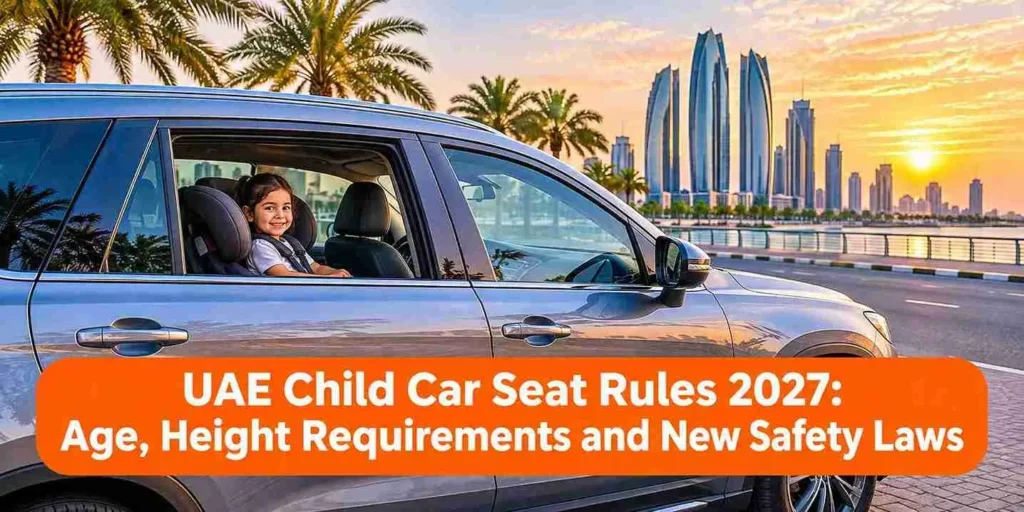
Parents travelling with children in the UAE must pay attention to updated child passenger safety requirements taking effect on January 1, 2027. The new federal traffic regulations establish clearer conditions for using child safety seats, including age-based requirements, rear-seat placement and restrictions on children travelling in the front passenger seat.

The changes are outlined in Cabinet Decision No. 174 of 2026, which introduces the implementing regulations of Federal Decree-Law No. 14 of 2024 concerning the regulation of traffic.

Under Article 11, drivers must provide appropriate child safety seats for children aged four and under. These seats must match the child’s height and weight, comply with applicable UAE safety standards and be installed in the rear of the vehicle.

The regulations also clarify that children can occupy the front passenger seat if they are older than 10 years or at least 145cm tall.

These requirements apply across Dubai, Abu Dhabi, Sharjah and other emirates. Here is everything parents need to know about the UAE child car seat rules 2027, including age requirements, height restrictions, permitted exceptions and essential safety precautions.

UAE Child Seat Laws 2027: Key Requirements

The updated regulations establish specific conditions for transporting young passengers safely.

Here are the main requirements:

Requirement Details
Implementation date January 1, 2027
Legal framework Cabinet Decision No. 174 of 2026
Mandatory child seat age Four years and under
Child seat position Rear seats
Seat suitability Based on height and weight
Front passenger seat age Older than 10 years
Front passenger seat height At least 145cm
Safety standards Applicable UAE standards

These provisions aim to strengthen child passenger safety and provide clearer guidance for motorists.

Mandatory Car Seats for Children Aged Four and Under

Under Article 11, drivers must ensure that children aged four and under use appropriate child safety seats.

However, not every car seat is suitable for every child. Parents must select a restraint system according to the child’s physical development and the manufacturer’s recommended height and weight limits.

Three important conditions apply:

Correct Seat Position: Child safety seats must generally be installed in the rear of the vehicle, keeping young passengers away from the front passenger airbag.

Suitable Size: The seat must be appropriate for the child’s height and weight. Parents should check the manufacturer’s specifications before purchasing a product.

Safety Compliance: Child restraint systems must meet applicable UAE safety standards. Proper installation is equally important for effective protection.

These requirements make choosing the correct restraint system an essential part of child car safety regulations UAE motorists must follow.

UAE Child Seat Height Requirements: When Can Children Sit in Front?

One important clarification under the new regulations concerns the minimum age and height for children travelling in the front passenger seat.

From January 1, 2027, children can occupy the front passenger seat if they meet either of these conditions:

Both conditions do not need to be satisfied.

For example, a nine-year-old child who has reached 145cm may qualify under the height requirement. Similarly, a child older than 10 years may qualify without reaching 145cm.

However, meeting the legal requirement does not automatically make the front seat the safest option. Parents should also consider seat belt positioning, the child’s physical development and vehicle manufacturer recommendations.

Exceptions to Rear-Seat Child Safety Requirements

The regulations establish specific exceptions for certain situations.

1. Medical Conditions

A child may be exempt from using a protective seat if a medical condition prevents them from doing so. This must be supported by a medical certificate approved by the relevant UAE medical authority.

The child must also be accompanied by another person in the rear seat.

2. Vehicles Without Rear Seats

Some vehicles, including certain two-seat models, do not have rear passenger seating.

In these cases, a child safety seat may be installed in the front passenger position, provided that the seat faces backwards and the front passenger airbag is deactivated.

Parents should follow the vehicle manufacturer’s instructions when installing the restraint system.

Which Car Seat Should Parents Choose?

Choosing the right restraint system depends on the child’s age, height, weight and physical development.

Rear-Facing Car Seats: These are generally recommended for infants and younger children. They support the head, neck and spine by distributing collision forces across the back of the seat. Children should remain rear-facing for as long as permitted by the manufacturer’s height and weight limits.

Forward-Facing Car Seats: These are designed for children who have outgrown their rear-facing seats. They generally use an internal harness to secure the child during travel.

Booster Seats: Booster seats help older children who have outgrown forward-facing seats but are not yet large enough for an adult seat belt to fit properly.

A correctly positioned seat belt should cross the upper thighs and chest rather than the stomach and neck.

Parents should remember that these are general safety recommendations, not separate statutory age categories under Article 11.

Why Are Proper Child Restraint Systems Important?

Child safety seats play an important role in reducing the risk of serious injuries during road accidents.

Children have different physical proportions from adults, meaning standard vehicle seat belts may not provide adequate protection when used incorrectly.

A properly fitted restraint system helps distribute collision forces and reduces the likelihood of a child being thrown forward during sudden braking or an accident.

According to a January 2026 survey commissioned by RoadSafetyUAE and Al Wathba Insurance, 72% of parents with children aged four and under owned a proper child restraint system, while 28% did not.

Research cited in the Gulf News report indicates that appropriate child restraint systems can reduce the risk of death by up to 71% and injury by up to 82%.

These findings highlight why child passenger safety UAE families should prioritise appropriate car seats and correct installation.

Baby Car Seat Rules Dubai: Safety Tips for Parents

Beyond meeting legal requirements, parents should develop safe travelling habits.

Here are some important precautions:

  1. Check Installation: Secure the car seat using approved ISOFIX anchor points or the manufacturer’s recommended seat belt installation method.
  2. Adjust the Harness: Ensure the harness fits securely according to the manufacturer’s instructions.
  3. Activate Child Locks: Use child safety locks to prevent children from accidentally opening vehicle doors.
  4. Secure Loose Objects: Keep bags, toys and other objects properly stored to prevent injuries during sudden braking.
  5. Check Seat Condition: Inspect the restraint system for damaged straps, worn components and expiry dates.
  6. Never Leave Children Unattended: Never leave children alone inside parked vehicles, particularly in the UAE’s hot climate.
  7. Understand Emergency Procedures: Know how to release the harness and safely remove your child during an emergency.

These measures can help parents improve everyday vehicle safety.

What Should Parents Do Before January 2027?

With the new requirements taking effect on January 1, 2027, families should review their existing arrangements.

Preparing early can help parents comply with the updated regulations and protect young passengers.

Final Verdict

The UAE child car seat rules 2027 represent an important development in the country’s efforts to strengthen road safety.

Effective January 1, 2027, children aged four and under must use appropriate child safety seats installed in the rear of the vehicle. The seats must match their height and weight and comply with applicable safety standards.

The regulations also clarify that children can sit in the front passenger seat if they are older than 10 years or at least 145cm tall. Specific exceptions apply to qualifying medical conditions and vehicles without rear seats.

For parents, understanding these requirements is essential when selecting car seats and planning family journeys. Proper installation and suitable restraint systems can make a significant difference during road accidents.

For more UAE automotive news, traffic regulations, road safety updates and vehicle industry developments, reach out to connect  with Miss Auto UAE.

Frequently Asked Questions

When will the new UAE child car seat rules take effect?

The updated requirements under Cabinet Decision No. 174 of 2026 will take effect on January 1, 2027.

Children aged four and under must use appropriate child safety seats that meet applicable UAE safety standards.

A child must be at least 145cm tall or older than 10 years to occupy the front passenger seat under the new regulations.

Generally, children aged four and under must use safety seats in the rear. Exceptions apply to qualifying medical conditions and vehicles without rear seats. In the latter case, the child seat must face backwards and the passenger airbag must be deactivated.

The appropriate restraint depends on the child’s height, weight and manufacturer specifications. A suitable rear-facing or forward-facing seat may be used within its approved limits.

Yes. The requirements form part of the federal traffic regulations and apply across all seven emirates.

Author

  • Max Wheeler

    Max Wheeler is a automotive writer known for insightful car reviews, maintenance guides, and industry updates. His goal is to help drivers stay informed and confident on the road.

Shares: