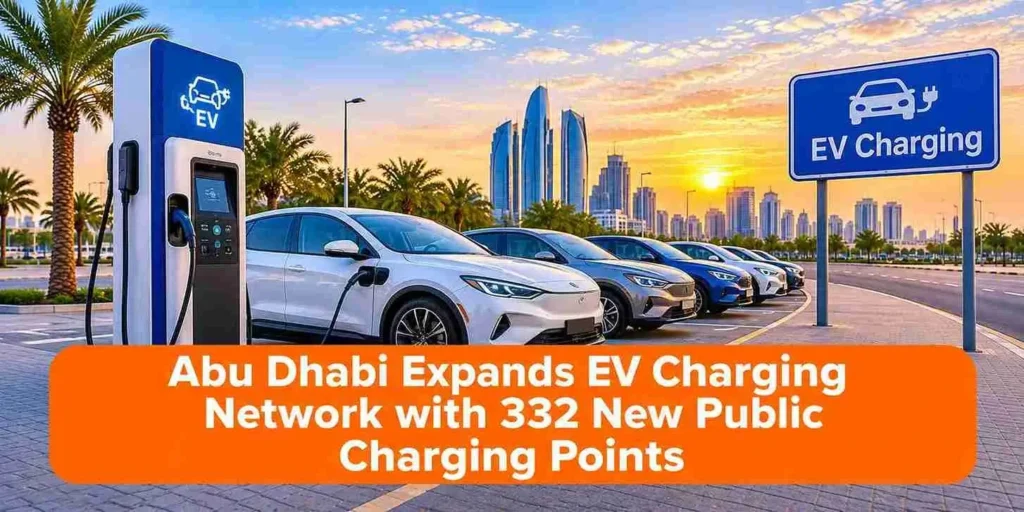
Abu Dhabi is strengthening its electric vehicle infrastructure with the activation of 332 new public EV charging points across designated parking areas. The initiative is expected to make electric car charging more accessible for residents, visitors and motorists travelling across the emirate.

The Integrated Transport Centre (Abu Dhabi Mobility), an affiliate of the Department of Municipalities and Transport, announced the launch in collaboration with Q Mobility. The newly operational charging facilities are part of a wider project to integrate electric vehicle charging services into public parking areas managed under the Mawaqif system.

The first phase has brought 244 charging units into operation, providing 332 charging points. The wider project aims to establish 4,500 charging units and more than 9,000 charging points across approximately 2,250 locations by 2032.

The development represents another step towards improving sustainable transport and supporting the growing adoption of electric vehicles in the UAE.

Here is everything motorists should know about the Abu Dhabi EV charging network, including the new charging facilities, available speeds, payment requirements and future expansion plans.

Abu Dhabi EV Charging Network: Key Highlights

The latest announcement introduces additional public charging infrastructure across Abu Dhabi City, Al Ain City and the Al Dhafra Region.

Here are the important details:

Feature Details
Authority Integrated Transport Centre (Abu Dhabi Mobility)
Project partner Q Mobility
Operational charging units 244
Activated charging points 332
First-phase target 1,000 charging units
First-phase coverage 405 locations
Standard charging capacity 22 kW
Fast charging capacity 60 kW to 160 kW
Long-term target More than 9,000 charging points
Expansion deadline 2032

The project is designed to provide convenient charging access while vehicles are parked in designated public parking bays.

Where Are the New EV Charging Stations in Abu Dhabi?

The first phase of the Abu Dhabi electric vehicle infrastructure project covers three major geographical areas: Abu Dhabi City, Al Ain City and the Al Dhafra Region.

The broader first-phase plan includes 1,000 charging units across 405 locations in 10 main areas. The newly activated 244 units are an operational part of this larger rollout.

Integrating charging facilities into public parking areas gives EV owners more opportunities to recharge their vehicles during everyday activities. Motorists may be able to charge while visiting commercial areas, attending appointments or completing other activities near designated parking facilities.

However, the announcement does not provide a complete location-by-location list of all 332 operational charging points. Drivers should therefore use the relevant charging application or the QR code displayed on individual units to identify available facilities.

This approach is expected to make public EV charging points Abu Dhabi more accessible without requiring motorists to depend entirely on private home charging facilities.

Standard and Fast Charging Options Explained

One of the important features of the new network is the availability of different charging capacities.

The project includes standard 22 kW chargers and fast chargers with capacities ranging from 60 kW to 160 kW.

Standard 22 kW Chargers

Standard chargers are suitable for motorists who have more time to leave their vehicles connected. They can be useful when parking for extended periods, such as during work hours or longer visits.

The actual charging time depends on the vehicle’s onboard charging capacity, battery size, current battery level and other technical factors.

Fast Chargers: 60 kW to 160 kW

Fast charging facilities offer higher power output and can help reduce charging time for compatible electric vehicles.

These chargers may be more convenient for motorists who need to recharge their vehicles during shorter stops. However, the maximum charging speed also depends on the vehicle’s battery management system and charging capability.

Providing both standard and fast charging options allows the Abu Dhabi EV charging network to serve different driving patterns and vehicle requirements.

How to Use Public EV Charging Points Abu Dhabi

Motorists can access the new charging facilities through a QR code displayed on the charging units.

The process is designed to help users identify compatible chargers, access the relevant application and review service information.

Here is how drivers can use the facilities:

  1. Locate a Charging Unit: Find a designated EV charging bay in a public parking area.
  2. Scan the QR Code: Use your smartphone to scan the QR code displayed on the charging unit.
  3. Access the Application: Download or open the application designated for that charging area.
  4. Check Compatibility: Confirm that the charging connector is compatible with your electric vehicle.
  5. Review the Tariff: Check the approved charging rates and available service information.
  6. Start Charging: Follow the instructions displayed on the charging unit or in the application.
  7. Contact Support if Needed: Use the technical support details provided on the unit if you experience any issues.

Drivers should check the instructions provided at each station because the relevant application and charging arrangements may vary by charging area.

EV Charging Fees and Mawaqif Parking Rules

Electric vehicle owners using the new facilities should understand that parking and charging are separate services.

Standard public parking fees under the Mawaqif system continue to apply to designated EV charging bays. In addition, motorists must pay the charging fees determined by the respective charging station operators.

The approved charging tariffs can be checked through the relevant application or the information displayed on the charging units.

There is also an important parking rule that EV owners must follow. Designated charging bays are reserved for vehicles actively using the charging service. Once charging is complete, motorists must vacate the bay immediately to allow other electric vehicle users to access the facility.

Drivers should avoid treating charging bays as regular parking spaces. Following these rules can improve availability and ensure that the facilities remain accessible to motorists who need to recharge.

Companies Involved in Abu Dhabi's EV Charging Network

The project is being developed through a public-private partnership model. Under concession agreements, participating companies are responsible for activities that include supplying, installing, operating and maintaining charging units in public parking areas.

ChargePoint, Tatweer Middle East & Africa and Loop Global are participating in the implementation of the network.

This partnership model allows the project to benefit from specialist technical expertise and private-sector investment while supporting the emirate’s wider sustainable mobility objectives.

All charging units installed under the project must comply with Abu Dhabi’s approved regulatory requirements and technical specifications, including relevant safety and quality standards.

Abu Dhabi EV Charging Network Expansion Plan: What to Expect by 2032

The activation of 332 charging points is only an early stage of a much larger infrastructure development programme.

Under the phased expansion plan, Abu Dhabi aims to provide:

Expansion Target Planned Infrastructure
Charging units 4,500
Charging points More than 9,000
Locations Approximately 2,250
Target year 2032

The expansion is intended to accommodate the anticipated increase in demand for electric vehicle charging services.

As electric vehicle ownership grows, access to reliable public charging facilities will become increasingly important. A wider network can help reduce concerns about charging availability, particularly for motorists who cannot install private charging equipment at home.

The expansion also supports Abu Dhabi Mobility’s Low and Zero-Emission Vehicle Strategy, which focuses on developing infrastructure that encourages the adoption of cleaner transport options.

Why Is Abu Dhabi Expanding Its Electric Vehicle Infrastructure?

Public charging availability is an important factor influencing electric vehicle adoption. While home charging can be convenient for some owners, not every resident has access to a private parking space or the facilities needed to install a personal charger.

Expanding EV charging stations Abu Dhabi across public parking areas can help address this challenge.

The initiative offers several potential benefits:

Together, these developments contribute to the wider EV charging network expansion UAE initiative and the emirate’s long-term sustainability ambitions.

What Should Electric Vehicle Owners Do Now?

Motorists can take a few practical steps to make use of the new charging facilities.

First, check the charging options available near your home, workplace and frequently visited destinations. Use the QR codes displayed on the charging units to access the relevant applications and review charging information.

Before connecting your vehicle, confirm connector compatibility and check the charging tariff. Also, understand the applicable Mawaqif parking charges and remember to move your vehicle once charging is complete.

If you are considering buying an electric vehicle, the expanding public charging infrastructure is another factor worth considering alongside battery range, charging compatibility and ownership costs.

Final Verdict

The activation of 332 public EV charging points marks an important development in Abu Dhabi’s transition towards sustainable mobility. With 244 charging units now operational, the first phase is helping integrate electric vehicle charging into public parking facilities across Abu Dhabi City, Al Ain and the Al Dhafra Region.

The availability of standard 22 kW chargers and fast charging options ranging from 60 kW to 160 kW provides flexibility for different motorists and vehicle requirements.

More importantly, the long-term target of over 9,000 charging points across approximately 2,250 locations by 2032 demonstrates the emirate’s commitment to expanding its electric vehicle infrastructure.

For EV owners, the new facilities offer additional charging options. For prospective buyers, the expansion signals continued investment in the infrastructure needed to support electric mobility.

Stay connected with Miss Auto UAE for the latest updates on electric vehicles, UAE automotive developments, transport regulations and sustainable mobility.

Frequently Asked Questions

How many new EV charging points has Abu Dhabi activated?

Abu Dhabi has activated 332 EV charging points through 244 operational charging units as part of the first phase of its public parking charging project.

The first phase covers Abu Dhabi City, Al Ain City and the Al Dhafra Region. The wider plan includes 405 locations across 10 main areas.

The network includes standard 22 kW chargers and fast chargers with capacities ranging from 60 kW to 160 kW.

Drivers can scan the QR code displayed on a charging unit to access the relevant application, check connector compatibility, review tariffs and follow the charging instructions.

Yes. Standard Mawaqif parking fees apply separately from the charging tariffs set by the charging station operators.

The project aims to provide more than 9,000 charging points through 4,500 charging units across approximately 2,250 locations by 2032.

ChargePoint, Tatweer Middle East & Africa and Loop Global are participating in the implementation of the charging network alongside Abu Dhabi Mobility and Q Mobility.

Author

  • Max Wheeler

    Max Wheeler is a automotive writer known for insightful car reviews, maintenance guides, and industry updates. His goal is to help drivers stay informed and confident on the road.

Shares: