

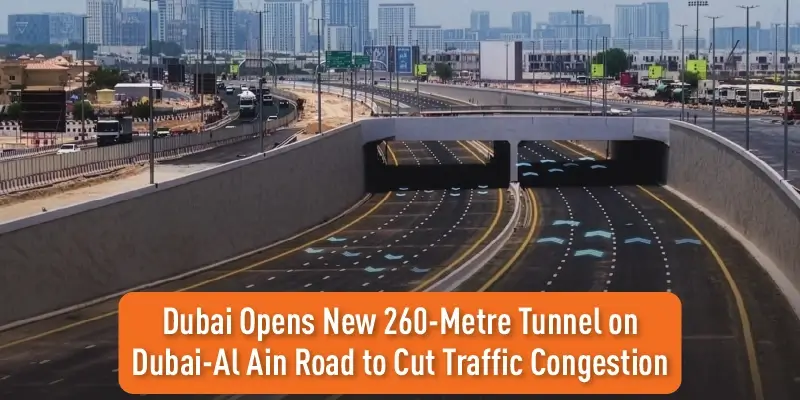

Dubai motorists have a new route designed to make journeys smoother and reduce traffic conflicts, following the opening of a 260-metre vehicle tunnel connecting Dubai-Al Ain Road with Oud Metha Service Road.

The tunnel has been opened by Dubai’s Roads and Transport Authority (RTA) as part of the wider Oud Metha Road and Al Asayel Street Development Project, a major infrastructure initiative focused on improving connectivity and traffic movement across the area.
The single-lane tunnel can accommodate up to 1,200 vehicles per hour and has been designed to reduce traffic overlap and weaving between key roads.
The latest opening adds another important element to Dubai’s expanding road network and forms part of the emirate’s broader efforts to improve mobility as residential, commercial and development areas continue to grow.
Here’s everything you need to know about the new Dubai-Al Ain Road tunnel and how it could affect daily traffic.
Dubai-Al Ain Road Tunnel – Quick Overview
| Category | Details |
| Project | Oud Metha Road and Al Asayel Street Development Project |
| Tunnel Length | 260 metres |
| Tunnel Type | Single-lane vehicle tunnel |
| Capacity | Up to 1,200 vehicles per hour |
| Connection | Dubai-Al Ain Road to Oud Metha Service Road |
| Authority | Dubai Roads and Transport Authority (RTA) |
| Main Purpose | Reduce traffic overlap and weaving |
| Wider Project | Oud Metha Road and Al Asayel Street Development |
| Location | Dubai, UAE |
What Is the New Dubai-Al Ain Road Tunnel?
The 260-metre tunnel in Dubai motorists can now use provides a dedicated connection between Dubai-Al Ain Road and Oud Metha Service Road.
Rather than requiring vehicles to navigate overlapping movements at surface-level roads, the tunnel creates a more direct route between the two roads.
This is particularly important in an urban environment where multiple traffic movements converge within a relatively small area.
According to RTA, the tunnel is specifically designed to reduce traffic overlap and weaving, helping motorists move more smoothly between Dubai-Al Ain Road and Oud Metha Service Road.
Why Is the Dubai-Al Ain Road Tunnel Important?
Dubai-Al Ain Road is an important part of the emirate’s wider road network, connecting major urban areas and supporting traffic movement towards Al Ain.
Improving connections around this corridor can help:
- Reduce traffic conflicts
- Improve road connectivity
- Minimise unnecessary weaving
- Increase traffic efficiency
- Support smoother journeys
- Improve access between major roads
- Strengthen Dubai's road infrastructure
The new tunnel therefore represents more than a standalone road improvement. It is part of Dubai’s continued strategy of developing grade-separated infrastructure to accommodate growing traffic demand.
How Will the 260-Metre Tunnel Help Reduce Traffic Congestion?
One of the key objectives of the Dubai-Al Ain Road project is to create smoother traffic movements by separating conflicting vehicle flows.
The new tunnel provides a dedicated route between Dubai-Al Ain Road and Oud Metha Service Road, allowing vehicles to avoid some of the traffic overlap that can occur when several movements share the same surface-level junction.
With a capacity of up to 1,200 vehicles per hour, the tunnel provides additional movement capacity while helping streamline traffic through the area.
For motorists, this could translate into:
Less Traffic Weaving
Drivers have a more direct connection between the two roads, reducing the need for complicated lane changes.
Smoother Traffic Flow
Separating traffic movements can help prevent vehicles from interfering with one another at busy points.
Better Road Connectivity
The tunnel strengthens the connection between Dubai-Al Ain Road and the surrounding Oud Metha road network.
Improved Journey Experience
More predictable traffic movement can make daily journeys smoother and less stressful.
Part of a Much Larger Dubai Road Project
The new tunnel is not an isolated development.
It forms part of the Oud Metha Road and Al Asayel Street Development Project, which is being implemented as part of Dubai’s wider road infrastructure development strategy.
The broader project includes the development of four major intersections, bridges extending approximately 4.3 kilometres, and new roads covering around 14 kilometres.
The project is expected to serve more than 420,000 residents by 2030.
These improvements are designed to strengthen connections between important areas including:
- Zabeel
- Al Jaddaf
- Oud Metha
- Umm Hurair
- Latifa Hospital
- Al Wasl Club
- Dubai-Al Ain Road
- Al Khail Road
What Other Improvements Are Included in the Project?
The wider project includes several infrastructure upgrades designed to address different traffic movements.
Upgraded Major Intersections
Four major intersections are being improved to increase capacity and reduce traffic conflicts.
New Bridges
The project includes bridges spanning approximately 4.3 kilometres, creating grade-separated routes for important traffic movements.
Road Extensions and Widening
Approximately 14 kilometres of roads are being developed or improved to strengthen connectivity across the corridor.
Additional Traffic Lanes
Several existing routes are being widened to increase vehicle capacity and improve traffic movement.
Dedicated Traffic Movements
New ramps, bridges and the tunnel are designed to separate conflicting movements and provide more direct connections.
How Will the Project Improve Dubai Traffic?
The wider development is expected to deliver significant improvements in traffic capacity and journey times.
RTA previously stated that the project will increase the capacity of Oud Metha Road from 10,400 vehicles per hour to 15,600 vehicles per hour in both directions, representing a 50% increase.
It is also designed to reduce journey time from approximately 20 minutes to five minutes, an improvement of 75%.
These improvements demonstrate how individual infrastructure elements, including the new tunnel, work together as part of a larger traffic-management strategy.
Dubai-Al Ain Road Project and the Wider Road Network
The new tunnel also fits into the broader development of Dubai-Al Ain Road.
RTA’s Dubai-Al Ain Road improvement programme has included major upgrades such as widening the road from three to six lanes in both directions, constructing service roads and developing free-flow intersections.
The wider Dubai-Al Ain Road improvement project is designed to increase capacity from 6,000 to 12,000 vehicles per hour and reduce travel time across the 17-kilometre section from 16 minutes to eight minutes.
This means the latest tunnel opening should be viewed as part of a much wider transformation of Dubai’s strategic road network.
Who Will Benefit From the New Tunnel?
The new Dubai-Al Ain Road tunnel is expected to benefit motorists travelling through the Oud Metha and surrounding areas.
Potential beneficiaries include:
- Daily commuters
- Residents of Oud Metha
- Motorists travelling towards Dubai-Al Ain Road
- Drivers accessing Oud Metha Service Road
- Residents and visitors travelling between Al Jaddaf and surrounding districts
- Commercial and service traffic using the wider road network
As Dubai continues to experience population growth and urban development, road infrastructure improvements are becoming increasingly important for maintaining efficient mobility.
Why Dubai Is Investing in Grade-Separated Roads
One of the biggest challenges in a rapidly developing city is managing traffic where multiple routes intersect.
Traditional intersections can create delays when vehicles travelling in different directions compete for the same road space.
Bridges, tunnels and dedicated ramps offer another solution by allowing different traffic movements to operate independently.
The 260-metre tunnel in Dubai has opened is a clear example of this approach. By providing a dedicated underground connection, it helps reduce overlapping movements and traffic weaving.
This approach is becoming increasingly common across Dubai’s major RTA road projects, particularly in areas experiencing rapid residential and commercial development.
Dubai Road Infrastructure 2026: A Growing Network
The new tunnel is one of several major infrastructure developments taking place across Dubai in 2026.
RTA is continuing to invest in:
- New tunnels
- Flyovers and bridges
- Road widening
- Service roads
- Smart traffic systems
- Improved intersections
- Dedicated ramps
- Better connections between major highways
These projects are intended to keep Dubai’s road network ahead of population growth and increasing vehicle demand.
The approach also supports Dubai’s long-term vision of creating an efficient, integrated and technology-driven mobility network.
What Does the New Tunnel Mean for Daily Drivers?
For motorists, the biggest advantage is likely to be simpler traffic movement.
Instead of navigating overlapping traffic movements at road level, drivers using the new connection can follow a dedicated route between Dubai-Al Ain Road and Oud Metha Service Road.
The tunnel’s 1,200-vehicle-per-hour capacity also provides additional infrastructure to accommodate traffic demand.
As the remaining components of the wider project are completed, motorists could see further improvements in connectivity, road capacity and journey reliability.
What Comes Next for Dubai's Road Network?
The opening of the new tunnel is another step in Dubai’s ongoing programme of road development.
RTA’s continued investment in bridges, tunnels, service roads and upgraded intersections demonstrates the emirate’s focus on keeping its transport infrastructure aligned with rapid urban expansion.
The Dubai traffic improvements being delivered across different corridors are designed not only to address today’s congestion but also to prepare the network for future demand.
Final Insights
The opening of the Dubai-Al Ain Road tunnel marks another important milestone in Dubai’s ongoing efforts to improve road connectivity and reduce traffic conflicts.
The new 260-metre, single-lane tunnel provides a direct connection between Dubai-Al Ain Road and Oud Metha Service Road, with a capacity of up to 1,200 vehicles per hour. Its primary purpose is to reduce traffic overlap and weaving, helping create smoother movements for motorists.
As part of the wider Oud Metha Road and Al Asayel Street Development Project, the tunnel works alongside new bridges, road improvements and intersection upgrades to create a more efficient transport network.
With major Dubai road infrastructure 2026 projects continuing across the emirate, motorists can expect further improvements aimed at reducing congestion, increasing capacity and making everyday journeys faster and more convenient.
Stay Connected with the Latest UAE Transport & Automotive News
Stay informed with the latest updates on Dubai RTA projects, road infrastructure, traffic improvements, road safety, smart mobility, electric vehicles, autonomous transport and automotive developments across the UAE.
Guest Blog Submission
Do you have a passion about transportation, mobility or the UAE automotive industry?
We welcome original articles covering Dubai road projects, smart mobility, traffic management, road safety, vehicle technology, electric vehicles, automotive trends and the future of transportation.
Share your expertise and become part of our growing contributor community. We welcome professionals, entrepreneurs, marketers, automotive enthusiasts and industry thought leaders to contribute original, informative and engaging content.
Frequently Asked Questions
What is the new Dubai-Al Ain Road tunnel?
The new tunnel is a 260-metre, single-lane vehicle tunnel connecting Dubai-Al Ain Road with Oud Metha Service Road. It forms part of the Oud Metha Road and Al Asayel Street Development Project.
What is the capacity of the 260-metre tunnel?
The tunnel can accommodate up to 1,200 vehicles per hour.
How will the Dubai-Al Ain Road tunnel reduce congestion?
The tunnel provides a dedicated connection between Dubai-Al Ain Road and Oud Metha Service Road, helping reduce traffic overlap and weaving and allowing vehicles to move more smoothly.
Which project does the new tunnel belong to?
The tunnel is part of the Oud Metha Road and Al Asayel Street Development Project, which includes four major intersection upgrades, bridges and new road infrastructure.
What other improvements are included in the Oud Metha project?
The wider project includes approximately 4.3 kilometres of bridges and 14 kilometres of roads, along with intersection upgrades and additional road-capacity improvements.
How will Dubai-Al Ain Road benefit from wider infrastructure improvements?
RTA’s broader Dubai-Al Ain Road improvement programme includes road widening, service roads and free-flow intersections. The programme is designed to increase capacity and reduce journey times along key sections of the corridor.
Why is Dubai building more tunnels and bridges?
Grade-separated infrastructure allows different traffic movements to operate more independently. This can reduce intersection conflicts, improve traffic flow, increase road capacity and support Dubai’s growing population and urban development.


