

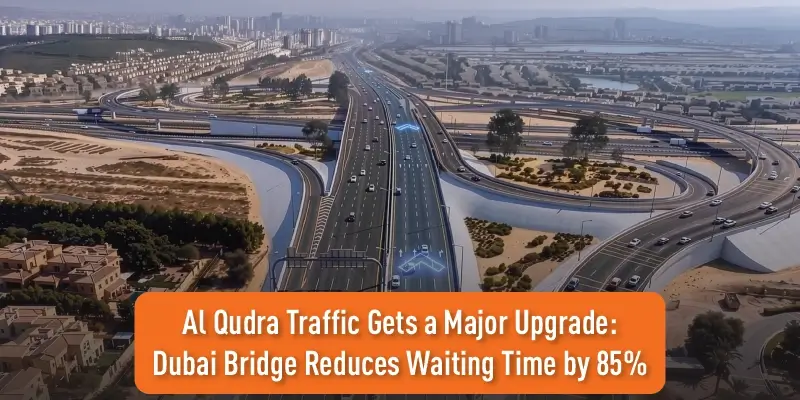

Dubai motorists travelling along Al Qudra Road can now expect smoother journeys and shorter delays following the opening of a new 700-metre, four-lane bridge at the intersection of Al Qudra Road and Sheikh Zayed bin Hamdan Al Nahyan Street.

Opened by Dubai’s Roads and Transport Authority (RTA) in August 2026, the bridge forms part of the wider Al Qudra Road Development Project, one of the emirate’s major ongoing road infrastructure initiatives.
The latest upgrade is expected to make a significant difference to Al Qudra traffic in Dubai, with intersection waiting time projected to fall by 85%, from around 393 seconds to just 60 seconds. The intersection’s overall capacity will also increase from approximately 7,800 vehicles per hour to 19,400 vehicles per hour.
With additional bridges, ramps and service roads planned, the project is designed to create a faster and more continuous traffic corridor across some of Dubai’s fastest-growing residential and development areas.
Here’s everything you need to know about the latest Al Qudra bridge in Dubai upgrade and what it means for motorists.
Al Qudra Road Upgrade – Quick Overview
| Category | Details |
| Project | Al Qudra Road Development Project |
| Latest Bridge | 700-metre, four-lane bridge |
| Location | Al Qudra Road and Sheikh Zayed bin Hamdan Al Nahyan Street |
| Traffic Capacity | 7,800 to 19,400 vehicles per hour |
| Waiting Time Reduction | 85% |
| Waiting Time | Approximately 393 seconds to 60 seconds |
| Journey Time Reduction | 9.4 minutes to 2.8 minutes |
| Road Development | 11.6 km of Al Qudra Road |
| Communities Served | Arabian Ranches, Motor City, Studio City, DAMAC Hills, Mudon and others |
| Beneficiaries | More than 400,000 residents and visitors |
What Is the New Al Qudra Bridge?
The new Al Qudra bridge in Dubai is a 700-metre structure designed to carry traffic through the intersection with Sheikh Zayed bin Hamdan Al Nahyan Street.
The four-lane bridge can accommodate up to 6,000 vehicles per hour and is designed to improve traffic movement towards Al Qudra City. It also completes the main traffic configuration at the intersection following the opening of the opposite bridge earlier in 2026.
By allowing traffic to move more efficiently over the intersection instead of relying entirely on signal-controlled movements, the bridge is expected to reduce bottlenecks and improve journey reliability.
How Much Will Al Qudra Traffic Improve?
One of the biggest highlights of the project is the expected reduction in waiting time.
According to RTA, the upgraded intersection will increase capacity from 7,800 vehicles per hour to 19,400 vehicles per hour. At the same time, waiting time is expected to fall by 85%, from approximately 393 seconds to only 60 seconds.
This represents a major Dubai traffic improvement, particularly for motorists travelling during busy periods.
The wider Al Qudra Road project is also expected to reduce travel time along the upgraded corridor by around 70%, bringing the journey down from approximately 9.4 minutes to 2.8 minutes.
Why Is Al Qudra Road Important for Dubai?
Al Qudra Road is one of Dubai’s important east-west transport corridors. It connects several residential communities and development areas with the emirate’s wider strategic road network.
The upgraded corridor extends between Sheikh Mohammed bin Zayed Road and Emirates Road, passing through Sheikh Zayed bin Hamdan Al Nahyan Street before continuing towards Al Qudra City.
The route serves major communities and developments including:
- Arabian Ranches 1 and 2
- Dubai Motor City
- Dubai Studio City
- Akoya
- Mudon
- DAMAC Hills
- The Sustainable City
- Town Square
- Mira
- DAMAC Hills 2
The improvements are therefore expected to benefit a large number of daily commuters, residents and visitors travelling through these areas.
What Are the Major Features of the Al Qudra Road Project?
The latest bridge is only one component of a much larger Dubai road projects 2026 initiative.
The overall project includes several major infrastructure improvements designed to increase capacity and improve traffic movement.
1. New 700-Metre Bridge
The newly opened bridge provides four lanes and accommodates traffic moving along the Al Qudra corridor.
It is designed to improve traffic flow towards Al Qudra City and reduce delays at one of the corridor’s important intersections.
2. 500-Metre Ramp Bridge
Another 500-metre bridge is being developed to carry traffic from Al Qudra Road towards Jebel Ali via Sheikh Zayed bin Hamdan Al Nahyan Street.
This connection will provide more direct movement between key routes and reduce pressure on existing intersections.
3. 900-Metre Bridge
A further 900-metre bridge will serve motorists travelling towards Downtown Dubai and Dubai International Airport.
The additional connection is expected to improve traffic distribution and provide more efficient movement towards major destinations.
4.Three Kilometres of Service Roads
The project also includes approximately three kilometres of service roads on both sides of Sheikh Zayed bin Hamdan Al Nahyan Street.
These roads will improve access to surrounding developments while helping separate local traffic from through traffic.
How Will the Project Reduce Dubai Traffic Congestion?
Traffic congestion often occurs when large volumes of vehicles converge at major intersections.
The Al Qudra development tackles this issue by increasing road capacity, introducing grade-separated bridges and providing additional ramps and service roads.
Instead of forcing all vehicles through the same signal-controlled junction, the upgraded infrastructure allows traffic to move through dedicated routes.
This can help:
- Reduce intersection bottlenecks
- Improve traffic flow
- Shorten waiting times
- Increase vehicle capacity
- Improve connectivity between communities
- Make journeys more predictable
- Reduce pressure on surrounding roads
The result is expected to be a significant improvement in Al Qudra Road traffic as more components of the project become operational.
Which Areas Will Benefit From the Al Qudra Upgrade?
The project serves several residential and commercial areas along the Al Qudra corridor.
More than 400,000 residents and visitors are expected to benefit from the wider improvements.
Communities likely to experience improved access include:
Arabian Ranches
Residents travelling towards Al Qudra Road, Sheikh Zayed bin Hamdan Al Nahyan Street and surrounding areas can benefit from smoother connections.
Dubai Motor City
The project strengthens connectivity for one of Dubai’s major residential and automotive-focused communities.
Dubai Studio City
Improved road capacity can help motorists travelling between Studio City, Al Qudra Road and neighbouring communities.
DAMAC Hills and Mudon
The upgraded corridor provides more efficient access for residents travelling towards Emirates Road and other strategic highways.
Town Square and DAMAC Hills 2
Further improvements to Al Qudra Road and the surrounding development zone are expected to make access to these growing communities easier.
More Al Qudra Road Improvements Are Coming
The bridge opening does not mark the end of the project.
RTA is continuing work on additional ramps and road improvements, with further bridge infrastructure expected to open during the fourth quarter of 2026.
These include ramps designed to allow traffic to move in different directions without disrupting the main carriageways.
The wider development also includes:
- Widening a 3.4-kilometre section of Al Qudra Road
- Increasing the number of lanes in both directions
- Constructing a new 4.8-kilometre road
- Connecting the new road directly with Emirates Road
- Widening both sides of Emirates Road over 4.8 kilometres
Together, these improvements are designed to create a more connected and efficient road network around Dubai’s growing communities.
How Will the Al Qudra Upgrade Benefit Daily Drivers?
For everyday motorists, the most noticeable benefit could be less time spent waiting at major intersections.
Shorter Waiting Times
The 85% reduction in waiting time is expected to significantly reduce delays at the upgraded intersection.
Faster Journeys
The wider project is designed to reduce journey time along the upgraded Al Qudra corridor from 9.4 minutes to 2.8 minutes.
Better Traffic Flow
Grade-separated bridges and additional ramps will allow more vehicles to move continuously through the corridor.
Improved Connectivity
The project creates stronger connections between Al Qudra Road, Emirates Road, Sheikh Mohammed bin Zayed Road and Sheikh Zayed bin Hamdan Al Nahyan Street.
Support for Growing Communities
As Dubai’s residential and commercial areas continue to expand, upgraded road infrastructure can provide the capacity required to support increasing traffic demand.
What Does This Mean for Dubai's Road Infrastructure?
The Al Qudra development is more than a single bridge project. It represents Dubai’s continued investment in large-scale road infrastructure designed to keep pace with urban expansion.
The wider project covers approximately 11.6 kilometres of Al Qudra Road, with bridges across the development reaching a combined length of around 4,000 metres according to the latest RTA update.
By improving major intersections and expanding road capacity, the project supports Dubai’s broader mobility objectives while helping accommodate future residential and economic growth.
Al Qudra Traffic Dubai: What Drivers Should Expect
With the new bridge already operational and additional ramps scheduled later in 2026, motorists can expect continued changes to traffic patterns around the Al Qudra and Sheikh Zayed bin Hamdan Al Nahyan Street corridor.
Drivers should remain attentive to temporary diversions, lane changes and updated road signs while construction work continues.
Once the remaining infrastructure is completed, the corridor is expected to provide smoother, more continuous movement between Al Qudra City, Emirates Road and other major destinations.
Closing Insights
The latest Al Qudra bridge in Dubai upgrade represents a major step forward for Dubai’s transport infrastructure.
With the new 700-metre bridge now open, intersection capacity is set to rise substantially while waiting time is expected to fall by 85%. The wider project is also targeting a significant reduction in journey times along the corridor, supported by additional bridges, ramps, service roads and lane expansions.
For thousands of motorists travelling through Dubai’s growing western and southern communities, these improvements could mean shorter waits, smoother journeys and better-connected roads.
As more components of the project open throughout 2026, the Al Qudra corridor is set to become an increasingly efficient part of Dubai’s strategic road network.
Stay Updated with the Latest UAE Transport & Automotive News
Stay informed with the latest updates on Dubai RTA projects, road infrastructure, traffic improvements, smart mobility, road safety, electric vehicles, autonomous transport, public transportation and automotive developments across the UAE.
Guest Blog Submission
Passionate about transportation, mobility or the UAE automotive industry?
We welcome original articles covering Dubai road projects, smart mobility, traffic management, road safety, vehicle technology, electric vehicles, automotive trends and the future of transportation.
Share your expertise and become part of our growing contributor community. We welcome professionals, entrepreneurs, marketers, automotive enthusiasts and industry thought leaders to contribute original, informative and engaging content.
Frequently Asked Questions
What is the new Al Qudra bridge in Dubai?
The new Al Qudra bridge is a 700-metre, four-lane bridge at the intersection of Al Qudra Road and Sheikh Zayed bin Hamdan Al Nahyan Street. It forms part of Dubai’s wider Al Qudra Road Development Project.
How much does the Al Qudra bridge reduce traffic waiting time?
The upgraded intersection is expected to reduce waiting time by 85%, from approximately 393 seconds to 60 seconds.
How much will traffic capacity increase?
The intersection’s overall capacity is expected to increase from around 7,800 vehicles per hour to 19,400 vehicles per hour.
Which areas benefit from the Al Qudra Road project?
The project serves several major communities, including Arabian Ranches, Dubai Motor City, Dubai Studio City, Mudon, DAMAC Hills, Town Square and DAMAC Hills 2, among others.
Will more bridges be opened on Al Qudra Road?
Yes. Additional ramp bridges are scheduled to open later in 2026, including a 500-metre bridge towards Jebel Ali and a 900-metre bridge serving traffic towards Downtown in Dubai and Dubai International Airport.
How much will the Al Qudra project reduce journey time?
The wider Al Qudra Road Development Project is expected to reduce travel time along the upgraded corridor by approximately 70%, from 9.4 minutes to 2.8 minutes.


