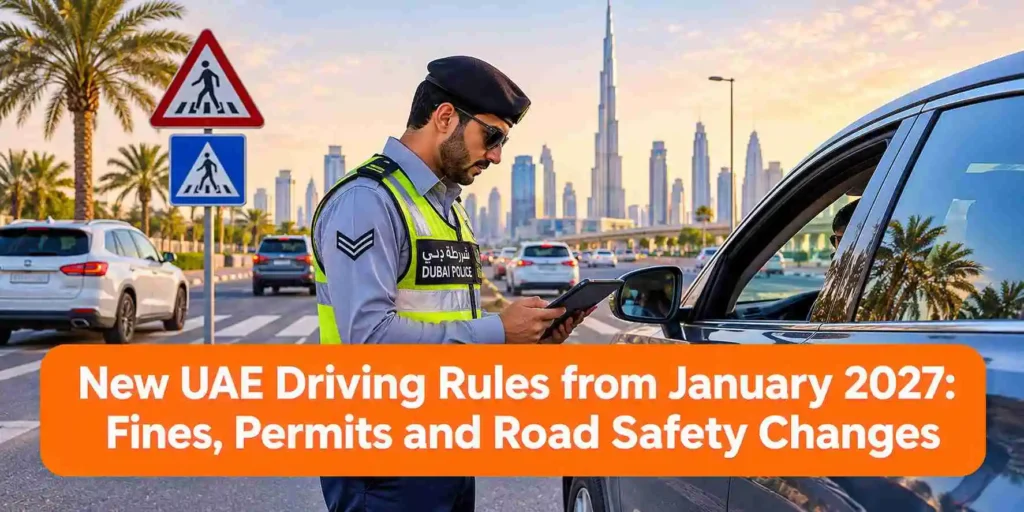
The UAE is introducing new traffic regulations from January 1, 2027, bringing important changes for motorists, learner drivers, e-scooter riders and delivery drivers. The updated rules aim to improve road safety, establish clearer permit requirements and strengthen vehicle regulations across the Emirates.

The changes come under Cabinet Decision No. 174 of 2026, which introduces the executive regulations of Federal Decree-Law No. 14 of 2024 on the Regulation of Traffic.

Some major updates include a maximum driving limit of nine hours within 24 hours, new e-scooter permit requirements, revised learner permit validity and additional tests for certain expired driving licences.

So, what should motorists know about the UAE driving rules 2027? Here is a closer look at the new regulations, permit requirements and road safety changes.

UAE Driving Rules 2027: Key Changes at a Glance

Here are some of the important updates coming into effect:

Regulation New Requirement
Effective date January 1, 2027
Maximum driving duration 9 hours within 24 hours
Minimum e-scooter permit age 15 years
E-scooter permit validity 3 years
Learner permit validity Up to 6 months
Licence expired over 10 years Theory and practical tests
Child safety seats Mandatory for children aged 4 and under
Delivery riders Professional permits and approved equipment
Vehicle registration Two-year option for eligible vehicles

These changes cover different categories of road users and are intended to encourage safer driving practices.

Maximum Driving Limit: Nine Hours Within 24 Hours

One of the significant updates under the new UAE traffic regulations is the introduction of a maximum driving duration of nine hours within any 24-hour period.

Under Article 7, motorists must also avoid driving when excessive tiredness or exhaustion affects their ability to operate a vehicle safely.

The rule highlights the importance of managing driver fatigue, particularly for people who spend extended periods on the road.

The nine-hour limit is not described as nine consecutive hours. Motorists should follow the applicable regulatory guidance and avoid driving when their concentration or reaction time is affected.

New E-Scooter Permit Regulations in the UAE

Electric scooter riders will also need to follow updated permit requirements.

Under Article 59, individuals applying for permits to use electric scooters, electric bicycles and small-wheeled cycles must be at least 15 years old.

The permits will remain valid for three years.

Riders must use designated routes and comply with the requirements established by the relevant authorities.

Personal mobility devices must also meet specific safety standards, including:

These requirements aim to improve visibility and reduce risks for riders and other road users. Local authorities may also introduce additional operating conditions.

Driving Licence Renewal: New Rules for Expired Licences

Drivers with long-expired licences should pay attention to the revised renewal requirements.

Under Article 76, motorists renewing a driving licence that has remained expired for more than 10 years must complete theory and practical tests.

The relevant licensing authority will determine the testing requirements.

This measure aims to ensure that drivers still have the necessary road knowledge and practical skills before returning to the road.

Motorists should check with their respective licensing authorities for the latest renewal procedures.

Learner Driving Permits: Validity Extended to Six Months

The new regulations also extend the validity of learner driving permits.

Under Article 82, learner permits can remain valid for up to six months, compared with the previous three-month period.

Driving lessons must take place under the supervision of an authorised instructor.

Only the learner and instructor are permitted inside the vehicle during driving instruction. Learners may also drive on roads in populated areas when the instructor considers them capable of controlling the vehicle safely.

The extended validity provides additional flexibility for people completing their driving training.

Child Car Seat Rules and Passenger Safety

Child passenger safety remains an important part of the updated regulations.

Under Article 11, children aged four and under must use appropriate child safety seats installed in the rear of the vehicle.

The seats must match the child’s height and weight and meet applicable UAE safety standards.

There are specific exceptions for vehicles without rear seats. A rear-facing child seat may be installed in the front if the airbag is deactivated.

A medical exception is also available when supported by the required medical certificate.

These requirements reinforce the importance of using suitable child restraints instead of relying only on standard seat belts for young children.

New Regulations for Delivery Riders in the UAE

The updated traffic rules also introduce requirements for professional delivery riders.

Under Article 10, delivery drivers must hold valid professional permits and use approved equipment to carry orders.

Important requirements include:

Professional permits under Article 57 have a validity period of two years.

These changes aim to improve delivery rider safety and encourage responsible practices across the UAE’s growing delivery sector.

UAE Driving Fines 2027: What Motorists Should Know

Many motorists are asking whether the new traffic regulations will introduce higher fines from January 2027.

However, Cabinet Decision No. 174 of 2026 does not establish a completely new nationwide fine schedule with revised amounts for every traffic violation.

Instead, it introduces additional requirements and reinforces existing road safety obligations.

Article 14 addresses speeding violations and coordination between licensing and traffic-control authorities regarding road speed limits and violation detection.

Motorists should continue following posted speed limits, pedestrian crossing rules, overtaking restrictions and other applicable traffic regulations.

For accurate UAE driving fines 2027, drivers should check official updates from the Ministry of Interior or the relevant emirate’s traffic authority rather than relying on unverified penalty amounts.

Vehicle Registration and Other Important Changes

The new regulations also introduce changes to vehicle registration.

Eligible light vehicles may receive two-year registration instead of the standard one-year period, subject to approval by the licensing authority.

To qualify, vehicles must have been brand new when first registered, be no more than six years old from their manufacturing date and be individually owned rather than company-owned.

The regulations also establish a limit of five vehicles registered to an individual resident. Up to two vehicles can be registered without additional fees, while further registrations are subject to additional charges.

These provisions offer more flexibility to eligible vehicle owners while establishing clearer registration conditions.

Final Verdicts

The UAE driving rules 2027 introduce important changes for motorists, learner drivers, e-scooter riders and delivery professionals from January 1, 2027.

From the nine-hour driving limit and revised licence renewal tests to three-year e-scooter permits and stricter delivery rider requirements, the regulations place greater emphasis on responsible road usage.

The updated child safety seat requirements and vehicle registration options are also worth understanding.

Although the new regulations do not introduce a completely revised nationwide traffic fine schedule, motorists must continue following existing penalties and updated legal requirements.

Stay connected with Miss Auto UAE for the latest UAE automotive news, traffic regulations, road safety updates, driving licence information and important changes affecting motorists across the Emirates.

Frequently Asked Questions

When will the new UAE driving rules come into effect?

The new regulations under Cabinet Decision No. 174 of 2026 will come into effect on January 1, 2027.

Driving is limited to nine hours within a 24-hour period. Motorists must also avoid driving when fatigue affects their ability to operate a vehicle safely.

Applicants must be at least 15 years old to obtain permits for electric scooters and other covered personal mobility devices.

The new federal regulations provide for a three-year permit validity period.

You must complete theory and practical tests determined by the relevant licensing authority before renewal.

Author

  • Max Wheeler

    Max Wheeler is a automotive writer known for insightful car reviews, maintenance guides, and industry updates. His goal is to help drivers stay informed and confident on the road.

Shares: