The UAE is moving closer to a future where cars can navigate roads with little or no human intervention. From autonomous taxis and advanced driver-assistance technology to driverless delivery and transport solutions, the country has been steadily building the infrastructure needed for smarter mobility.

Now, that progress has entered a new phase.
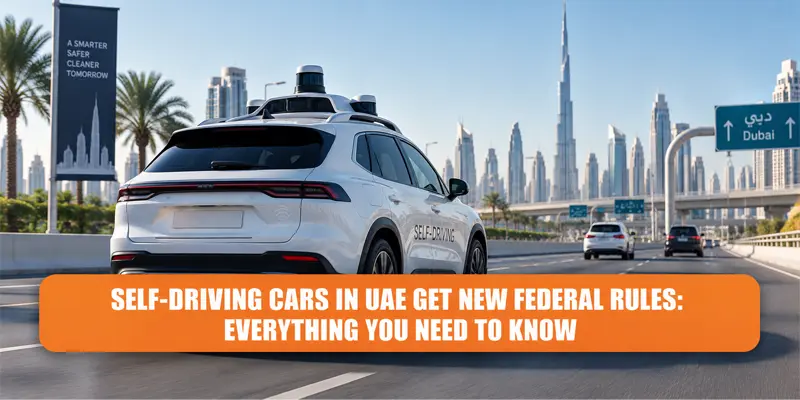
In September 2026, the UAE Cabinet approved a federal law regulating autonomous vehicles, creating a broader regulatory framework for self-driving transport across the country. The move comes as testing and commercial deployments of autonomous vehicles continue to expand in different emirates.
For anyone following self-driving cars in the UAE developments, the new law represents an important step. It is designed to establish rules for inspecting, registering and licensing autonomous vehicles while also setting out requirements for companies testing new vehicle technologies.
So, what does the new federal framework mean for drivers, businesses and the future of mobility in the UAE?
What Is the New UAE Federal Law on Self-Driving Cars?
The UAE Cabinet has approved a new federal regulatory framework for autonomous vehicles as the country prepares for wider adoption of driverless transportation.
The law establishes rules covering several important areas, including:
- Inspection of autonomous vehicles
- Registration requirements
- Licensing of self-driving vehicles
- Testing of new autonomous vehicle technologies
- Responsibilities of vehicle agents and operators
- Responsibilities of passengers
- Roles of federal and local government authorities
The framework is intended to create greater consistency while allowing autonomous mobility technology to develop across the country.
This is particularly significant because individual emirates have already been developing their own approaches to autonomous transportation.
With federal legislation now being introduced, the UAE is moving towards a more unified regulatory environment for driverless cars in the UAE and other autonomous mobility solutions.
Why Does the UAE Need Self-Driving Vehicle Regulations?
Autonomous vehicles are fundamentally different from conventional cars.
A traditional vehicle relies heavily on a human driver to make decisions, control speed, observe road conditions and respond to unexpected situations. A self-driving vehicle, by contrast, depends on sensors, software, artificial intelligence, connectivity and other technologies to perform driving tasks.
This creates new regulatory questions.
Who is responsible for the vehicle?
How should autonomous vehicles be inspected?
What permissions are required for testing?
Who can operate a commercial driverless service?
What responsibilities do passengers and operators have?
The new UAE self-driving car rules aim to establish a clearer framework for these questions while supporting the continued development of autonomous transportation.
The government has also said the framework is intended to encourage cleaner technologies, reduce road pollution and congestion, and improve road safety.
Also Read: Tesla Self Driving Cars Tested in Abu Dhabi
How Will the New Law Affect Autonomous Vehicles in the UAE?
The biggest change is the creation of a federal-level framework for autonomous vehicles.
Under the new system, autonomous vehicles will be subject to requirements involving inspection, registration and licensing. Companies developing or testing autonomous technologies will also operate within a defined regulatory environment.
This could make it easier for manufacturers, technology companies and mobility operators to understand the requirements for bringing autonomous vehicles into the UAE market.
At the same time, the framework recognises that autonomous mobility involves multiple stakeholders.
Vehicle manufacturers and agents, operators, passengers and government authorities all have different responsibilities. Clearly defining these roles is important as autonomous vehicles move from controlled testing environments towards everyday transportation.
For consumers, this could eventually mean greater confidence in the safety and regulatory status of self-driving cars in the UAE.
Dubai Has Already Been Preparing for Driverless Transport
The federal law is not Dubai’s first step towards autonomous mobility.
Dubai already has legislation governing autonomous vehicles. The emirate introduced rules for testing autonomous vehicles in 2019 and later introduced Law No. 9 of 2023, which regulates the operation of autonomous vehicles in Dubai.
The Dubai framework covers areas including technical inspection, licensing and the obligations of stakeholders involved with autonomous vehicles.
This means the latest federal framework builds on an environment where autonomous transport has already been actively tested and developed.
Dubai’s long-term goal is particularly ambitious: 25% of all trips in the emirate are targeted to become smart and driverless by 2030.
Autonomous Cars Are Already Being Tested
Dubai has spent years testing autonomous technologies on public roads.
In 2023, the Roads and Transport Authority (RTA) issued a permit for supervised autonomous vehicle testing in the Jumeirah 1 area. The trial involved autonomous Chevrolet Bolt-based vehicles with a safety driver present.
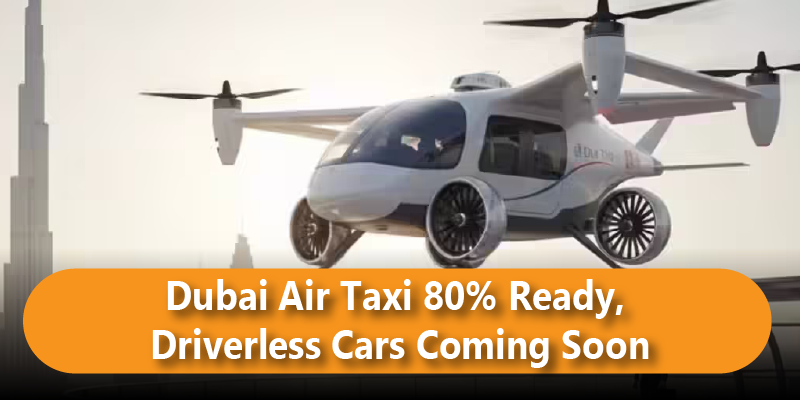
Dubai has also developed a broader ecosystem around autonomous transportation, including autonomous buses, logistics vehicles, delivery robots and other smart mobility solutions.
These developments show that autonomous driving UAE 2026 is no longer simply a futuristic concept. Testing, regulation and commercial preparations are already taking place.
What Does This Mean for Autonomous Taxis in Dubai?
One of the most visible applications of autonomous technology is driverless taxi services.
Dubai has been working towards autonomous taxi operations as part of its wider smart mobility strategy. The latest federal framework comes at a time when commercial autonomous transportation is becoming increasingly visible.
According to the recent report, Dubai has directed the start of official autonomous taxi operations, with an initial fleet of 100 self-driving vehicles.
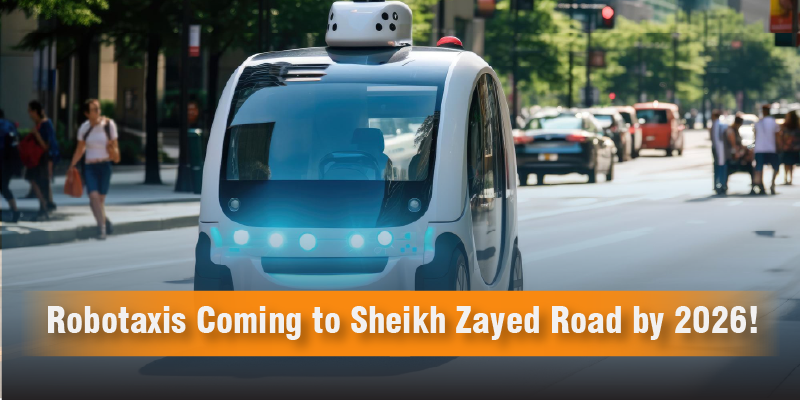
The development of robotaxis could eventually change how residents and visitors travel around the city.
Instead of ordering a conventional taxi driven by a human, passengers could book an autonomous vehicle through a mobility platform and travel without a traditional driver.
This is one reason self-driving vehicle regulations in the UAE are becoming increasingly important.
What Is Happening With Driverless Cars in Abu Dhabi?
Dubai is not the only emirate progressing with autonomous mobility.
Abu Dhabi has also introduced measures to support driverless transportation. The emirate recently issued operating permits for fully driverless vehicles and introduced dedicated blue licence plates to identify autonomous vehicles.
The plates include labels such as “Auto Drive” for commercial autonomous vehicles and “Test” for vehicles operating in trials or pilot programmes.
This identification system can help authorities recognise autonomous vehicles operating on the roads and support monitoring of approved operations.
The development demonstrates that the UAE’s autonomous vehicle ecosystem is expanding beyond a single city.
What Are the Main Benefits of Autonomous Vehicles?
The UAE’s push towards autonomous mobility is connected to several potential benefits.
Improved Road Safety
One of the major objectives of autonomous transportation is improving road safety.
Advanced autonomous systems can continuously monitor their surroundings using cameras, sensors and other technologies. Over time, these systems could help reduce certain types of human driving errors.
The UAE’s federal framework specifically identifies improved road safety and reducing accidents involving autonomous vehicles among its objectives.
Reduced Traffic Congestion
Autonomous vehicles could also contribute to more efficient transportation.
Connected vehicles may communicate with infrastructure and other vehicles, while intelligent routing systems can potentially improve traffic flow.
For a rapidly developing city such as Dubai, reducing congestion is an important part of the wider smart mobility strategy.
Cleaner Transportation
The federal government also expects the framework to encourage clean technologies.
Autonomous technology itself does not necessarily make a vehicle electric, but autonomous systems can be combined with electric and other cleaner transportation technologies.
This could support the UAE’s broader sustainability and smart mobility objectives.
Greater Mobility Options
Driverless taxis, autonomous buses, delivery vehicles and logistics solutions could create additional transportation options.
This could be particularly useful for first- and last-mile journeys, public transport connections and commercial logistics.
What Are the UAE Self-Driving Car Rules Likely to Cover?
While the newly approved federal framework establishes broad areas of regulation, specific requirements will remain important as implementation develops.
Key areas include:
| Regulatory Area | Why It Matters |
| Vehicle inspection | Ensures autonomous vehicles meet required technical standards |
| Registration | Creates an official record of approved vehicles |
| Licensing | Controls which autonomous vehicles can operate |
| Testing | Provides a framework for companies developing new technology |
| Operator responsibilities | Establishes accountability for commercial services |
| Passenger responsibilities | Clarifies expectations for people using autonomous vehicles |
| Government oversight | Coordinates federal and local responsibilities |
Dubai’s existing autonomous vehicle legislation already addresses areas such as technical inspection, licensing procedures and stakeholder obligations.
Will Self-Driving Cars Replace Human Drivers Immediately?
No.
The introduction of federal regulation does not mean every vehicle on UAE roads will suddenly become driverless.
Autonomous transportation will continue to develop through testing, approvals, pilot programmes and controlled commercial deployments.
Different vehicles also operate at different levels of automation. Some technologies assist human drivers, while more advanced systems can perform a larger portion of the driving task.
The transition towards driverless cars UAE is therefore likely to happen gradually as technology, infrastructure, regulations and public acceptance develop together.
What Should UAE Drivers Know About Autonomous Vehicles?
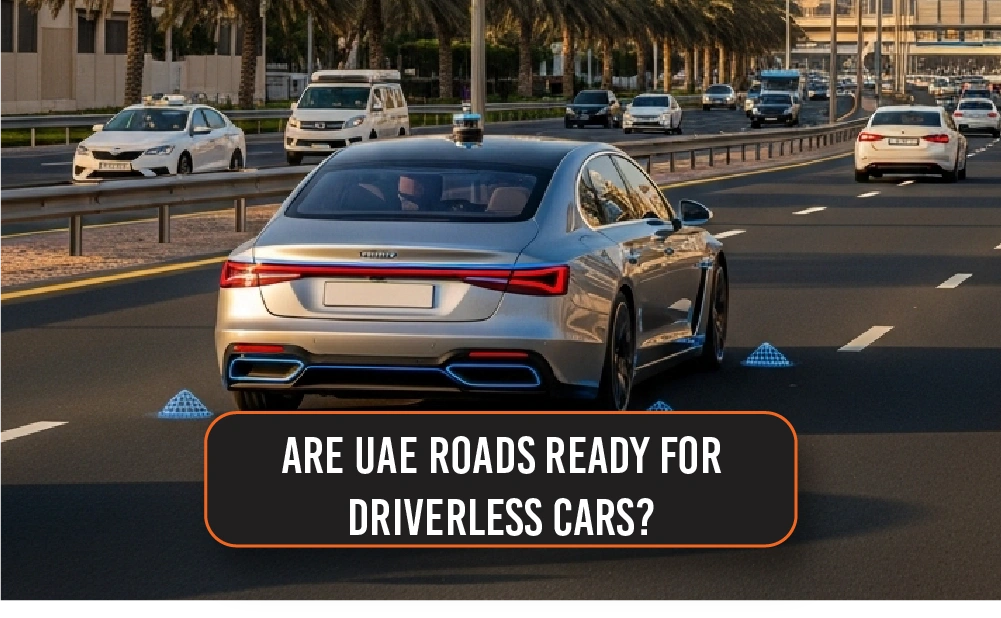
Even drivers who do not own an autonomous vehicle will increasingly encounter them on UAE roads.
As autonomous taxis, testing vehicles and commercial vehicles become more common, conventional drivers may need to understand that these vehicles can behave differently from human-driven cars.
For example, an autonomous vehicle may respond differently to pedestrians, lane markings, traffic signals or unusual road situations.
Drivers should continue following UAE traffic regulations and maintain safe distances around all vehicles, including autonomous ones.
For people considering purchasing an autonomous-capable vehicle, it is also important to understand exactly which functions are automated and which still require human supervision.
What Does the New Law Mean for the Future of Mobility?
The approval of the federal framework signals that autonomous mobility is becoming a more established part of the UAE’s transportation strategy.
Rather than treating self-driving technology only as an experimental concept, the UAE is building a regulatory environment around its testing, registration, licensing and operation.
This could encourage more manufacturers, technology companies and mobility providers to explore opportunities in the country.
It may also help create greater consistency as autonomous transportation expands across different emirates.
The development is particularly significant because Dubai and Abu Dhabi are already moving ahead with autonomous vehicle programmes. A federal framework can provide a broader foundation while local authorities continue managing their own operational requirements.
What Is Next for Self-Driving Cars in the UAE?
The next stage will be watching how the federal framework is implemented in practice.
Manufacturers and operators will need to understand the applicable licensing and inspection requirements. Technology companies will need to comply with testing requirements, while authorities will continue monitoring autonomous vehicles as they become more common.
For consumers, the most visible changes could come through autonomous taxis, public transport, logistics and delivery services.
Dubai’s 2030 target of making 25% of trips smart and driverless shows the scale of the ambition.
As autonomous technology develops, regulation will play an equally important role in determining how quickly it can move from pilot programmes to everyday transportation.
Quick Look: UAE Autonomous Driving in 2026
Before we wrap up, here are the key points to remember:
- The UAE Cabinet has approved a federal law regulating autonomous vehicles.
- The framework covers inspection, registration and licensing.
- Companies will have a clearer framework for testing autonomous vehicle technologies.
- Responsibilities for agents, operators, passengers and authorities are addressed.
- Dubai already has autonomous vehicle legislation.
- Dubai aims for 25% of trips to be smart and driverless by 2030.
- Abu Dhabi has introduced permits and dedicated plates for autonomous vehicles.
- Autonomous taxis and other driverless services are moving towards commercial deployment.
- The federal framework aims to support safety, cleaner technology and reduced congestion.
Final Thoughts
The future of transportation in the UAE is becoming increasingly autonomous.
The approval of the new federal law marks an important milestone for self-driving cars in the UAE, bringing autonomous vehicles into a more structured national regulatory environment.
The legislation does not simply focus on putting driverless vehicles on the roads. It establishes a framework for inspection, registration, licensing and testing while defining responsibilities for the different parties involved.
At the same time, developments in Dubai and Abu Dhabi show that autonomous transportation is already moving beyond the testing stage.
For UAE residents, this means autonomous driving in the UAE 2026 is becoming a reality that will gradually become more visible on everyday roads.
As technology continues to improve, the success of UAE autonomous vehicle laws will depend on maintaining the right balance between innovation, safety, regulation and public confidence.
The UAE has already set ambitious goals for smart mobility. With a federal framework now in place, the journey towards safer, smarter and increasingly driverless transportation has entered its next chapter.
Stay Informed with Miss Auto
From self-driving cars UAE developments and new automotive technologies to road safety, electric vehicles and the latest UAE automotive trends, Miss Auto keeps drivers informed with practical and easy-to-understand automotive content.
Follow Miss Auto for the latest developments shaping the UAE’s rapidly evolving automotive landscape.
FAQs
What are the new UAE self-driving car rules?
The UAE Cabinet has approved a federal framework regulating autonomous vehicles. It establishes rules covering areas such as vehicle inspection, registration, licensing and testing of autonomous vehicle technologies.
Are self-driving cars legal in the UAE?
Autonomous vehicles can operate within approved regulatory frameworks and programmes. Dubai already has specific legislation regulating autonomous vehicle operations, while the newly approved federal law establishes a broader national framework.
What is the UAE's goal for driverless transportation?
Dubai aims for 25% of all trips to be smart and driverless by 2030.
Are autonomous cars already operating in Dubai?
Yes. Dubai has been testing autonomous vehicles for several years and has been moving towards commercial autonomous taxi services. Recent developments also include fully driverless Apollo Go vehicles being made available to some riders through the Uber platform in selected areas.
What is happening with autonomous vehicles in Abu Dhabi?
Abu Dhabi has issued operating permits for fully driverless vehicles and introduced dedicated blue licence plates identifying commercial autonomous vehicles and vehicles involved in testing programmes.
Will all cars in the UAE become self-driving?
No. The new law creates a regulatory framework for autonomous vehicles but does not mean all vehicles will immediately become driverless. Adoption will depend on technology, approvals, infrastructure, testing and commercial deployment.