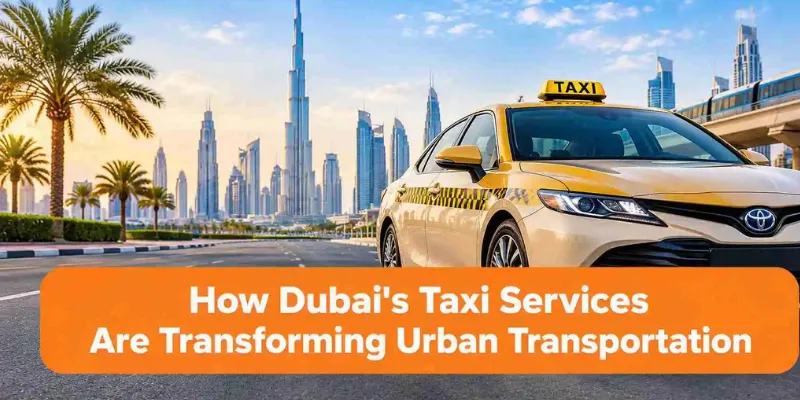
Dubai’s transportation network is evolving rapidly as the emirate continues to invest in smarter, safer and more sustainable mobility solutions. Among the different modes of transportation, taxi services in Dubai play an essential role in connecting residents, tourists and business travellers to important destinations across the city.
The growing demand for convenient transportation is reflected in the latest passenger figures. According to Dubai’s Roads and Transport Authority (RTA), taxi services carried approximately 209 million passengers across more than 120 million trips in 2025. The figures highlight the importance of taxis within Dubai’s expanding public transportation network.

Alongside increasing passenger demand, technological advancements, electric vehicle adoption and improved service standards are changing how people travel around the emirate.

So, how are Dubai taxi services transforming urban transportation? Here is a closer look at the latest developments, smart mobility initiatives and future trends shaping the city’s taxi industry.

Dubai Taxi Services: A Growing Part of Urban Transportation

Taxi services have become an important part of Dubai’s everyday transportation system. Whether travelling to shopping malls, airports, hotels, business districts or residential communities, passengers rely on taxis for convenient point-to-point journeys.

In 2025, Dubai’s taxi sector transported more than 209 million passengers through over 120 million trips. The sector also accounted for approximately 27% of all users of public transport, shared mobility and taxis.

The city’s taxi network includes several major operators, such as Dubai Taxi Company, Kabi Taxi, National Taxi, Arabia Taxi and Metro Taxi.

With an expanding fleet and increasing passenger demand, operators are focusing on improving vehicle availability, service quality and booking convenience.

These developments demonstrate how taxi services in Dubai are becoming more than just an alternative to private vehicles. They are an essential component of the emirate’s wider urban mobility strategy.

These developments demonstrate how taxi services in Dubai are becoming more than just an alternative to private vehicles. They are an essential component of the emirate’s wider urban mobility strategy.

Smart Taxi Services UAE: Technology Is Changing the Passenger Experience

Technology is one of the biggest factors transforming Dubai’s taxi industry.

Traditional street-hailing methods are gradually being complemented by digital booking platforms, allowing passengers to request rides through smartphones without searching for available taxis on the road.

E-hailing platforms provide convenient booking options, estimated arrival times, digital payments and journey information. These features help passengers plan their trips more efficiently.

According to RTA figures reported in 2026, approximately 45% of taxi trips in 2025 were completed through e-hailing platforms, demonstrating the growing popularity of digital booking channels.

Smart technology also supports taxi operators by improving vehicle allocation, monitoring fleet performance and responding to passenger demand during busy periods.

These developments are helping establish smart taxi services in the UAE as an important part of Dubai’s digital transportation ecosystem.

RTA Introduces a Five-Star Rating System for Taxi Companies

Another important development in Dubai’s taxi industry is the introduction of a five-star rating system by the Roads and Transport Authority.

Announced in November 2026, the initiative aims to improve service quality, encourage competition among taxi operators and strengthen passenger satisfaction.

The rating framework evaluates taxi companies using 18 performance indicators grouped under four major pillars: sustainability, technology, accountability and reliability.

Some of the important assessment areas include:

Companies achieving five-star ratings will receive seven additional taxi plates, while four-star operators will receive five additional plates.

Companies receiving three stars or fewer will be required to introduce improvements to their service standards.

Passengers will also be able to view company ratings through smart screens inside taxis, providing greater transparency when choosing transportation services.

This initiative highlights Dubai’s continued focus on improving the overall passenger experience through accountability and service excellence.

Sustainable Mobility: Electric and Hybrid Taxis Across Dubai

Environmental sustainability is another important factor influencing Dubai taxi industry trends.

Environmental sustainability is another important factor influencing Dubai taxi industry trends.

According to Gulf News, 12,380 of the 14,346 taxis operating in Dubai in 2025 were electric or hybrid vehicles. The green vehicle share across the taxi and limousine fleet also exceeded 72%.

These developments reflect the emirate’s commitment to reducing emissions and supporting environmentally responsible transportation.

Electric taxis offer several potential advantages, including reduced tailpipe emissions, quieter operation and lower energy consumption compared with conventional petrol-powered vehicles.

The RTA also aims to transition its entire taxi fleet to electric and hydrogen-powered vehicles by 2040, supporting the broader objective of achieving zero-emission public transport by 2050.

The continued development of charging infrastructure will play an important role in supporting this transition.

As more electric vehicles enter commercial taxi operations, passengers can expect to see sustainable transportation becoming an increasingly familiar part of everyday travel.

How Dubai Taxi Services Support Tourism and Business Travel

Dubai welcomes millions of international visitors every year, making reliable transportation essential for the tourism and hospitality industries.

Taxi services provide convenient connections between airports, hotels, shopping destinations, tourist attractions and major business districts.

For visitors unfamiliar with the city’s road network, taxis offer a straightforward way to reach their destinations without navigating public transport routes or arranging private vehicle rentals.

Airport taxi services are particularly important for international travellers arriving at Dubai International Airport and other transport hubs.

Dedicated services, digital booking facilities and different vehicle categories also help accommodate families, business travellers and passengers with specific mobility requirements.

For residents, taxis provide an alternative when public transportation routes do not directly connect their starting point and destination.

This flexibility strengthens Dubai public transportation by complementing other mobility options and supporting the city’s growing tourism and business activities.

Integration with Dubai Public Transportation

Dubai’s transportation strategy focuses on creating a connected network rather than depending on a single mode of travel.

Taxis work alongside the Dubai Metro, Dubai Tram, public buses, marine transport and shared mobility services to provide passengers with different travel options.

For example, commuters can use the Metro for longer journeys and book a taxi to reach destinations that are not conveniently accessible from nearby stations.

Similarly, tourists can combine public transport with taxi journeys when visiting multiple attractions across the city.

In 2025, Dubai’s public transport, shared mobility and taxi services collectively recorded approximately 802.1 million passenger journeys, representing 7.4% growth compared with 2024.

The average daily ridership reached approximately 2.2 million passengers.

These figures demonstrate the increasing demand for connected mobility solutions and the important role of taxis within the wider transportation network.

Better integration between different transport services can also help reduce dependence on private vehicles for everyday journeys.

Improved Safety, Reliability and Passenger Convenience

Passenger safety and service reliability remain important priorities as Dubai’s taxi industry continues to expand.

Modern taxi operations increasingly rely on technology, vehicle monitoring systems and digital platforms to improve operational visibility and support safer journeys.

The five-star rating initiative further strengthens these priorities by assessing driver behaviour, traffic safety, vehicle cleanliness and operational performance.

Passengers also benefit from convenient payment options and digital booking facilities, reducing the need to depend entirely on cash transactions or street-hailing services.

Specialised transportation options, including taxis designed for People of Determination and dedicated services for women and families, help make the network more accessible to different passenger groups.

These improvements contribute to a more comfortable and dependable travel experience for both residents and visitors.

The Future of Dubai Urban Mobility: What Can Passengers Expect?

Dubai’s taxi industry is expected to continue evolving as population growth, tourism and technological innovation create new transportation demands.

Electric vehicles, smart booking platforms and autonomous mobility solutions are likely to play increasingly important roles in the future.

The RTA is also exploring new mobility technologies, including electric autonomous vehicles, while expanding charging infrastructure at public parking facilities and major transportation locations.

Artificial intelligence and intelligent fleet management systems could further improve vehicle allocation, journey planning and operational efficiency.

The expansion of digital payment facilities and real-time booking services will also make taxi journeys more convenient.

As these developments progress, Dubai’s transportation network is expected to become increasingly connected, technology-driven and environmentally responsible.

The focus will remain on providing reliable transportation while improving accessibility, reducing environmental impact and supporting the city’s long-term urban development plans.

Final Verdict

Dubai taxi services are playing an increasingly important role in transforming the emirate’s urban transportation landscape. With more than 209 million passengers served in 2025, the sector continues to demonstrate strong demand and growing importance within the city’s mobility network.

From smart booking platforms and the RTA’s five-star rating system to electric vehicle adoption and improved passenger facilities, several developments are reshaping the future of taxi transportation.

The integration of taxis with the Dubai Metro, public buses and shared mobility services further strengthens the city’s connected transportation ecosystem.

As Dubai continues investing in sustainable mobility and innovative transport technologies, taxi services will remain an essential part of making everyday journeys more convenient, accessible and efficient.

Stay connected with Miss Auto UAE for the latest UAE automotive news, transportation developments, road safety updates, vehicle launches and important mobility trends shaping the Emirates.

Frequently Asked Questions

How many passengers used Dubai taxi services in 2025?

Dubai’s taxi sector transported approximately 209 million passengers through more than 120 million trips in 2025, according to RTA figures.

The five major taxi operators include Dubai Taxi Company, Kabi Taxi, National Taxi, Arabia Taxi and Metro Taxi.

Digital booking platforms, e-hailing applications, electronic payments and smart fleet management systems are improving booking convenience, vehicle availability and passenger experience.

Yes. Dubai operates electric and hybrid taxis as part of its sustainable transportation strategy. The RTA aims to transition its entire taxi fleet to electric and hydrogen-powered vehicles by 2040.

Introduced in November 2026, the system evaluates taxi operators based on customer satisfaction, safety, technology, sustainability, accountability and operational reliability. It aims to encourage better service standards and improve passenger experience.

Author

  • Max Wheeler

    Max Wheeler is a automotive writer known for insightful car reviews, maintenance guides, and industry updates. His goal is to help drivers stay informed and confident on the road.

Shares: