

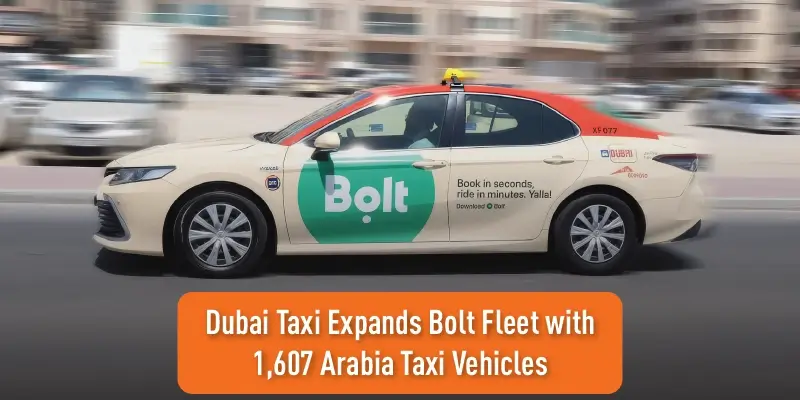

Dubai’s ride-hailing landscape is getting another major boost as Dubai Taxi Company (DTC) partners with Arabia Taxi to add 1,607 vehicles to the Dubai Taxi Bolt fleet. The expansion is designed to increase taxi availability across the emirate, improve fleet utilisation and reduce estimated arrival times during periods of high demand.

The latest move comes as demand for app-based mobility continues to grow in Dubai. By integrating more vehicles into Bolt, DTC and its partners are strengthening the connection between traditional taxi operations and digital booking platforms.
For residents, tourists and business travellers, the expansion could mean more vehicles available when demand rises, potentially creating a faster and more convenient booking experience.
What Is the Latest Dubai Taxi and Bolt Expansion?
Dubai Taxi Company has signed an agreement with Arabia Taxi to integrate 1,607 vehicles into the Bolt ride-hailing platform. The partnership was announced on August 19, 2026, and represents another step in DTC’s strategy to expand its digital mobility network.
The additional vehicles will increase the pool of taxis available to customers through Bolt while helping participating operators make better use of their fleets.
According to the companies, the additional capacity is expected to improve taxi availability during high-demand periods and reduce estimated arrival times.
For Dubai commuters, this is particularly relevant during busy periods when demand for app-based transport can rise sharply.
Why Are 1,607 Arabia Taxi Vehicles Being Added to Bolt?
The primary objective of the agreement is to increase the number of vehicles available through the platform.
When more taxis are connected to an e-hailing network, customers have a larger pool of vehicles to choose from. This can help improve availability when demand increases and potentially reduce the time passengers spend waiting for a ride.
The partnership also focuses on fleet utilisation. Instead of operating vehicles independently of digital booking channels, Arabia Taxi Dubai will gain access to a broader customer base through the Bolt platform.
This creates benefits on both sides: passengers can potentially find taxis more easily, while operators can improve how their vehicles and drivers are utilised.
How Will the Dubai Taxi Bolt Fleet Benefit Passengers?
The most immediate impact is expected to be improved availability.
1. More Taxis on the Platform
Adding 1,607 vehicles gives Bolt customers access to a larger network of taxis across Dubai. This can be particularly useful during periods when booking demand is high.
2. Potentially Shorter Waiting Times
One of the key objectives of the expansion is to reduce estimated arrival times. With more vehicles available, passengers may have a better chance of being matched with a nearby taxi.
3. Faster Digital Booking
The additional vehicles could contribute to a smoother booking process by increasing the supply available through the app.
4. Greater Fleet Utilisation
For Arabia Taxi, integration with Bolt provides an opportunity to connect its vehicles and drivers with a wider pool of customers while improving operational efficiency.
What Does This Mean for Arabia Taxi Dubai?
The agreement is also significant for Arabia Taxi Dubai, as its fleet will gain access to Bolt’s digital ride-hailing ecosystem.
Rawoof Ali, Executive Director of Arabia Taxi, said joining the platform would allow the company’s fleet and drivers to reach a wider customer base and improve operational efficiency.
This means the partnership is not simply about adding vehicles. It also reflects the growing importance of digital platforms in how taxi operators connect with customers.
For fleet operators, app-based bookings can help create additional demand while giving drivers access to customers who prefer booking rides digitally rather than hailing taxis on the street.
How Does the Expansion Support Dubai’s Mobility Strategy?
Dubai has been investing heavily in connected, technology-driven mobility solutions. The latest agreement between DTC, Arabia Taxi and Bolt fits into this broader transformation.
DTC Group CEO Mansoor Rahma Alfalasi said the expansion is intended to improve customer experience as demand for app-based mobility increases. He also noted that integrating Arabia Taxi’s fleet would allow DTC to scale its network more efficiently while supporting Dubai’s move toward smarter and more connected transport services.
This makes the latest Dubai taxi expansion 2026 development more than a simple fleet increase. It demonstrates how traditional taxi services are increasingly being integrated with digital platforms.
Bolt Dubai Taxi Fleet Continues to Grow
The latest addition builds on Bolt’s expanding relationship with DTC.
In 2025, DTC reported that more than 6,000 taxis had been onboarded to the Bolt platform as part of its ambition to build a major e-hailing ecosystem in the UAE.
DTC also entered into an agreement with Kabi by Al Ghurair in 2025. Under that partnership, DTC’s 6,200 taxi vehicles and Kabi’s 3,680 vehicles were set to be integrated into Bolt and Zed platforms, with the aim of increasing availability and reducing waiting times.
The addition of Arabia Taxi’s 1,607 vehicles therefore continues a broader strategy of bringing more taxi capacity into digital booking networks.
Dubai Taxi Fleet Update: A Wider Expansion Strategy
The Dubai taxi fleet update comes during a period of significant growth and consolidation across the UAE mobility sector.
In April 2026, DTC announced the acquisition of 600 new taxi licence plates through an RTA auction. The move was expected to increase its Dubai taxi fleet from 6,217 to 6,817 vehicles, with a phased rollout beginning in July.
DTC also completed its acquisition of National Taxi in July 2026. The transaction created a combined fleet of more than 9,500 vehicles across Dubai and Abu Dhabi and strengthened DTC’s position as the UAE’s largest taxi operator.
These developments show that fleet growth and digital integration are happening simultaneously.
What Does It Mean for Taxi Services Dubai?
For customers using taxi services in Dubai, the expansion could improve access to app-based transport.
Dubai has a large population of residents, a growing tourism sector and significant daily movement between residential communities, business districts, airports, shopping destinations and entertainment areas.
During busy periods, demand can place additional pressure on ride-hailing availability. Increasing the number of vehicles connected to platforms such as Bolt can help operators respond more efficiently.
The addition of 1,607 Arabia Taxi vehicles is therefore particularly relevant to customers who rely on digital booking for daily commutes, airport journeys, business travel and leisure trips.
How Could Peak-Demand Travel Improve?
Peak demand is one of the main situations where the expanded network could make a noticeable difference.
When a large number of passengers request rides simultaneously, the distance between available vehicles and passengers can influence estimated arrival times.
A larger pool of connected taxis can potentially increase the probability that a nearby vehicle is available for a booking.
The companies specifically said the additional vehicles are expected to improve availability during high-demand periods and reduce estimated arrival times.
However, actual waiting times will still depend on factors such as traffic, location, time of day and real-time demand.
What Does the Expansion Mean for Bolt in the UAE?
The latest partnership reinforces Bolt’s growing presence in the UAE mobility market.
In May 2026, Bolt announced plans to expand into Abu Dhabi, initially with a limousine fleet followed by taxis. The move came after strong growth in e-hailing activity, with DTC reporting a 24% year-on-year increase in e-hailing activity during 2025 and a further 9% increase in the first quarter of 2026.
This indicates that Bolt’s strategy is extending beyond Dubai as demand for app-based mobility grows across the UAE.
The addition of Arabia Taxi’s vehicles strengthens the platform’s Dubai operations while contributing to the wider development of Bolt taxi vehicles in the UAE customers can access.
Why Fleet Integration Matters for Dubai’s Future Mobility
Digital fleet integration is becoming an important part of modern urban transportation.
Instead of relying only on individual operators and conventional taxi dispatch systems, integrated platforms can connect customers, drivers and vehicles through a single digital ecosystem.
For Dubai, this approach supports a more connected mobility environment where technology can help match supply with passenger demand.
For operators, integration can provide greater visibility and access to customers. For passengers, it can make booking more convenient.
The Arabia Taxi agreement demonstrates how partnerships between taxi operators and technology platforms can contribute to this transformation.
What Can Dubai Taxi Users Expect Next?
Passengers should not necessarily expect every booking to become instantly faster. Traffic conditions, demand and vehicle availability will continue to influence journey times.
However, the addition of 1,607 vehicles provides additional capacity to the Bolt network and creates the potential for improved availability.
As DTC continues to expand its network and strengthen partnerships, customers could see more options becoming available through digital booking channels.
The latest agreement also suggests that fleet expansion and technology integration will remain important elements of Dubai’s mobility strategy.
Final Thoughts
The addition of 1,607 Arabia Taxi vehicles to Bolt represents another significant development for the Dubai Taxi Bolt fleet and the emirate’s growing digital mobility ecosystem.
The partnership is designed to increase the number of taxis available through Bolt, improve fleet utilisation and reduce estimated arrival times, particularly when demand is high.
For passengers, the biggest potential advantage is greater access to taxis through an app-based booking experience. For Arabia Taxi, the partnership provides access to a wider customer base, while DTC can expand its digital network more efficiently.
The move also arrives during a wider period of fleet growth for DTC, including new taxi licences, the acquisition of National Taxi and continued expansion of its Bolt partnership.
As Dubai continues to develop its smart mobility ecosystem, partnerships that combine established taxi fleets with digital ride-hailing platforms are likely to become increasingly important.
For now, the latest Dubai taxi fleet update gives passengers another reason to expect greater availability and more connected taxi services Dubai as the emirate’s mobility network continues to expand.
Stay Updated with Miss Auto
Stay informed with Miss Auto for the latest UAE automotive and mobility news, Dubai transport developments, new vehicle launches, taxi services, EV updates, RTA announcements, technology-driven mobility trends, vehicle guides and important Dubai taxi expansion 2026 updates.
FAQs
How many Arabia Taxi vehicles have been added to the Bolt platform?
Dubai Taxi Company has partnered with Arabia Taxi to add 1,607 vehicles to the Bolt platform, expanding the number of taxis available to customers across Dubai.
Why is Dubai Taxi adding Arabia Taxi vehicles to Bolt?
The expansion aims to increase taxi availability, improve fleet utilisation, reduce estimated arrival times during periods of high demand and provide customers with a faster booking experience.
Will the new vehicles reduce taxi waiting times in Dubai?
The companies expect the additional vehicles to help reduce estimated arrival times, particularly during periods of high demand. Actual waiting times can still vary depending on traffic, location and real-time demand.
What does the Dubai Taxi Bolt fleet expansion mean for passengers?
Passengers should have access to a larger pool of taxis through Bolt, potentially improving availability and making app-based bookings more convenient.
Is Bolt expanding beyond Dubai in the UAE?
Yes. Bolt announced an expansion into Abu Dhabi in 2026, initially with limousine services and subsequently taxi services, following strong growth in e-hailing demand.

