

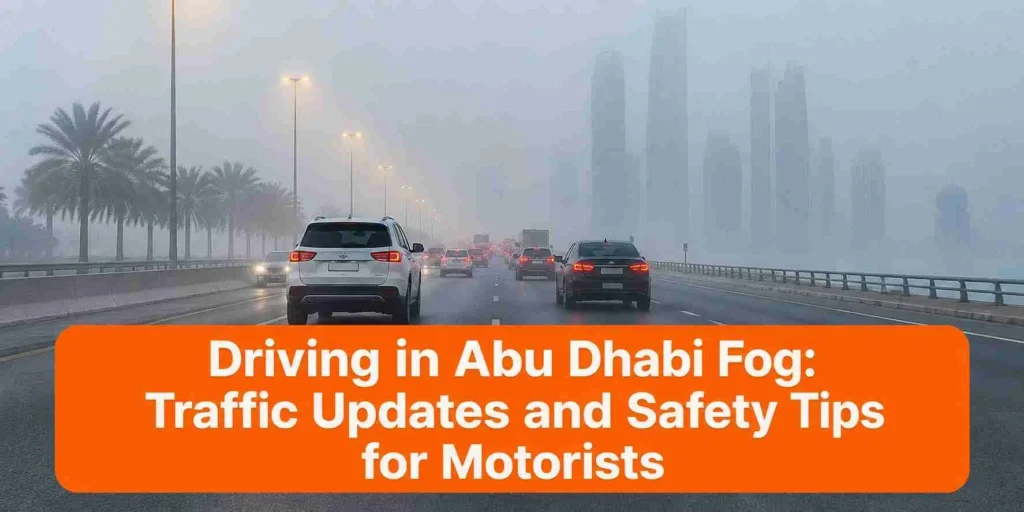

Morning fog can quickly transform a normal commute into a challenging drive, particularly on Abu Dhabi’s major highways and high-speed roads. Reduced visibility makes it harder for motorists to judge distances, identify vehicles ahead and react to sudden changes in traffic.

On September 23, 2026, dense fog affected visibility across Abu Dhabi during the morning commute, slowing traffic on several key routes. Abu Dhabi Police issued a safety alert asking motorists to drive carefully and follow the variable speed limits displayed on road signs and electronic boards. The National Centre of Meteorology (NCM) said foggy conditions were expected to continue until around 8:30am before visibility gradually improved.
For motorists, the latest conditions highlight why knowing the right Abu Dhabi fog driving practices is essential. From adjusting speed to maintaining greater distance and using the correct headlights, small changes in driving behaviour can help reduce risks on fog-affected roads.
What Happened During the Latest Abu Dhabi Fog?
Dense fog reduced horizontal visibility across parts of Abu Dhabi during the September 23 morning rush hour. The conditions resulted in slower-moving traffic and congestion across several major corridors.
Traffic delays were reported along the E11 between Old Rahba and Al Shahama New, while congestion was also visible around the Rabdan interchange, Mohamed Bin Zayed City, Mazyad Mall and connecting routes towards the E30 and E22.
Other affected areas included sections of the E75 near Al Faya Industrial and Al Faya South, as well as the Bani Yas and Mafraq Industrial Area interchanges. Traffic around Zayed International Airport, E20 and Al Khaleej Al Arabi Street was also affected during the morning commute.
These Abu Dhabi traffic updates demonstrate how quickly fog can affect traffic flow, particularly during peak commuting hours.
Abu Dhabi Police Issues Fog Safety Alert
Abu Dhabi Police urged motorists to exercise caution because of reduced horizontal visibility. Drivers were advised to follow the variable speed limits shown on road signs and electronic display boards.
Authorities also reiterated several important precautions for driving in fog Abu Dhabi, including reducing speed, maintaining a safe following distance and using low-beam headlights.
Motorists were also advised against sudden lane changes and overtaking. If visibility becomes extremely poor, drivers should move to a safe location rather than stopping in an active traffic lane.
Abu Dhabi has also developed systems designed to warn motorists about changing weather conditions. These include electronic guidance screens, warning messages, variable speed signs, automated enforcement systems and visibility monitoring technology.
Why Is Fog Driving Dangerous?
Fog creates a combination of visibility and reaction-time challenges. Even when the road itself is clear, motorists may have difficulty identifying vehicles, lane markings, road signs or upcoming junctions.
The biggest danger is that drivers may continue at normal speeds despite being unable to see far enough ahead. At higher speeds, the stopping distance can become significantly longer than the visible road ahead.
Fog can also make vehicles appear suddenly. A car travelling a short distance ahead may become visible only when the gap is already limited. This is why maintaining additional space between vehicles is one of the most important fog safety tips UAE motorists should follow.
Essential Safety Tips for Driving During Fog UAE
Reduce Your Speed
The first step is to slow down according to the conditions and follow the variable speed limits displayed on electronic signs.
Do not assume that the normal speed limit is appropriate when visibility has dropped significantly. A lower speed gives motorists more time to identify hazards and react safely.
Use Low-Beam Headlights
Low-beam headlights should be used during foggy conditions. High beams can reflect off water droplets in the fog and create additional glare, making it more difficult to see.
Abu Dhabi Police has repeatedly advised motorists to avoid high beams during low-visibility conditions.
Maintain a Safe Following Distance
Keep considerably more space between your vehicle and the car ahead. The additional distance provides extra reaction time if the vehicle in front suddenly slows down or stops.
Earlier Abu Dhabi Police guidance has advised motorists to increase the normal safety distance during foggy conditions.
Avoid Sudden Lane Changes
Changing lanes suddenly is particularly risky when visibility is limited. Other drivers may not see your vehicle early enough to react.
Stay in your lane wherever possible, use indicators well in advance and check carefully before changing lanes.
Avoid Overtaking
Overtaking during dense fog can expose motorists to vehicles that may not be visible until they are dangerously close.
Unless absolutely necessary, remain in your lane and maintain a steady, controlled speed.
Abu Dhabi Fog Driving: Quick Safety Guide
| Safety Measure | What Motorists Should Do |
| Speed | Reduce speed according to visibility and displayed limits |
| Headlights | Use low-beam headlights |
| Distance | Maintain a greater gap from the vehicle ahead |
| Lane changes | Avoid sudden manoeuvres |
| Overtaking | Avoid overtaking in dense fog |
| Visibility | Monitor road signs and electronic displays |
| Emergency stop | Move to a safe location instead of stopping in a live lane |
What Should You Do If Visibility Becomes Extremely Poor?
Sometimes fog can become so dense that continuing to drive safely becomes difficult. In such situations, motorists should avoid panic braking or stopping suddenly in the middle of the road.
If possible, continue carefully towards the nearest safe exit or suitable stopping location. Abu Dhabi Police has separately warned motorists about the dangers of stopping in live traffic lanes following incidents involving secondary collisions.
If a vehicle cannot be moved because of an emergency or breakdown, motorists should seek assistance rather than remaining in a dangerous position on the roadway.
How Abu Dhabi Manages Fog-Related Traffic
Abu Dhabi uses a combination of technology and traffic-management measures during unstable weather. Electronic guidance screens, warning messages, variable speed-limit signs, visibility sensors and emergency warning systems can provide motorists with information when conditions deteriorate.
The system can also support traffic management during fog and other weather events by providing warnings about reduced visibility and changing road conditions.
For drivers, this means electronic signs and official alerts should not be ignored. They can provide important information about changing speed limits and road conditions ahead.
Abu Dhabi Traffic Updates: What Motorists Should Check
Before starting an early-morning journey during fog season, motorists should check official weather and traffic updates. Abu Dhabi Police alerts can provide information about reduced visibility, traffic conditions and safety instructions.
The NCM is also an important source for weather-related information, particularly when fog or mist is expected during the early morning.
Planning the journey around these updates can help motorists avoid heavily affected routes or allow additional travel time.
Abu Dhabi Fog Driving
| Factor | Key Information |
| Latest fog disruption | September 23, 2026 |
| Main issue | Reduced horizontal visibility |
| Traffic impact | Delays and congestion on several major roads |
| Police advice | Drive carefully and follow variable speed limits |
| Headlights | Use low beam |
| Driving style | Slow down and avoid sudden manoeuvres |
| Following distance | Increase the gap between vehicles |
| Weather update | Fog expected to gradually improve after around 8:30am |
What Happens Next?
Fog and mist can affect UAE roads during humid periods, particularly during the early morning. Conditions can change quickly, meaning motorists should remain alert even when visibility initially appears acceptable.
Drivers should pay close attention to electronic road signs and official warnings. If variable speed limits are activated, motorists should follow them rather than maintaining the normal road speed.
For Abu Dhabi motorists safety, preparation is just as important as driving technique. Checking weather conditions before leaving, allowing additional journey time and remaining patient can make a significant difference during foggy commutes.
Final Thoughts
The latest Abu Dhabi fog disruption is another reminder that weather conditions can have a major impact on road safety and traffic movement. Dense fog reduces visibility, slows traffic and leaves motorists with less time to react to unexpected situations.
Following basic UAE road safety practices remains essential. Reduce speed, use low-beam headlights, maintain a greater following distance and avoid sudden lane changes or overtaking.
Most importantly, motorists should follow official Abu Dhabi traffic updates and variable speed-limit instructions during periods of reduced visibility. A slower and more controlled journey is preferable to taking unnecessary risks when road conditions are difficult.
Stay Updated with Miss Auto
For the latest UAE road safety news, Abu Dhabi traffic updates, driving guides and automotive developments, follow Miss Auto for practical information that helps motorists stay informed on the road.
FAQs
What is the most important rule for Abu Dhabi fog driving?
Reducing speed according to visibility and following the variable speed limits displayed on electronic road signs are among the most important precautions.
Which headlights should I use when driving in fog in Abu Dhabi?
Use low-beam headlights. High beams can reflect off fog and create glare, making visibility worse.
Should I overtake during dense fog?
It is safer to avoid overtaking when visibility is significantly reduced. Sudden lane changes and overtaking can increase the risk of collisions.
What should I do if visibility becomes extremely poor?
Slow down and, if necessary, move carefully to a safe location away from active traffic lanes. Avoid stopping suddenly in a live lane.
Where can motorists get Abu Dhabi traffic and weather updates?
Motorists should monitor official Abu Dhabi Police alerts, electronic road signs and National Centre of Meteorology updates for information about fog, visibility and changing road conditions.


