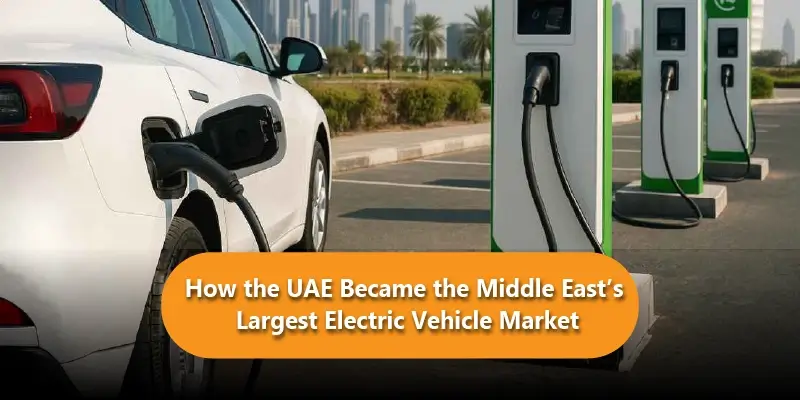
The UAE electric vehicle market has rapidly evolved into the largest and most advanced EV ecosystem in the Middle East. Driven by ambitious government initiatives, expanding charging infrastructure, sustainability-focused policies, and growing consumer awareness, the United Arab Emirates has positioned itself as a regional leader in electric mobility.
Over the past few years, the country has witnessed significant growth in EV registrations, charging networks, and investment in clean transportation technologies. As more consumers embrace environmentally friendly mobility solutions, the UAE continues to set new benchmarks for innovation and sustainable transportation.
As demand for cleaner mobility rises, interest in electric vehicles in the UAE continues to grow among consumers, businesses, and policymakers seeking to reduce carbon emissions while enhancing transportation efficiency.
Table of Contents
- UAE’s Electric Vehicle Revolution
- Key Factors Driving UAE EV Growth
- Government Policies Supporting EV Expansion
- Charging Infrastructure Development
- Consumer Demand and Market Trends
- Role of Sustainability Initiatives
- Leading EV Brands in the UAE
- Challenges and Opportunities
- UAE’s Position in the Middle East EV Market
- Future of Electric Mobility in the UAE
- Why the UAE Leads the Region
- Final Verdict
- FAQ
UAE's Electric Vehicle Revolution
The UAE’s journey toward becoming the region’s EV leader has been fueled by a combination of government support, private sector investment, and consumer demand.
The country has strategically embraced electrification as part of its broader sustainability and economic diversification goals. Major cities such as Dubai and Abu Dhabi have become testing grounds for advanced mobility solutions, helping accelerate the transition toward cleaner transportation.
Key Highlights
- Rapid EV adoption across major cities
- Growing public charging infrastructure
- Strong government incentives
- Increasing consumer awareness
- Expansion of sustainable mobility programs
- Global automotive investments
- Long-term clean energy strategies
The result is a thriving ecosystem that continues to attract both manufacturers and consumers.
Key Factors Driving UAE EV Growth
Several important factors have contributed to the remarkable success of the UAE’s electric vehicle sector.
Growth Drivers
- Government sustainability targets
- Expansion of charging stations
- Technological advancements
- Increasing fuel efficiency awareness
- Rising environmental consciousness
- Premium EV model availability
- Strong economic support for innovation
| Factor | Impact |
|---|---|
| Infrastructure Expansion | Improved convenience |
| Government Policies | Increased adoption |
| Consumer Awareness | Higher demand |
| Technology Innovation | Better ownership experience |
Together, these factors have created favorable conditions for long-term market expansion.
Government Policies Supporting EV Expansion
Government support has played a critical role in transforming the UAE electric vehicle market into a regional success story.
Authorities have introduced various initiatives aimed at encouraging cleaner transportation and reducing dependence on conventional fuel-powered vehicles. These programs align with broader national sustainability objectives and carbon reduction commitments.
Government Initiatives
- National sustainability programs
- Clean energy transition strategies
- Smart city development projects
- Green mobility frameworks
- Public transportation electrification
- Renewable energy integration
These measures have strengthened investor confidence while accelerating EV ownership across the country.
Charging Infrastructure Development
A robust charging network is essential for widespread EV adoption, and the UAE has invested heavily in building one of the region’s most comprehensive charging ecosystems.
Public and private charging stations continue to expand across highways, residential communities, commercial centers, and business districts.
Infrastructure Highlights
- Fast-charging networks
- Urban charging hubs
- Highway charging corridors
- Smart charging technology
- Residential charging solutions
- Commercial charging facilities
| Infrastructure Element | Benefit |
|---|---|
| Fast Chargers | Reduced charging time |
| Public Networks | Increased accessibility |
| Smart Systems | Efficient energy management |
| Home Charging | Greater convenience |
The continued growth of charging infrastructure remains a key driver of EV adoption.
Consumer Demand and Market Trends
Consumer attitudes toward electric mobility have shifted significantly in recent years.
Buyers are increasingly attracted by lower operating costs, advanced vehicle technologies, premium driving experiences, and environmental benefits. As a result, EV adoption in the UAE continues to accelerate across multiple vehicle segments.
Popular Consumer Motivations
- Lower running costs
- Reduced emissions
- Advanced technology features
- Improved driving performance
- Enhanced energy efficiency
- Government-backed sustainability goals
Growing confidence in EV technology is helping drive long-term market momentum.
Role of Sustainability Initiatives
Sustainability remains one of the strongest pillars behind the country’s EV growth.
National environmental strategies encourage businesses and consumers to embrace greener transportation alternatives while supporting broader climate objectives.
Sustainability Benefits
- Reduced carbon emissions
- Improved urban air quality
- Lower energy consumption
- Increased renewable energy integration
- Enhanced environmental awareness
The adoption of cleaner mobility solutions aligns closely with the UAE’s long-term vision for sustainable development.
Leading EV Brands in the UAE
Several global automotive manufacturers have contributed to the growing popularity of electric vehicles in the UAE.
Premium, luxury, and mainstream brands now offer a wide range of EV models tailored to the preferences of UAE consumers.
Popular EV Categories
- Luxury electric sedans
- Premium electric SUVs
- Compact urban EVs
- Performance-focused electric vehicles
- Commercial electric fleets
The increasing variety of available models continues to attract new buyers to the EV market.
Challenges and Opportunities
Despite significant progress, the EV sector still faces several challenges that must be addressed to maintain long-term growth.
Key Challenges
- Charging infrastructure scalability
- Battery technology development
- Consumer education
- Grid capacity management
- Initial vehicle purchase costs
Emerging Opportunities
- Smart mobility solutions
- Fleet electrification
- Renewable energy integration
- Battery innovation
- Autonomous vehicle development
Addressing these challenges effectively will unlock even greater market potential.
UAE's Position in the Middle East EV Market
Today, the UAE stands at the forefront of regional electric mobility development.
Its combination of advanced infrastructure, supportive policies, strong purchasing power, and sustainability leadership has enabled the country to outperform neighboring markets.
Regional Leadership Factors
| Category | UAE Position |
|---|---|
| Charging Infrastructure | Leading |
| EV Availability | Leading |
| Consumer Adoption | Leading |
| Government Support | Leading |
| Sustainability Programs | Leading |
This leadership position continues to strengthen as investment and innovation accelerate.
Future of Electric Mobility in the UAE
The future of electric transportation in the UAE looks exceptionally promising.
Emerging technologies, improved battery efficiency, and increased digital connectivity are expected to further enhance the ownership experience while making EVs more accessible to a wider audience.
Future Trends
- AI-powered mobility systems
- Smart charging networks
- Vehicle-to-grid technology
- Autonomous electric vehicles
- Enhanced battery performance
- Sustainable manufacturing practices
Industry experts expect EV adoption in the UAE to continue growing as technology advances and infrastructure expands.
Why the UAE Leads the Region
The UAE’s success stems from its ability to combine policy leadership, technological innovation, and infrastructure development within a unified long-term vision.
Key Strengths
- Progressive government strategies
- World-class charging networks
- Strong consumer demand
- Sustainable mobility initiatives
- Global investment attraction
- Advanced urban planning
These strengths have helped establish the country as a benchmark for electric mobility across the Middle East.
Final Verdict
The UAE electric vehicle market has become a regional success story through a combination of visionary leadership, strategic investments, expanding infrastructure, and growing consumer demand. By embracing sustainable transportation solutions and fostering innovation, the country has successfully positioned itself as the Middle East’s largest and most advanced EV market.
As electric mobility continues to evolve, the UAE is expected to remain at the forefront of the transition toward cleaner, smarter, and more sustainable transportation systems.
FAQ
Why is the UAE leading the Middle East EV market?
The UAE benefits from strong government support, extensive charging infrastructure, sustainability initiatives, and increasing consumer demand for electric vehicles.
What is driving EV growth in the UAE?
Key drivers include environmental awareness, infrastructure expansion, supportive policies, technological innovation, and growing consumer confidence.
Are charging stations widely available in the UAE?
Yes. Charging infrastructure continues to expand across cities, highways, residential communities, and commercial areas.
What are the benefits of owning an electric vehicle in the UAE?
Benefits include lower operating costs, reduced emissions, advanced technology features, and support for sustainability goals.
Will EV adoption continue to grow in the UAE?
Yes. Industry experts expect continued growth due to expanding infrastructure, technological improvements, and supportive government policies.
How does the UAE compare with other Middle Eastern countries in EV adoption?
The UAE currently leads the region in charging infrastructure, EV availability, government support, and overall electric mobility development.