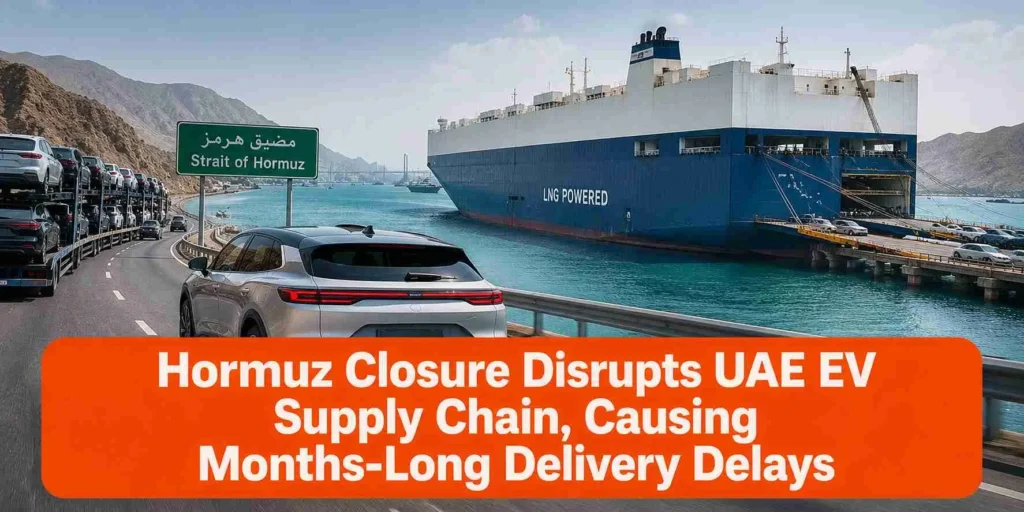

The UAE’s electric vehicle (EV) market has experienced remarkable growth over the past few years, driven by government incentives, expanding charging infrastructure, and increasing consumer interest in sustainable mobility. However, the recent disruption in shipping through the Strait of Hormuz has created significant challenges for the automotive industry, delaying vehicle imports and stretching EV waiting periods to several months.
The Hormuz closure in UAE EV supply chain disruption has affected the transportation of electric vehicles, batteries, automotive components, and spare parts entering the region. Many dealerships are now reporting extended delivery timelines, while buyers who placed orders months ago continue to wait for their vehicles.
As global shipping routes face unprecedented challenges, the UAE automotive sector is adapting to protect supply chains and meet rising consumer demand. Understanding how these disruptions affect EV availability helps buyers make informed purchasing decisions and prepare for potential delivery delays.
Whether you’re planning to purchase your first electric vehicle, expanding a commercial fleet, or simply following UAE automotive trends, this guide explains the causes of the current disruption, its impact on consumers and businesses, and what the future holds for the UAE EV market.
Hormuz Closure in UAE EV Supply Chain – Quick Overview
| Category | Details |
|---|---|
| Primary Keyword | Hormuz closure UAE EV supply chain |
| Industry | Electric Vehicles |
| Main Issue | Shipping & Supply Chain Disruption |
| Primary Impact | Extended EV Delivery Times |
| Affected Products | Electric Vehicles, Batteries, Spare Parts & Components |
| Estimated Delays | Up to Several Months |
| Affected Region | UAE & GCC Automotive Market |
| Key Focus | EV Imports, Logistics & Supply Chain Resilience |
Why the Strait of Hormuz Is Critical for UAE EV Imports
The Strait of Hormuz is one of the world’s busiest maritime trade routes, connecting the Arabian Gulf with international shipping lanes. Every day, thousands of cargo vessels transport vehicles, automotive components, batteries, and industrial goods through this strategic waterway.
For the UAE automotive industry, this route plays an essential role in:
- Importing new electric vehicles
- Transporting lithium-ion batteries
- Delivering automotive spare parts
- Supporting vehicle distribution networks
- Maintaining dealership inventory
- Ensuring timely fleet deliveries
Any disruption in this shipping corridor creates a ripple effect across the entire automotive supply chain.
Why UAE EV Delivery Delays Are Increasing
Demand for electric vehicles in the UAE continues to rise rapidly. At the same time, shipping disruptions have limited the number of vehicles arriving at dealerships.
Several factors are contributing to longer waiting periods:
- Shipping route disruptions
- Increased freight costs
- Delayed vehicle imports
- Limited production capacity
- Higher consumer demand
- Battery transportation challenges
- Port congestion
- Supply chain bottlenecks
Together, these issues are extending delivery schedules for many EV models.
10 Major Effects of the Hormuz Closure on the UAE EV Supply Chain
1. Longer Waiting Times for New Electric Vehicles
Many dealerships are experiencing reduced inventory levels, forcing customers to wait considerably longer for ordered vehicles.
Common Buyer Experiences
- Extended booking periods
- Delayed vehicle arrivals
- Limited stock availability
- Longer reservation lists
Some buyers may need to wait several months before receiving their vehicles.
2. Reduced EV Inventory Across Dealerships
With fewer shipments arriving, dealerships have fewer vehicles available for immediate delivery.
Effects Include
- Limited model availability
- Reduced colour options
- Fewer trim selections
- Increased advance bookings
Customers may have fewer customization choices until inventory stabilizes.
3. Rising Shipping and Logistics Costs
Alternative shipping routes often require longer transit times and increased operational expenses.
Additional Cost Factors
- Higher freight charges
- Increased fuel expenses
- Insurance adjustments
- Port handling costs
These expenses can place additional pressure on automotive supply chains.
4. Battery Supply Challenges
Electric vehicles depend on complex battery supply chains involving multiple countries and transportation networks.
Potential disruptions include:
- Battery shipment delays
- Component shortages
- Longer assembly timelines
- Inventory management challenges
Battery availability remains one of the most important factors influencing EV production.
5. Delays in Spare Parts Availability
Supply chain interruptions affect not only new vehicles but also replacement parts.
Commonly affected components include:
- Battery modules
- Electronic control units
- Charging equipment
- Sensors
- Body panels
- Electric drive components
Longer repair times may result if parts are delayed.
6. Increased Pressure on UAE Dealerships
Dealerships must carefully manage customer expectations while handling reduced inventory.
Many are focusing on:
- Improved order tracking
- Customer communication
- Alternative vehicle recommendations
- Reservation management
Transparent communication has become increasingly important.
7. Higher Demand for Available EV Models
As supply decreases, vehicles already in stock become more desirable.
This may result in:
- Faster sell-outs
- Longer waiting lists
- Increased competition among buyers
- Higher demand for popular models
Consumers are encouraged to secure bookings early.
8. Fleet Operators Face Operational Challenges
Businesses transitioning to electric mobility may experience delays when expanding their fleets.
Affected sectors include:
- Logistics
- Ride-hailing services
- Corporate fleets
- Government transportation
- Delivery companies
Fleet planning becomes more complex during supply disruptions.
9. Greater Focus on Local Supply Chain Resilience
The disruption highlights the importance of diversifying supply chains and improving regional logistics capabilities.
Future strategies may include:
- Multiple shipping routes
- Regional warehousing
- Improved inventory planning
- Local assembly initiatives
Supply chain resilience is becoming a key industry priority.
10. Continued Growth in UAE EV Demand
Despite delivery delays, consumer interest in electric vehicles remains strong.
Key drivers include:
- Government sustainability initiatives
- Lower operating costs
- Expanding charging infrastructure
- Growing model availability
- Environmental awareness
The long-term outlook for the UAE EV market remains highly positive.
How Buyers Can Prepare for EV Delivery Delays
Consumers planning to purchase an electric vehicle can reduce uncertainty by taking several proactive steps.
Recommended actions include:
- Place orders as early as possible.
- Confirm estimated delivery timelines.
- Stay in regular contact with dealerships.
- Consider multiple vehicle options.
- Monitor shipping updates.
- Explore available stock before ordering.
- Review financing timelines.
- Plan for potential delivery extensions.
Early planning helps minimize inconvenience.
Industries Most Affected by the Supply Chain Disruption
Several sectors rely heavily on timely EV deliveries.
These include:
- Automotive dealerships
- Fleet management companies
- Vehicle leasing firms
- Government agencies
- Logistics providers
- Charging infrastructure companies
- Automotive service centres
- Parts distributors
The impact extends well beyond retail vehicle buyers.
UAE EV Market Outlook
Although current delivery delays present short-term challenges, the long-term outlook for electric mobility in the UAE remains promising.
Industry trends continue to support growth through:
- Expanded EV charging networks
- Government sustainability policies
- Increased manufacturer investment
- New vehicle launches
- Smart mobility initiatives
- Growing consumer awareness
Temporary logistics challenges are unlikely to slow the UAE’s transition toward cleaner transportation.
How Supply Chain Disruptions Affect Vehicle Prices
Supply constraints can influence market pricing in several ways.
Possible outcomes include:
- Reduced promotional offers
- Higher demand for available stock
- Longer pre-order periods
- Increased shipping-related costs
Pricing ultimately depends on manufacturers, importers, and market conditions.
Pros and Cons of the Current EV Market Situation
Pros
- Strong long-term EV market growth
- Increased investment in supply chains
- Greater focus on logistics resilience
- Rising government support
- Continued expansion of charging infrastructure
- Higher consumer awareness
Cons
- Extended delivery timelines
- Limited dealership inventory
- Delayed spare parts
- Higher logistics costs
- Longer fleet deployment schedules
- Reduced model availability
EV Buying Tips During Supply Chain Disruptions
Before ordering a new electric vehicle:
- Compare multiple dealerships.
- Confirm delivery estimates in writing.
- Ask about available stock.
- Consider flexible vehicle specifications.
- Stay updated on shipping developments.
- Monitor manufacturer announcements.
- Prepare for longer waiting periods.
- Maintain realistic delivery expectations.
Planning ahead can reduce purchasing uncertainty.
Components Most Affected by EV Supply Chain Delays
| Component | Supply Chain Impact |
|---|---|
| Electric Vehicles | Extended Delivery Times |
| Lithium-Ion Batteries | Shipping Delays |
| Charging Equipment | Longer Availability |
| Electronic Modules | Component Shortages |
| Electric Motors | Production Delays |
| Sensors | Import Delays |
| Spare Parts | Reduced Availability |
| Vehicle Accessories | Delayed Distribution |
Who Should Be Most Concerned?
These developments are particularly important for:
- Prospective EV buyers
- Fleet operators
- Corporate vehicle managers
- Ride-hailing companies
- Automotive dealerships
- Logistics businesses
- Government agencies.
- Electric mobility investors
Closing Remarks
The Hormuz closure in UAE EV supply chain disruption highlights how global shipping challenges can significantly impact local automotive markets. Extended delivery times, reduced dealership inventory, battery shipment delays, and increased logistics costs have created temporary obstacles for the UAE’s rapidly expanding electric vehicle sector.
For buyers, patience, early planning, and regular communication with dealerships will be essential while the industry navigates these temporary challenges.
However, despite these short-term disruptions, the UAE remains committed to accelerating electric mobility through continued investment in charging infrastructure, smart transportation initiatives, and sustainable mobility policies. As supply chains gradually stabilize and manufacturers strengthen regional logistics networks, the long-term future of electric vehicles in the UAE remains exceptionally strong.
Stay Connected with the Latest UAE Automotive News
Stay informed with the latest electric vehicle news, automotive supply chain updates, EV buying guides, smart mobility developments, transportation technology, industry trends, and vehicle ownership advice from across the UAE.
From electric vehicle launches and charging infrastructure updates to government policies and expert automotive insights, we provide comprehensive coverage of the rapidly evolving UAE automotive industry.
Guest Blog Submission
Enthusiastic about vehicle technology, road safety, electric mobility, or automotive innovation?
Connect with our contributor community and share your expertise with readers across the UAE and beyond.
We welcome guest articles covering:
- Electric vehicles
- EV charging infrastructure
- Automotive supply chains
- Smart mobility
- Fleet management
- Sustainable transportation
- Automotive technology
- UAE automotive trends
Become a contributor and help shape the future of electric mobility in the UAE.
Frequently Asked Questions (FAQs)
Why is the Hormuz closure affecting UAE EV deliveries?
Shipping disruptions through the Strait of Hormuz have delayed the transportation of electric vehicles, batteries, and automotive components entering the UAE.
How long are EV delivery delays expected to last?
Delivery times vary by manufacturer and model, but some buyers are experiencing waiting periods of several months due to ongoing supply chain disruptions.
Are only electric vehicles affected?
No. While EVs are significantly impacted because of battery and component logistics, supply chain disruptions can also affect conventional vehicles and automotive spare parts.
Will EV prices increase because of supply chain disruptions?
Higher shipping and logistics costs may influence pricing, although final vehicle prices depend on manufacturers, importers, dealerships, and market conditions.
What should buyers do before ordering an EV?
Confirm estimated delivery times, ask about available inventory, compare dealerships, and prepare for possible delays before placing an order.
Is the long-term future of electric vehicles in the UAE still positive?
Yes. Despite temporary supply chain challenges, government support, expanding charging infrastructure, and growing consumer demand continue to drive strong long-term growth for the UAE EV market.