Motorists in Dubai could face substantial financial penalties if they commit serious traffic violations, with vehicle release payments reaching AED 100,000 for certain offences and potentially doubling to AED 200,000 in specified repeat-offence cases.

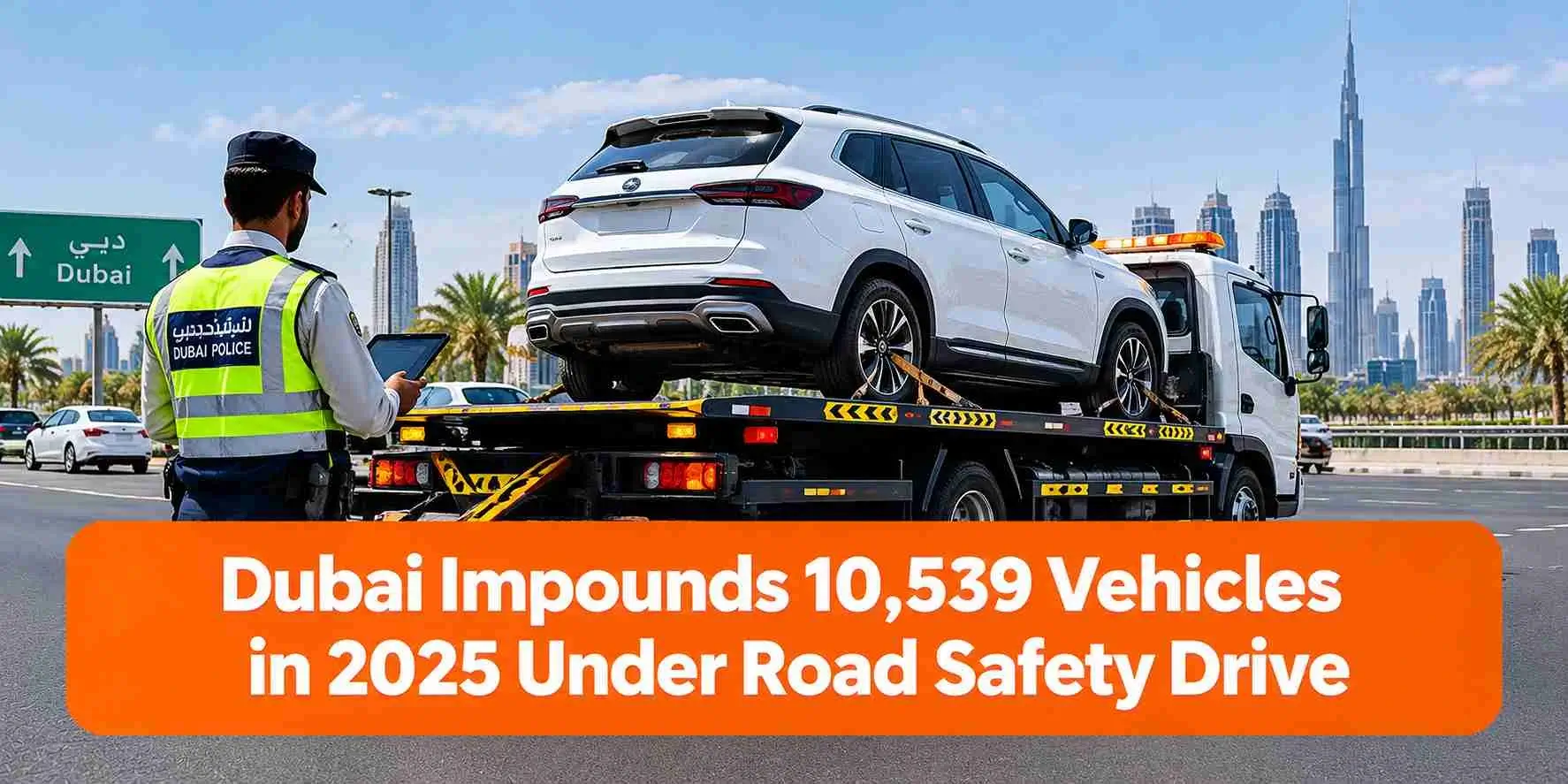
The Dubai vehicle impound rules 2026 are governed by Decree No. 30 of 2023, which amended the emirate’s existing vehicle impoundment regulations. These rules identify offences that can result in mandatory vehicle impoundment, establish release payments and outline additional consequences for repeat violations.

According to Gulf News, Dubai Police issued 7,735 traffic fines and impounded 1,630 vehicles for excessive noise and unauthorised modifications during the first nine months of 2026. The figures highlight the authorities’ continued efforts to address dangerous driving and vehicles that do not comply with applicable regulations.

But which offences can result in vehicle impoundment, how much do motorists need to pay, and what is the procedure for recovering an impounded car? Here is everything drivers should know about Dubai car impound fines, release requirements and penalties.

Dubai Vehicle Impound Rules 2026: Key Penalties

Dubai’s regulations distinguish between offences carrying mandatory impoundment and cases where police have discretion to impound a vehicle.

For specified mandatory offences, the amount required to release the vehicle depends on the violation.

Dubai Vehicle Release Fees

Violation Category Release Payment
Participating in an unauthorised road race AED 100,000
Reckless driving and specified serious offences AED 50,000
Driving a recreational motorcycle on a paved road AED 50,000
Driving through a red light AED 50,000
Driving without number plates AED 10,000
Major modifications causing increased speed or excessive noise AED 10,000
Fleeing from police AED 10,000
Certain illegal window tinting violations AED 10,000

These amounts are vehicle release payments under the applicable impoundment rules, not necessarily the total cost of the offence. Other fines, black points or legal consequences may also apply.

For vehicles impounded because their accumulated traffic fines exceed AED 6,000, the owner must settle the outstanding fines to secure release.

The applicable requirements depend on the offence and the relevant provisions of Dubai’s traffic regulations.

Which Traffic Violations Can Get Your Car Impounded?

Understanding traffic violations Dubai authorities consider serious can help motorists avoid unnecessary expenses and legal complications.

1. Reckless Driving and Red-Light Violations

Driving recklessly or in a manner that endangers lives, property or road safety can result in mandatory vehicle impoundment. Driving through a red light is also among the offences carrying an AED 50,000 vehicle release payment under the decree.

These violations create significant risks for pedestrians and other motorists, particularly at busy intersections and on high-speed roads.

Drivers should obey traffic signals, maintain safe distances and avoid aggressive manoeuvres.

2. Illegal Number Plates

Using counterfeit, forged, fake or obscured number plates, or using plates in a manner that violates applicable legislation, can result in impoundment and an AED 50,000 release payment.

Driving without number plates is another impoundment offence, carrying an AED 10,000 release payment under the decree.

Vehicle owners should ensure their registration plates are valid, clearly visible and compliant with local requirements.

3. Unauthorised Vehicle Modifications

Substantial vehicle modifications that increase speed or produce excessive noise can lead to impoundment and an AED 10,000 release payment.

Changes to the engine, exhaust system or other components should comply with applicable UAE requirements. Motorists should confirm whether modifications require approval before making alterations.

4. Illegal Road Racing and Stunts

Participating in a road race without police permission carries an AED 100,000 vehicle release payment.

Other specified offences, including gathering to watch illegal races while engaging in associated disorder or performing vehicle stunts on public roads, carry an AED 10,000 release payment.

These measures aim to discourage dangerous activities that can threaten public safety.

AED 200000 Traffic Fines UAE: When Can the Maximum Apply?

The AED 200000 traffic fines UAE figure often attracts attention, but it is important to understand what it represents.

Under Dubai Decree No. 30 of 2023, if a vehicle is impounded again within one year of the incident that led to its previous impoundment, specified release payments can double.

For offences carrying release payments of AED 10,000, AED 50,000 or AED 100,000, the doubled amount cannot exceed AED 200,000.

The impoundment period may also double for cases where police determine the duration, subject to a maximum of 90 days.

This escalation does not mean every repeat traffic violation automatically results in an AED 200,000 payment. The applicable amount depends on the original offence and whether the legal conditions for repeat impoundment are met.

Motorists should therefore address violations promptly and avoid repeating behaviour that can result in vehicle seizure.

Can Unpaid Traffic Fines Lead to Vehicle Impoundment?

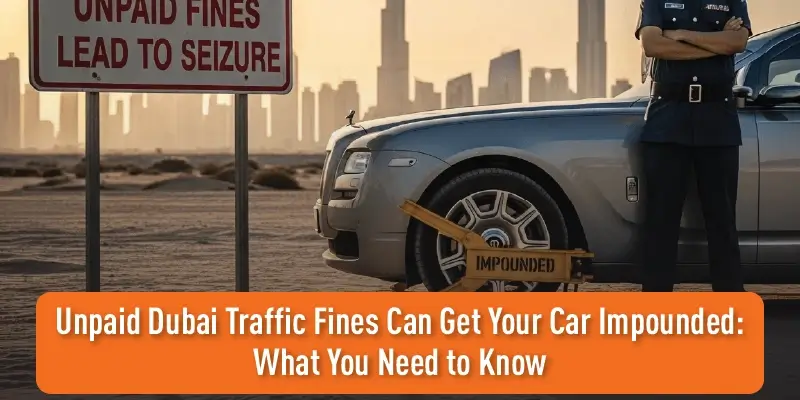
Yes. Under Dubai’s impoundment rules, a vehicle can be impounded when the accumulated traffic fines recorded against it exceed AED 6,000.

To recover the vehicle, the owner must settle the outstanding traffic fines.

Drivers should regularly check their traffic records and resolve outstanding penalties through official channels. Ignoring accumulated fines can create additional inconvenience if the vehicle becomes subject to impoundment.

Owners should also distinguish between the original traffic fines and any separate payment required for vehicle release. The applicable requirements depend on the circumstances of the case.

Dubai Vehicle Release Fees: How to Recover an Impounded Car

The procedure for recovering a vehicle depends on whether the impoundment is mandatory or discretionary.

For certain offences where police have discretion to impound a vehicle, owners may need to complete the prescribed impoundment period or obtain approval for an early release arrangement.

Generally, the process involves the following steps:

Step 1: Confirm the reason for impoundment. Contact Dubai Police or use the relevant official service to establish the violation and applicable requirements.

Step 2: Settle outstanding fines. Pay the fines recorded against the vehicle as required.

Step 3: Resolve the violation. Correct the issue that led to the impoundment, where applicable.

Step 4: Complete the release requirements. Fulfil the prescribed impoundment period, pay the applicable release amount and satisfy any additional conditions.

Step 5: Collect the vehicle promptly. Follow the instructions provided by the relevant authority.

For other impoundment cases covered by the applicable ministerial regulations, release payments may be calculated daily at AED 100 for light vehicles or AED 200 for heavy vehicles, depending on the circumstances and legal provisions.

If a vehicle remains uncollected after the impoundment period expires, an additional AED 50 per day applies for each day it stays in the impoundment area.

Motorists should confirm the exact amount and procedure directly with Dubai Police before making payment.

Additional Consequences of Serious Traffic Violations

Vehicle impoundment is not always the only consequence of a serious offence. Depending on the violation, motorists may also face fines, black points or other legal measures.

One particularly significant provision concerns non-UAE national drivers of heavy vehicles who drive through a red light. Under the decree, such drivers face administrative deportation from the UAE in addition to other applicable penalties.

This provision highlights the importance of understanding the regulations relevant to the type of vehicle being driven.

Owners should also ensure that anyone operating their vehicle has the appropriate driving entitlement and complies with applicable traffic laws.

Final Thoughts

The Dubai vehicle impound rules 2026 outline serious consequences for motorists who engage in dangerous driving, illegal racing, unauthorised modifications and other specified violations.

Depending on the offence, vehicle release payments range from AED 10,000 to AED 100,000. Under specified repeat-impoundment conditions, these amounts can double, subject to a maximum of AED 200,000.

Motorists can reduce the risk of impoundment by following traffic regulations, maintaining compliant vehicles, avoiding reckless behaviour and resolving outstanding fines promptly.

Anyone whose vehicle has been impounded should verify the applicable release requirements through official Dubai Police services, as the process and costs vary according to the offence.

For the latest UAE traffic regulations, vehicle ownership updates, road safety news and automotive guides, get in touch with Miss Auto UAE.

Frequently Asked Questions

What are the Dubai vehicle impound rules in 2026?

Dubai’s rules identify specified offences that can result in vehicle impoundment, with release payments determined by the violation and additional consequences for certain repeat offences.

The vehicle release payment can reach AED 200,000 when specified release amounts double following repeat impoundment within one year, subject to the conditions in the applicable decree.

Yes. A vehicle can be impounded when its accumulated traffic fines exceed AED 6,000. The owner must settle the outstanding fines to recover it.

For specified offences, release payments range from AED 10,000 to AED 100,000. Other cases may involve daily release payments, outstanding fines and additional requirements.

Confirm the reason for impoundment, settle applicable fines, resolve the violation and fulfil the release requirements specified by Dubai Police.

Author

  • Max Wheeler

    Max Wheeler is a automotive writer known for insightful car reviews, maintenance guides, and industry updates. His goal is to help drivers stay informed and confident on the road.

Shares: