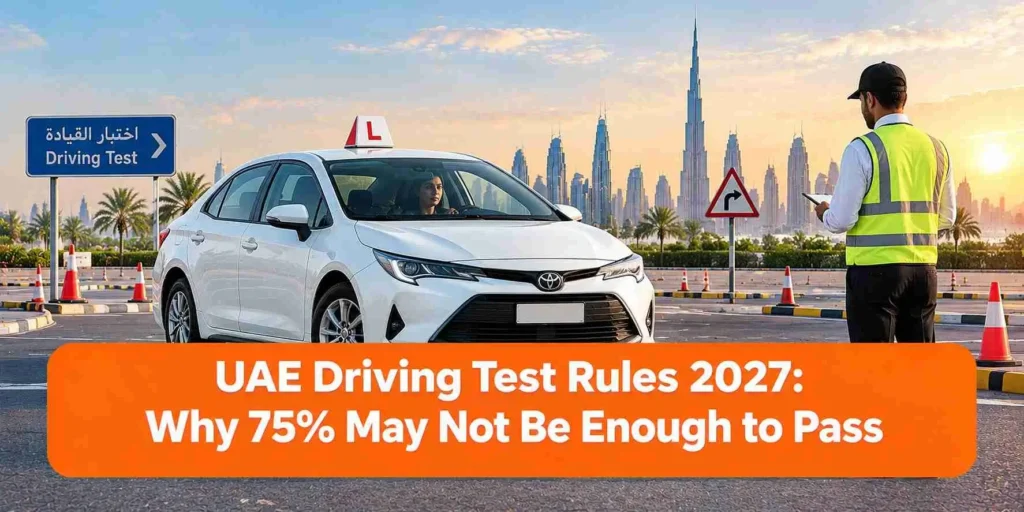
Passing a driving test in the UAE requires more than knowing traffic rules or operating a vehicle. Learners must demonstrate safe driving, effective observation and proper vehicle control throughout their examination.

The UAE driving test rules 2027 introduce a minimum passing score of 75% for both theory and practical examinations. However, achieving this score does not automatically guarantee success in the practical test. Dangerous mistakes that create actual or potential risks can still result in failure.

The updated regulations are scheduled to take effect on January 1, 2027, under Cabinet Decision No. 174 of 2026, which concerns the executive regulations of Federal Decree-Law No. 14 of 2024 on traffic regulation.

For anyone preparing for the UAE driving exam 2027, understanding the passing criteria and common mistakes can help make preparation more effective.

Here is what learners should know about the new rules, assessment requirements and ways to improve their chances of passing.

UAE Driving Test Rules 2027: What Has Changed?

The updated regulations establish a minimum passing threshold for theory and practical examinations. They also emphasise that candidates must demonstrate safe driving rather than rely solely on their overall marks.

UAE Driving Test Passing Score

Examination Minimum Passing Score Key Requirement
Theory test 75% Achieve the minimum required marks
Practical test 75% Demonstrate safe driving throughout the assessment
Dangerous driving situations A passing score may not be sufficient Serious safety concerns can result in failure

Under Article 65, candidates must obtain at least 75 marks out of 100 in the theory examination. Article 68 establishes the minimum passing requirement for the practical assessment while addressing dangerous situations during the test.

Therefore, learners should prepare for both examinations and develop the skills needed to drive safely and independently.

Why Scoring 75% May Not Be Enough to Pas

The UAE driving licence test rules make it important to distinguish between achieving the required score and demonstrating safe driving.

A candidate may perform several manoeuvres correctly and earn enough marks to meet the passing threshold. However, a serious mistake that creates danger can still lead to failure.

For example, a learner might park correctly and follow instructions during most of the test but ignore a traffic signal or make an unsafe manoeuvre at an intersection. Such an error could outweigh otherwise satisfactory performance.

An examiner may also need to intervene verbally or physically to prevent a dangerous situation.

This is why learners should focus on consistent driving habits rather than simply aiming for 75%. Safe decision-making, observation and vehicle control must remain priorities throughout the examination.

Driving Test Failure Reasons UAE: Common Mistakes to Avoid

Understanding the common driving test failure reasons UAE learners may encounter can help candidates identify areas that need additional practice.

1. Losing Control of the Vehicle

Poor clutch control, sudden acceleration or incorrect braking can affect vehicle stability and create unsafe situations.

Practise starting, stopping and driving at low speeds until these actions become smooth and predictable. Before moving, adjust the seat and mirrors, fasten your seat belt and check your surroundings.

2. Hitting a Kerb or Barrier

Contact with a kerb or barrier can indicate poor judgement of the vehicle’s position, particularly during parking and reversing.

Practise parking between marked spaces, parallel parking and reversing under supervision. Use your mirrors effectively and make controlled adjustments instead of rushing through manoeuvres.

3. Ignoring Traffic Signs or Signals

Failing to obey traffic signals, stop signs or applicable road instructions can create immediate danger.

Pay attention to road markings, speed limits and signs well before reaching intersections. Always stop at the correct position and follow traffic instructions.

4. Making Dangerous Gear-Change Errors

Incorrect gear selection or poor clutch coordination can affect vehicle control, especially on slopes and when moving off.

Manual transmission learners should practise coordinating the clutch, accelerator and gear changes. Automatic transmission drivers should understand the correct use of the gear selector.

5. Incorrect Parking or Positioning

Poor parking alignment can result in contact with surrounding vehicles, kerbs or barriers.

Practise different parking situations and learn to judge the vehicle’s position. Check mirrors, remain aware of your surroundings and make small corrections when needed.

6. Requiring Examiner Intervention

If the examiner must intervene verbally or physically to prevent danger, the candidate may fail.

Listen carefully to instructions, monitor road conditions and make safe decisions independently. Avoid rushing when approaching unfamiliar situations.

What Do Examiners Assess During the Practical Test?

Article 66 addresses practical assessments conducted according to the testing plan approved by the relevant licensing authority.

Candidates should practise the following skills before their examination.

Assessment Area What to Practise
Vehicle control Starting, stopping and smooth acceleration
Forward and reverse driving Maintaining control and manoeuvring safely
Parking Parallel parking and parking between markings
Lane changes Checking mirrors, blind spots and indicators
Turning Correct positioning and timely signalling
Intersections and roundabouts Observing priority rules and traffic conditions
Following distance Maintaining a safe distance from other vehicles
Traffic signs Following road markings, signs and signals

The exact test format and assessment procedures may vary according to the licensing authority. Candidates should confirm the current requirements with their driving school.

Dubai Driving Test Requirements: What Learners Should Know

Although federal regulations establish the broad requirements, applicants should confirm the relevant procedures with their local licensing authority.

For Dubai driving test requirements, consult the Roads and Transport Authority (RTA) or your approved driving school. Learners in Abu Dhabi and other emirates should check with their respective authorities.

Before booking the practical test, confirm that you have completed the required training and passed the necessary earlier assessments. Check your appointment details, documents, fees and any additional instructions.

Candidates whose lessons began in 2026 should not assume they are exempt from the updated rules when taking an examination on or after January 1, 2027.

Checking official guidance before the test can help prevent confusion about the applicable requirements.

Driving Test Tips UAE: How to Improve Your Chances of Passing

Preparing for the UAE driving exam 2027 involves more than memorising traffic rules. Consistent practice and safe driving habits are essential.

Practise the Complete Test Routine

Ask your instructor to conduct mock tests covering parking, reversing, starting, stopping, lane changes and intersections. This helps identify weaknesses before the actual examination.

Check Mirrors and Blind Spots

Develop the habit of checking mirrors regularly and looking over your shoulder when appropriate before changing lanes or moving into another position. Make sure the manoeuvre is safe before proceeding.

Maintain Safe Speeds and Distances

Follow speed limits and adjust your driving to road conditions. Maintain an appropriate distance from other vehicles and slow down near intersections, pedestrian crossings and potential hazards.

Practise Parking Consistently

Do not depend entirely on memorised steering patterns. Learn to judge the vehicle’s position and make controlled adjustments. Ask your instructor to correct recurring mistakes.

Stay Calm During the Test

Nervousness can lead to missed instructions and rushed decisions. Arrive early, get adequate rest and listen carefully to the examiner.

If you make a minor mistake, remain composed and continue driving safely. Consistent decision-making is more important than allowing one error to affect the rest of the assessment.

What Happens If You Fail the UAE Driving Test?

Failing the practical examination does not mean you cannot obtain a driving licence.

Under Article 69 of the updated regulations, applicants who fail the practical assessment will be scheduled for another test by the relevant licensing authority.

The applicable retest date, fees and procedures should be confirmed with the authority handling your application. Candidates should not assume that one waiting period or fee applies throughout the UAE.

Before attempting the test again, review the areas where you struggled. If parking, observation or vehicle control caused problems, request additional supervised practice in those areas.

Identifying specific weaknesses and correcting them can help you approach your next attempt with greater confidence.

Final Thoughts

The UAE driving test rules 2027 reinforce an important principle: achieving the minimum passing score does not automatically mean a candidate has demonstrated safe driving.

From January 1, 2027, learners must meet the 75% passing requirement for theory and practical examinations. However, dangerous mistakes during the practical test can still result in failure.

Losing vehicle control, ignoring traffic signals, hitting a kerb or barrier and requiring examiner intervention are among the situations candidates should take seriously.

The best preparation involves regular practice, a clear understanding of traffic rules and consistent attention to road safety.

Whether you are preparing for a test in Dubai or another emirate, confirm the latest requirements with your relevant licensing authority before your appointment.

For more UAE automotive news, driving updates and road-safety guides, visit Miss Auto UAE.

Frequently Asked Questions

What is the UAE driving test passing score in 2027?

Candidates must achieve at least 75% in both theory and practical examinations. However, dangerous mistakes during the practical test can still result in failure.

Yes. Candidates may fail the practical examination if they create dangerous situations or require examiner intervention to prevent danger.

The updated federal traffic regulations are scheduled to take effect on January 1, 2027.

Common mistakes include losing vehicle control, hitting a kerb or barrier, ignoring traffic signals, making dangerous gear-change errors and requiring examiner intervention.

Yes. Under Article 69, applicants who fail the practical examination will be scheduled for another test by the relevant licensing authority. Contact your authority or driving school for retest arrangements.

Author

  • Max Wheeler

    Max Wheeler is a automotive writer known for insightful car reviews, maintenance guides, and industry updates. His goal is to help drivers stay informed and confident on the road.

Shares: