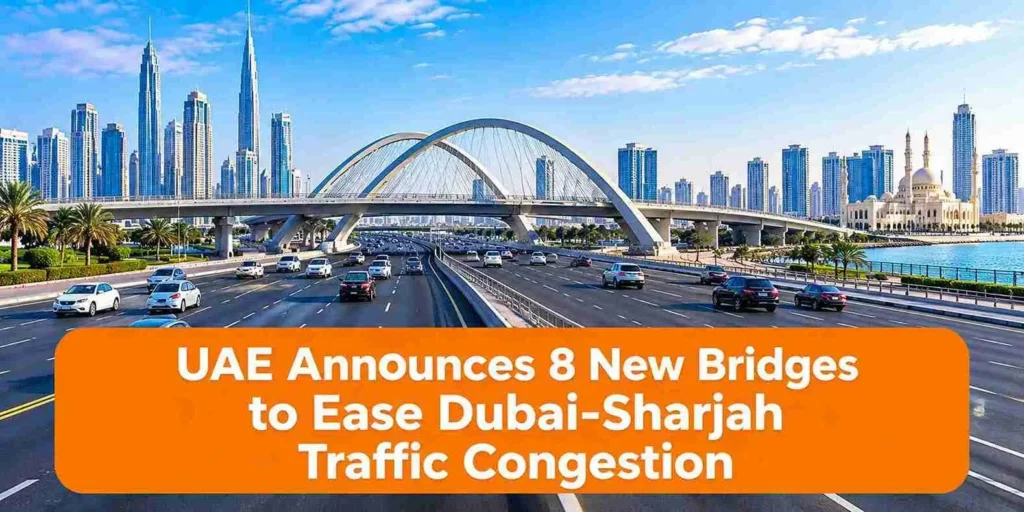
The UAE has announced plans for eight new bridges as part of a major upgrade to Al Ittihad Road, one of the busiest routes connecting Dubai and Sharjah. The project aims to ease daily traffic congestion, increase road capacity and significantly reduce journey times for thousands of commuters travelling between the two emirates.

Led by the UAE Ministry of Energy and Infrastructure, the first phase of the development focuses on the Al Nahda intersection. The project includes eight bridges spanning a combined four kilometres, along with 4.5 kilometres of service roads designed to improve traffic movement across the surrounding road network.

Once completed, the upgrade is expected to increase Al Ittihad Road’s daily vehicle capacity from 100,000 to 190,000. Journey times along major traffic routes could also fall from 15 minutes to just three minutes, offering considerable relief to motorists.

Key Highlights at a Glance

Feature Details
Project Al Ittihad Road upgrade
Announced by UAE Ministry of Energy and Infrastructure
New infrastructure Eight bridges
Total bridge length 4 kilometres
Service roads 4.5 kilometres
Main location Al Nahda intersection
Road capacity Expected to increase from 100,000 to 190,000 vehicles daily
Intersection capacity Expected to increase from 188,000 to 310,000 vehicles daily
Expected journey time Reduced from 15 minutes to three minutes
Main objective Reduce Dubai-Sharjah traffic congestion

UAE Announces Eight New Bridges for Al Ittihad Road

The UAE is moving forward with another major road infrastructure development aimed at improving connectivity between Dubai and Sharjah.

The Ministry of Energy and Infrastructure has launched a tender for the first phase of the Al Ittihad Road upgrade, focusing on the busy Al Nahda intersection. The development is designed to address increasing traffic volumes and improve the efficiency of one of the country’s important commuter corridors.

The proposed project includes the construction of eight bridges with a combined length of four kilometres. In addition, 4.5 kilometres of service roads will be developed to support smoother traffic movement and improve access across the surrounding areas.

These UAE road infrastructure projects are expected to strengthen road connectivity, reduce bottlenecks and provide motorists with more efficient travel routes.

With thousands of people travelling between the two emirates every day for work, education and business, the upgrade could make a significant difference to daily commuting.

Al Ittihad Road Capacity Expected to Increase by 90%

One of the biggest advantages of the UAE new bridges 2026 project is the expected improvement in road capacity.

According to the Ministry of Energy and Infrastructure, the upgrade is expected to increase Al Ittihad Road’s capacity from approximately 100,000 to 190,000 vehicles per day.

This represents an increase of around 90%, allowing the road to accommodate considerably more traffic once the development is completed.

The Al Nahda intersection is also expected to benefit from a substantial capacity improvement.

Its daily vehicle-handling capacity is projected to increase from 188,000 to 310,000 vehicles, representing an improvement of approximately 65%.

These improvements are particularly important for commuters who regularly experience heavy traffic along the Dubai-Sharjah corridor.

By expanding road capacity and improving interchange efficiency, the project aims to create a smoother driving experience during busy commuting periods.

Journey Times Could Drop from 15 Minutes to Just 3 Minutes

Reducing travel time is another major objective of the Al Ittihad Road development.

According to the ministry, journey times along major traffic routes covered by the project are expected to decrease from approximately 15 minutes to just three minutes.

This could mean a considerable improvement for motorists who regularly travel between Dubai and Sharjah.

Long traffic delays can affect working hours, business schedules and everyday activities. A reduction in journey times could help commuters reach their destinations more efficiently while improving the overall movement of vehicles across the road network.

The expected improvements also highlight the importance of developing modern road infrastructure to accommodate the UAE’s growing population and increasing number of vehicles.

However, the projected travel times are based on the completed development and should not be considered an immediate change to current traffic conditions.

How the New Bridges Could Ease Dubai-Sharjah Traffic Congestion

The Dubai-Sharjah corridor is an important transport connection for residents, employees and businesses operating across both emirates.

Al Ittihad Road, also known as E11, handles significant daily commuter traffic. Heavy vehicle movement, particularly during peak hours, can contribute to congestion and longer journey times.

The new bridges and service roads are designed to improve traffic distribution and make movement through the Al Nahda intersection more efficient.

The development could support:

Improved Traffic Flow: Additional bridge infrastructure can help improve vehicle movement through busy junctions and reduce pressure on existing road connections.

Reduced Traffic Bottlenecks: The upgraded interchange is expected to improve traffic distribution around the Al Nahda intersection.

Better Road Connectivity: The 4.5 kilometres of service roads will support movement across the surrounding road network.

Shorter Commuting Times: The projected reduction in journey times could benefit motorists travelling between Dubai and Sharjah.

Increased Road Capacity: The improved infrastructure will provide greater capacity to accommodate daily traffic volumes.

These traffic improvement projects UAE are part of the wider effort to strengthen transport infrastructure and support more efficient urban mobility.

UAE Road Infrastructure Development: What Happens Next?

The first phase of the Al Ittihad Road upgrade has moved into the tender stage.

The Ministry of Energy and Infrastructure issued the tender on November 19, 2026, inviting eligible contractors to submit their bids for the project.

The tender is open to contractors classified under Category First A. Interested companies must demonstrate previous experience in delivering highway projects in high-traffic areas within the geographical scope of the development.

The deadline for submitting bids is January 5, 2027.

Earlier, in July 2026, the ministry invited experienced contractors to submit expressions of interest in developing Al Ittihad Road and the Al Nahda intersection.

The project is expected to progress through the relevant procurement and implementation stages following the tender process.

An exact construction completion date and the detailed construction schedule have not yet been specified in the announcement.

What Dubai and Sharjah Motorists Should Know

The planned road improvements are expected to bring long-term benefits to motorists travelling between Dubai and Sharjah. However, drivers should continue to expect existing traffic conditions until construction and infrastructure upgrades are completed.

Motorists are advised to:

Drivers should also remain alert to official announcements from the UAE Ministry of Energy and Infrastructure and the relevant local transport authorities regarding construction progress and traffic arrangements.

A Major Step Towards Better UAE Road Connectivity

The announcement of eight new bridges on Al Ittihad Road marks another important development in the UAE’s transport infrastructure plans.

With an expected 90% increase in road capacity, a 65% improvement at the Al Nahda intersection and potentially shorter journey times, the project is designed to address some of the major challenges associated with Dubai-Sharjah traffic congestion.

The addition of four kilometres of bridges and 4.5 kilometres of service roads could improve connectivity and support smoother movement across one of the country’s busiest commuter routes.

As the UAE continues investing in modern road infrastructure, these developments highlight the growing importance of efficient transport networks in supporting urban expansion, economic activity and everyday mobility.

Final Thoughts

The UAE’s announcement of eight new bridges for Al Ittihad Road brings encouraging news for Dubai and Sharjah commuters. Once completed, the development could reduce travel delays, increase road capacity and make daily journeys considerably more efficient.

For motorists, staying informed about road developments, following traffic regulations and planning journeys ahead will remain important as these infrastructure improvements progress.

Stay connected on the latest UAE automotive news, Dubai-Sharjah traffic updates, road infrastructure developments and transport regulations with Miss Auto UAE.

Frequently Asked Questions

How many new bridges has the UAE announced for Al Ittihad Road?

The UAE Ministry of Energy and Infrastructure has announced plans for eight new bridges as part of the first phase of the Al Ittihad Road upgrade at the Al Nahda intersection.

The road’s daily vehicle capacity is expected to increase from approximately 100,000 to 190,000 vehicles, representing an improvement of around 90%.

The project aims to improve traffic flow, reduce bottlenecks and increase the capacity of the Al Nahda intersection. Journey times along major routes are projected to fall from 15 minutes to three minutes.

The development includes 4.5 kilometres of service roads alongside eight bridges spanning a combined four kilometres.

The first phase tender was issued on November 19, 2026, with January 5, 2027, set as the bid submission deadline. A confirmed construction start date has not yet been announced.

Author

  • Max Wheeler

    Max Wheeler is a automotive writer known for insightful car reviews, maintenance guides, and industry updates. His goal is to help drivers stay informed and confident on the road.

Shares: