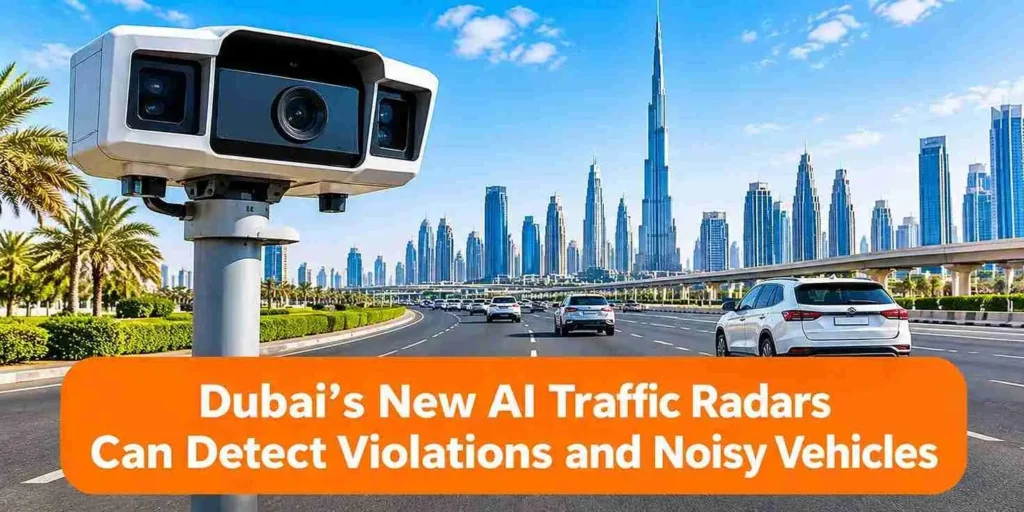
Dubai is preparing to introduce advanced solar-powered AI traffic radars designed to detect multiple traffic violations and noisy vehicles. From mobile phone use and seat belt violations to illegal lane changes and excessive vehicle noise, these smart systems aim to strengthen road safety and improve traffic monitoring across the Emirates.

Unlike conventional speed cameras, the AI-powered radars are expected to monitor a wider range of road violations. These include using mobile phones while driving, failing to wear seat belts, making illegal lane changes and driving vehicles that exceed permitted noise levels. By combining artificial intelligence with advanced detection technology, the systems aim to identify violations more efficiently and support real-time traffic monitoring.
Key Highlights at a Glance
| Feature | Details |
| New technology | Solar-powered AI traffic radars |
| Developer showcased | KTC International |
| Event | World Police Summit 2026, Dubai |
| Traffic violations detected | Mobile phone use, failure to wear seat belts and illegal lane changes |
| Noise monitoring | Measures vehicle sound levels and records evidence |
| Main objective | Improve road safety and reduce noise pollution |
Dubai to Introduce Advanced AI Traffic Radars
Dubai is preparing to take its road monitoring and traffic enforcement capabilities to the next level with advanced artificial intelligence-powered radars. These next-generation systems are designed to identify multiple traffic violations, monitor driver behaviour and detect vehicles producing excessive noise.
The new AI traffic radars in Dubai were among the advanced technologies showcased by KTC International at the World Police Summit 2026, highlighting how artificial intelligence and smart monitoring solutions can support safer roads.
Unlike conventional traffic cameras that focus on specific violations, these advanced systems can identify several types of unsafe driving behaviour. They are designed to detect motorists using mobile phones while driving, failing to wear seat belts and making illegal lane changes.
The technology also includes intelligent noise-detection capabilities that can measure vehicle sound levels and document potential violations through audio and visual recordings.
As Dubai continues to invest in smarter transport infrastructure, the introduction of these systems reflects a wider effort to strengthen road discipline, improve public safety and create quieter neighbourhoods.
Solar-Powered Radars Offer Greater Installation Flexibility
One of the most notable features of the new Dubai AI traffic radars is their solar-powered operation.
The systems are designed to function entirely on solar energy, eliminating the need for conventional electrical connections. This gives authorities greater flexibility when selecting installation locations across the emirate.
Solar-powered technology can support the deployment of monitoring equipment in different road environments without depending on nearby electricity infrastructure. It also reflects the growing use of sustainable energy solutions in public safety and transport management.
With greater flexibility in installation, these advanced traffic monitoring systems UAE could support more comprehensive coverage across different areas, subject to the authorities’ deployment plans.
The technology combines artificial intelligence, digital monitoring and renewable energy to make traffic enforcement more adaptable and efficient.
Which Traffic Violations Can the New AI Radars Detect?
The advanced systems are designed to identify several common driving violations that can increase accident risks and affect road safety.
1. Mobile Phone Use While Driving
Using a mobile phone behind the wheel is a major distraction that can reduce a driver’s attention and reaction time. Even a brief glance at a screen can prevent motorists from responding quickly to changing road conditions.
The AI-powered systems are designed to detect mobile phone use while driving, helping authorities identify distracted motorists and strengthen enforcement.
Drivers should avoid holding or operating mobile phones while driving and keep their attention focused on the road.
2. Failure to Wear Seat Belts
Drivers should avoid holding or operating mobile phones while driving and keep their attention focused on the road.
Seat belts remain one of the most important vehicle safety features. However, motorists and passengers who fail to wear them put themselves at greater risk of serious injuries during accidents.
The new radars can identify seat belt violations using advanced monitoring technology. This capability is expected to support greater compliance with road safety requirements and encourage safer driving habits.
3. Illegal Lane Changes
Sudden or unauthorised lane changes can disrupt traffic flow and create dangerous situations, particularly on busy roads and highways.
The AI traffic violation detection technology is designed to identify illegal lane changes and monitor driver behaviour. By documenting such offences, the systems can help authorities address unsafe driving practices and promote better lane discipline.
These capabilities demonstrate how smart traffic cameras UAE are evolving beyond traditional speed monitoring to identify a wider range of road safety concerns.
AI-Powered Noise Detection to Target Loud Vehicles
Another important feature of the technology is its ability to identify vehicles producing excessive noise.
Dubai’s new noise-detection radars are designed to measure sound levels emitted by vehicles and automatically document potential violations. Using artificial intelligence, the systems can capture images of vehicles and record audio and visual evidence.
This technology is particularly relevant to concerns about modified exhaust systems, excessively loud engines and vehicles that create unnecessary disturbance in residential areas.
Excessive vehicle noise can affect residents, pedestrians and other road users. It can also reduce the comfort of neighbourhoods, particularly during late-night and early-morning hours.
By introducing advanced noisy vehicle detection in Dubai, authorities aim to strengthen monitoring and discourage motorists from using vehicles that exceed permitted noise levels.
The technology is intended to support quieter streets and more comfortable urban environments while improving overall traffic management.
How AI Technology Can Improve Traffic Enforcement
Traditional traffic monitoring often depends on fixed cameras, radar equipment and physical inspections. AI-powered systems introduce an additional layer of automated monitoring by analysing information and identifying potential violations.
The new technology is designed to combine image capture, sound measurement and artificial intelligence to detect and document different types of offences.
This can help authorities monitor road behaviour more effectively and identify violations that may not always be easy to observe through conventional enforcement methods.
The technology also supports Dubai’s broader approach to smart mobility, where digital infrastructure and data-driven solutions play an increasingly important role in managing urban transport.
However, the exact operational procedures, deployment locations and enforcement timelines for the newly showcased systems have not yet been detailed in the announcement.
What Dubai Motorists Should Know About the New AI Radars
The introduction of advanced AI monitoring technology is a reminder for motorists to follow traffic regulations consistently.
Drivers should make sure they wear seat belts, avoid using handheld mobile phones while driving and follow lane markings and road signs. They should also ensure that their vehicles meet applicable noise requirements.
Vehicle owners who have modified exhaust systems or performance components should pay particular attention to noise levels and ensure that modifications comply with UAE regulations.
Motorists should also keep up with official announcements from Dubai Police and the relevant authorities regarding new radar installations and enforcement measures.
Although the announcement highlights the capabilities of the new systems, it does not specify their final installation locations, deployment schedule or any new fine amounts. Drivers should therefore refer to official updates rather than rely on unverified claims about penalties.
A Step Towards Smarter and Safer Roads in Dubai
Dubai’s planned introduction of solar-powered AI traffic radars highlights the emirate’s growing focus on technology-driven road safety and sustainable infrastructure.
By combining traffic violation detection with vehicle noise monitoring, these systems are designed to address more than one road safety concern through a single advanced monitoring approach.
From identifying distracted driving and seat belt violations to detecting excessive vehicle noise, the technology could support better traffic discipline and more comfortable urban surroundings.
As Dubai continues to expand its smart traffic management capabilities, motorists can expect road safety monitoring to become increasingly technology-driven. Following traffic regulations, maintaining vehicles responsibly and staying informed about official updates will remain essential for every road user.
Final Thoughts
Dubai’s new AI traffic radars signal another step towards smarter traffic enforcement, safer driving conditions and quieter streets. For motorists, the message is simple: follow road rules, avoid distractions and keep vehicles compliant with applicable safety and noise standards.
Stay updated on the latest UAE automotive news, traffic developments, road regulations and vehicle technology with Miss Auto UAE.
Frequently Asked Questions
What are the new AI traffic radars in Dubai?
They are advanced solar-powered traffic monitoring systems designed to use artificial intelligence to detect road violations, monitor driver behaviour and identify vehicles producing excessive noise.
Which traffic violations can Dubai's new AI radars detect?
The systems are designed to detect failure to wear seat belts, mobile phone use while driving and illegal lane changes.
Can the new Dubai radars detect noisy vehicles?
Yes. The noise-detection technology can measure vehicle sound levels and document potential violations using audio and visual recordings.
Are Dubai's new AI traffic radars solar-powered?
Yes. The systems operate entirely on solar power, eliminating the need for conventional electrical connections and offering greater flexibility in installation.
When will the new AI traffic radars be installed in Dubai?
Dubai is preparing to introduce the systems. However, an exact installation schedule and the locations of the new radars have not been announced in the report.
Have new traffic fines been announced for violations detected by these radars?
The announcement focuses on the technology’s detection capabilities. It does not specify new fine amounts. Motorists should refer to official Dubai Police and UAE government updates for applicable penalties.