

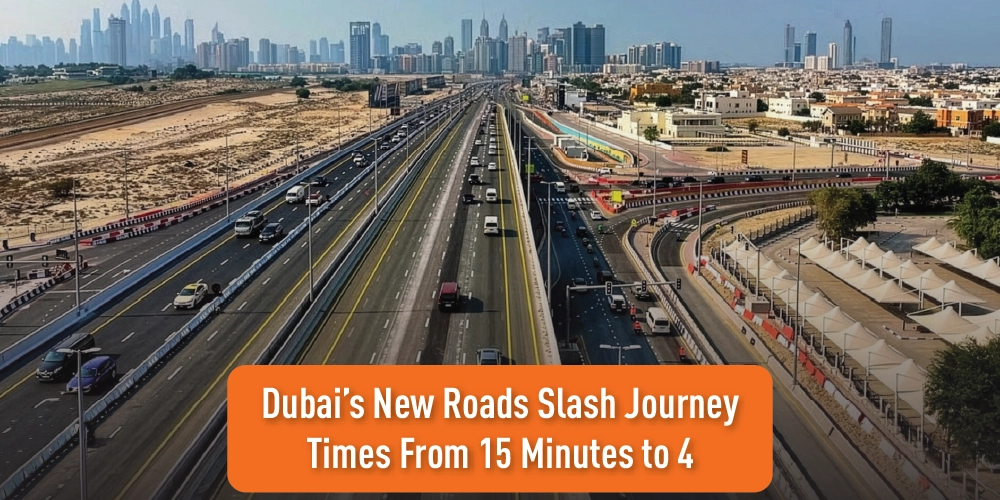

Dubai is entering a new phase of road and transport development, with major infrastructure projects helping motorists spend less time in traffic and more time reaching their destinations.

Several major Roads and Transport Authority (RTA) projects completed or progressing in 2026 are delivering measurable improvements across key corridors. In some locations, journey times have fallen dramatically – including the Hessa Street route between Sheikh Zayed Road and Al Khail Road, where travel time has dropped from around 15 minutes to just four minutes.
The improvements range from new bridges and tunnels to additional lanes, upgraded intersections and redesigned traffic connections. Together, these projects are designed to increase road capacity, reduce congestion and support Dubai’s growing population and mobility requirements.
Here’s everything you need to know about the latest Dubai new roads and infrastructure upgrades, how much time they are saving and which areas are benefiting.
Dubai New Roads – Quick Overview
Category | Details |
Authority | Dubai Roads and Transport Authority (RTA) |
Main Focus | Road capacity, traffic flow and connectivity |
Major 2026 Improvement | Hessa Street |
Hessa Street Travel Time | 15 minutes to 4 minutes |
Hessa Street Capacity | 8,000 to 16,000 vehicles per hour |
Dubai Harbour Bridge | 12 minutes to 3 minutes |
Commercial Centre Roundabout | 8 minutes to 2 minutes |
World Trade Centre Roundabout | 6 minutes to 1 minute |
Key Infrastructure | Bridges, tunnels, lanes and intersections |
Main Objective | Faster journeys and reduced congestion |
Beneficiaries | Dubai residents, commuters and visitors |
What Are the New Roads and Infrastructure Projects in Dubai?
The latest new roads in Dubai are not limited to traditional road construction. RTA is combining road widening, bridges, tunnels, additional lanes and intersection upgrades to address specific congestion points.
According to the latest project data, five completed projects with published before-and-after travel figures collectively account for approximately 37 minutes of reduced travel time across five separate journeys.
Among the most significant improvements is the Hessa Street Development Project, which has transformed a busy 4.5-kilometre stretch between Sheikh Zayed Road and Al Khail Road.
Other major projects include the Dubai Harbour bridge, Commercial Centre Roundabout bridge, Al Qudra Road upgrades and the World Trade Centre Roundabout improvements.
Also Read: Top Road Safety Mistakes New Drivers Make in UAE Every Day
Hessa Street: Journey Time Cut From 15 Minutes to 4
Hessa Street is currently one of the clearest examples of how Dubai’s infrastructure investment is changing daily commuting.
The completed project covers approximately 4.5 kilometres between Sheikh Zayed Road and Al Khail Road. Hessa Street was expanded from two lanes to four lanes in each direction, while four major intersections were upgraded.
The result is significant: travel time has fallen from approximately 15 minutes to four minutes, while road capacity has doubled from 8,000 to 16,000 vehicles per hour in both directions.
The upgraded intersections connect Hessa Street with Sheikh Zayed Road, Al Asayel Street, First Al Khail Street and Al Khail Road.
For commuters travelling between major residential and commercial communities, the improvement can translate into substantially shorter daily journeys.
Dubai Harbour Bridge Cuts Travel Time to 3 Minutes
Another major addition is the Dubai Harbour bridge.
The 1,500-metre bridge provides two lanes in each direction and has a capacity of approximately 6,000 vehicles per hour. The project connects Sheikh Zayed Road with Dubai Harbour through a series of key intersections and roads.
The improvement has reduced travel time on the relevant route from approximately 12 minutes to just three minutes.
The bridge was opened in phases, with traffic movements from Sheikh Zayed Road into Dubai Harbour opening first in June 2026 and remaining movements following in July.
This is particularly important for motorists travelling towards one of Dubai’s major waterfront destinations and surrounding developments.
Commercial Centre Roundabout Gets a Major Upgrade
The Commercial Centre Roundabout has also received a new 500-metre bridge.
Opened on May 9, 2026, the bridge handles outbound traffic from Al Bada’a towards 2nd of December Street and provides connections towards Sheikh Rashid Street and Al Wasl Street.
The project has reduced travel time on the relevant route from around eight minutes to two minutes.
By providing a more direct traffic movement, the upgrade is designed to improve access to Sheikh Zayed Road and distribute vehicles more efficiently across surrounding roads.
For drivers who regularly encounter congestion in this area, the change can make peak-hour journeys considerably smoother.
Al Qudra Road Improvements Target Major Congestion
Another important component of the Dubai road projects 2026 programme is the development around Al Qudra Street and Sheikh Zayed bin Hamdan Al Nahyan Street.
A 700-metre, four-lane bridge opened on August 9, 2026, with a capacity of approximately 6,000 vehicles per hour. The overall intersection improvement is expected to reduce waiting time by up to 85 per cent, from nearly seven minutes to around one minute once the complete scheme is finished.
The wider Al Qudra Road Development Project stretches between Sheikh Mohammed bin Zayed Road and Emirates Road and includes approximately 4,000 metres of bridges and an 11.6-kilometre road upgrade.
Once completed, corridor journey times are expected to fall by around 70 per cent, from 9.4 minutes to 2.8 minutes.
The project is particularly relevant to communities such as Arabian Ranches, Dubai Motor City, Dubai Studio City, DAMAC Hills, Mudon and The Sustainable City.
Also Read: Driving in Al Ain: Best Cars, Service Centers & Road Safety Tips
World Trade Centre Roundabout Becomes Faster
The World Trade Centre Roundabout is another major location benefiting from infrastructure improvements.
A one-kilometre, two-lane bridge opened in June 2026, providing a direct movement from Sheikh Zayed Road towards Sheikh Khalifa bin Zayed Street. The improvement has reduced travel time on the relevant route from around six minutes to one minute.
The wider project involves five bridges. Once the complete scheme is finished, RTA expects delays through the area to fall from approximately 12 minutes to around 90 seconds.
The roundabout is strategically important because several major arterial roads converge in the area, including Sheikh Khalifa bin Zayed Street, Sheikh Rashid Street, 2nd of December Street, Zabeel Palace Street and Al Majlis Street.
Oud Metha Road Project Could Deliver Another Major Time Saving
One of the most significant upcoming improvements involves Oud Metha Road and Al Asayel Street.
A three-lane bridge opened in July 2026, followed by a 260-metre tunnel in August. The complete project is expected to reduce travel time from approximately 20 minutes to five minutes — a potential 75 per cent reduction.
The project covers four major intersections, approximately 4.3 kilometres of bridges and tunnels and 14 kilometres of road improvements.
Once completed, Oud Metha Street’s capacity is expected to increase by 50 per cent, from 10,400 to 15,600 vehicles per hour in both directions.
The development serves areas including Zabeel, Al Jaddaf, Oud Metha and Umm Hurair.
How Are Dubai’s Road Projects Reducing Travel Times?
The latest Dubai road projects 2026 demonstrate that reducing congestion is not simply about adding more lanes.
RTA is using several engineering solutions, including:
- New bridges to bypass congested intersections
- Tunnels to reduce traffic overlap
- Additional lanes at key bottlenecks
- Upgraded intersections
- Improved entry and exit points
- Direct connections between major highways
- Redesigned traffic movements
- Service-road improvements
These measures allow vehicles to move more efficiently instead of repeatedly stopping at heavily congested intersections.
The Hessa Street project, for example, combines road widening with bridge and intersection upgrades, helping double capacity while significantly reducing journey time.
Why Are Faster Routes Important for Dubai?
Dubai’s population and urban development continue to expand, creating increasing demand for efficient transport infrastructure.
Faster road connections can benefit motorists in several ways.
Reduced Daily Commuting Time
Even a few minutes saved on every journey can make a meaningful difference for people who commute every day.
Lower Congestion
Higher road capacity and improved traffic distribution can reduce queues at major intersections.
Better Connectivity
New bridges and direct links can make it easier to move between major highways and residential communities.
Improved Productivity
Less time spent in traffic can give commuters more time for work, family and other activities.
Support for Urban Growth
Efficient road infrastructure helps new residential and commercial developments connect with established parts of the city.
How Will These Projects Affect Dubai Drivers?
For motorists, the biggest change is likely to be more predictable journey times across several major corridors.
Drivers travelling through Hessa Street, Dubai Harbour, Al Qudra, World Trade Centre and Oud Metha can benefit from new or upgraded connections as individual projects become fully operational.
The impact will vary depending on the route, time of day and traffic conditions. However, the published figures demonstrate the potential of targeted infrastructure upgrades to significantly improve traffic movement.
Also Read: ADAS Tech Transforming Road Safety Across UAE
What Other Dubai Road Projects Are Coming?
Dubai’s road development programme extends beyond projects already completed in 2026.
The second phase of the Hessa Street project is already under way and covers approximately three kilometres between Al Khail Road and Sheikh Mohammed bin Zayed Road. Once completed, RTA expects travel time along the extended corridor to fall from 24 minutes to five minutes.
Additional works are also planned for the Oud Metha project, World Trade Centre Roundabout and Al Qudra corridor.
Another major long-term development is the Al Shindagha Corridor Improvement Project. By 2030, the 13-kilometre route is expected to reduce journey times from 104 minutes to 16 minutes.
Dubai is also developing the Dh2 billion Latifa bint Hamdan Corridor, which will connect six major roads and is expected to reduce travel time between Umm Al Sheif Street and Emirates Road from 33 minutes to 15 minutes.
How Dubai’s Infrastructure Development Supports Future Growth
The latest road upgrades show that Dubai’s transport planning is increasingly focused on preparing the network for future demand rather than simply addressing today’s congestion.
As residential communities expand and commercial districts develop, road capacity needs to grow alongside them.
The RTA’s projects are therefore designed around longer-term connectivity, including links between major highways, bridges over busy junctions and tunnels that separate conflicting traffic movements.
This approach makes Dubai infrastructure development an important part of the emirate’s wider urban growth strategy.
What Do the New Road Projects Mean for Residents?
For residents, the benefits can extend beyond simply reaching a destination faster.
Shorter journeys can improve access to workplaces, schools, hospitals, shopping destinations and residential communities. Better connectivity can also make previously congested areas more attractive for residents and businesses.
The Hessa Street project, for example, serves several major communities and is expected to support areas whose combined population is projected to exceed 640,000 by 2030.
Similarly, the Oud Metha improvements serve communities including Zabeel, Al Jaddaf, Oud Metha and Umm Hurair, while the Al Qudra development supports several large residential communities.
Dubai New Roads: What Drivers Should Remember
The latest Dubai new roads and infrastructure upgrades are changing how motorists move across some of the emirate’s busiest corridors.
From Hessa Street’s dramatic reduction from 15 minutes to four to the Dubai Harbour bridge’s reduction from 12 minutes to three, the projects demonstrate how targeted road improvements can deliver measurable benefits.
The improvements also go beyond individual journey times. Increased capacity, better intersections, new bridges and tunnels and stronger connections between major roads are helping create a more efficient transport network.
For Dubai motorists, this means faster routes, improved connectivity and potentially less time spent waiting in traffic.
Closing Insights
Dubai’s latest road developments are reshaping daily travel across the emirate.
Major projects completed in 2026 have already delivered substantial journey-time reductions, while several additional developments are still under construction. Hessa Street, Dubai Harbour, Commercial Centre Roundabout, Al Qudra and World Trade Centre are among the projects delivering notable improvements.
The scale of these upgrades also highlights Dubai’s continued focus on expanding transport infrastructure in line with population growth and increasing mobility demand.
As more projects are completed, motorists can expect additional connectivity improvements and faster journeys across the city’s major corridors.
For anyone living, working or travelling in Dubai, keeping track of these new roads in Dubai can help make everyday journeys more efficient and easier to plan.
Stay Updated with the Latest UAE Transport & Automotive News
Stay informed with the latest updates on Dubai road projects, RTA developments, traffic improvements, vehicle technology, road safety, electric vehicles, smart mobility and major automotive developments across the UAE.
Guest Blog Submission
Passionate about automobiles, transportation, mobility or the UAE automotive industry?
We welcome original articles covering car maintenance, road safety, vehicle technology, electric vehicles, automotive trends, smart mobility, traffic management and the future of transportation.
Share your expertise and become part of our growing contributor community. We welcome professionals, entrepreneurs, marketers, automotive enthusiasts and industry thought leaders to contribute original, informative and engaging content.
Frequently Asked Questions
1. Which Dubai road project has reduced travel time from 15 minutes to four minutes?
The Hessa Street Development Project has reduced travel time between Sheikh Zayed Road and Al Khail Road from approximately 15 minutes to four minutes.
2. What are the major new roads and road upgrades in Dubai in 2026?
Major developments include Hessa Street, Dubai Harbour, Commercial Centre Roundabout, Al Qudra Road, World Trade Centre Roundabout and Oud Metha Road improvements.
3. How much time does the Dubai Harbour bridge save?
The Dubai Harbour bridge has reduced travel time on the relevant route from approximately 12 minutes to three minutes.
4. What is happening at the World Trade Centre Roundabout?
A new one-kilometre bridge opened in June 2026, reducing travel time on its route from around six minutes to one minute. Further bridges are planned as part of the wider intersection upgrade.
5. How will the Oud Metha Road project improve traffic?
The completed and ongoing improvements include bridges and tunnels designed to reduce traffic overlap and improve connectivity. Once completed, travel time is expected to fall from approximately 20 minutes to five minutes.
6. What is the purpose of Dubai’s road infrastructure projects?
The projects are designed to increase road capacity, reduce congestion, improve connectivity and support the emirate’s continued population and urban growth.
7. Are more Dubai road projects coming?
Yes. Further phases of Hessa Street, additional World Trade Centre bridges, Al Qudra side ramps and other major corridor projects are planned or under construction.
8. How can drivers benefit from the new road improvements?
Drivers can benefit from shorter journey times, improved connectivity, reduced waiting at intersections and more efficient routes between major residential, commercial and highway corridors.


