Dubai is known for its impressive highways, well-connected urban roads and advanced transport infrastructure. But maintaining a world-class road network in a rapidly growing city requires more than building wider roads. It involves continuous inspections, preventive maintenance, smart technology and long-term infrastructure planning.

The latest figures from Dubai’s Roads and Transport Authority (RTA) show just how much attention is given to the condition of the emirate’s roads. According to RTA, 95% of Dubai’s road network assets received an “excellent” rating under its Road Network Asset Condition Index (ACI). The system evaluates the structural and operational condition of roads and related infrastructure across the emirate.
This achievement helps explain why Dubai road quality continues to receive international recognition. The focus is not simply on keeping asphalt smooth, but on monitoring the entire road environment, including signs, barriers, lighting, traffic signals and other assets.
So, what makes Dubai’s roads stand out? Here’s a closer look at the technology, maintenance strategy and infrastructure planning behind the emirate’s highly rated road network.
Dubai Roads – Quick Overview
| Category | Details |
| Authority | Roads and Transport Authority (RTA) |
| Road Asset Rating | 95% rated excellent |
| Assessment System | Road Network Asset Condition Index |
| Assessment Scale | 0–100 |
| Key Technology | LiDAR, AI and automated data extraction |
| Assessment Frequency | Entire road network assessed annually |
| GIS Integration | Yes |
| Assets Covered | More than 38 road asset classes |
| Main Objective | Safety, efficiency and proactive maintenance |
| Location | Dubai, UAE |
RTA says its assessment system provides continuous information about the condition of Dubai’s road assets and helps identify maintenance priorities before problems become more serious.
What Is the Road Network Asset Condition Index?
The Road Network Asset Condition Index, or ACI, is a system developed by RTA to measure the structural and operational condition of road assets.
Instead of looking only at the road surface, the system takes a wider view of infrastructure.
It can assess assets such as:
- Road pavements
- Traffic signs
- Safety barriers
- Lighting poles
- Traffic signals
- Fencing
- Other road-related infrastructure
RTA says its ACI methodology provides a quantitative way of understanding the health of road assets and helps the authority plan interventions throughout the infrastructure lifecycle.
Dubai Road Network 2026: How Is It Being Monitored?
The Dubai road network 2026 is supported by increasingly advanced inspection technology.
RTA uses LiDAR, artificial intelligence and automated data extraction to survey road infrastructure. These technologies allow the authority to collect detailed information without relying solely on traditional visual inspections.
LiDAR technology can conduct high-precision digital surveys of more than 38 road asset classes. Importantly, these surveys can be carried out while vehicles are moving, meaning roads do not necessarily have to be closed for inspections.
This makes the inspection process more efficient, particularly on busy highways and freeways where traditional inspection methods could disrupt traffic.
How Artificial Intelligence Supports Dubai's Roads
Artificial intelligence is another important part of Dubai’s road asset management strategy.
AI can help process large volumes of information collected during road surveys. Instead of relying exclusively on manual inspections, automated systems can assist in identifying deterioration and determining which assets require attention.
This supports a more proactive approach to infrastructure management.
The combination of AI, LiDAR and automated data extraction gives RTA a broader and more detailed understanding of road conditions across the emirate.
Why Preventive Maintenance Matters
Preventive maintenance is one of the most important factors behind a reliable road network.
A small crack, surface defect or damaged road asset may not initially create a major problem. However, if it is left untreated, deterioration can accelerate and eventually require more extensive repairs.
RTA’s approach focuses on identifying such issues early.
The authority says its annual assessment programme helps create a continuous picture of the health of Dubai’s road network, allowing maintenance priorities to be identified before problems become more costly or disruptive.
RTA Road Maintenance: More Than Repairing Asphalt
RTA road maintenance is not limited to resurfacing damaged roads.
Modern road asset management covers a much wider range of infrastructure, including pavement conditions, signs, lighting, safety barriers, traffic signals and fencing.
This broader approach helps ensure that the entire road environment remains functional and safe.
RTA’s preventive maintenance strategy also means that infrastructure can be monitored throughout its lifecycle rather than being repaired only after visible deterioration occurs.
How Often Are Dubai's Roads Assessed?
One of the notable elements of RTA’s system is the frequency of assessment.
The authority carries out an annual assessment of the entire road network. This provides updated information about the condition of road assets and helps identify changes in performance or deterioration over time.
Regular assessment is particularly important for Dubai because the city continues to experience rapid population growth, economic activity and increasing vehicle movement.
A road network that performs well today must also be prepared for tomorrow’s demand.
Dubai Road Network 2026 and Smart Infrastructure
The Dubai road network 2026 is increasingly connected to smart systems that support traffic management, infrastructure monitoring and maintenance planning.
RTA integrates road asset information with Geographic Information Systems (GIS), allowing data about different infrastructure components to be organised and analysed geographically.
This helps create a more comprehensive picture of the condition of roads across different parts of the emirate.
Smart data can also help authorities make better decisions about where resources should be allocated.
How Does Dubai Compare With Global Road Standards?
Dubai’s road infrastructure is designed with international benchmarking in mind.
RTA developed its ACI methodology after comparing its practices with major transport authorities and organisations in countries including the United States, Australia, Singapore, Japan, China, France and Sweden.
This benchmarking allows Dubai to examine how leading transport organisations assess road assets, automate inspections, calculate condition indices and determine maintenance frequency.
The goal is not simply to build roads but to manage them according to internationally recognised best practices.
UAE Road Quality and Dubai's Contribution
The UAE has also received strong international recognition for road quality.
A 2025 international ranking reported by Gulf News placed the UAE fourth globally and first in the Arab world for road quality. The ranking highlighted the country’s wide road networks, engineering standards, maintenance programmes and smart transport systems.
Dubai’s extensive road infrastructure and advanced asset management systems contribute to the wider UAE transport environment.
What Makes Dubai Roads Different?
Several factors help distinguish Dubai’s road system.
Advanced Infrastructure
The emirate has invested heavily in highways, bridges, tunnels, intersections and connecting roads.
Continuous Monitoring
Road infrastructure is assessed regularly rather than only when problems become visible.
Smart Technology
LiDAR, AI and automated data extraction help identify potential defects and infrastructure deterioration.
Preventive Maintenance
Maintenance is planned proactively to reduce the risk of larger problems.
International Benchmarking
RTA compares its asset management practices with transport organisations around the world.
Integrated Data
GIS integration allows road asset information to be mapped and analysed across the emirate.
Together, these elements create a road management strategy that focuses on both current performance and long-term reliability.
How Does RTA Detect Road Problems Early?
Traditional road inspections often depend heavily on visual checks.
Dubai’s approach combines conventional assessments with digital technologies that can scan road assets while vehicles are moving.
LiDAR surveys can collect detailed information about physical infrastructure, while AI and automated systems help process the resulting data.
This allows potential deterioration to be detected earlier and gives maintenance teams more information when deciding where intervention is needed.
RTA Road Maintenance and Road Safety
RTA road maintenance also plays an important role in supporting road safety.
Road surfaces, signs, barriers, lighting and traffic signals all contribute to the overall driving environment.
Keeping these assets in good condition helps reduce the likelihood that infrastructure deterioration will negatively affect motorists.
RTA’s recent rehabilitation programme demonstrates this broader approach. In June 2026, the authority announced the completion of 17 kilometres of asphalt maintenance and rehabilitation across nine major roads and six districts. The programme used annual inspections, laser technologies and artificial intelligence to identify cracks, surface deterioration and potholes.
How Does Dubai Maintain Roads During Extreme Weather?
Weather conditions can put additional pressure on road infrastructure.
Dubai and the wider UAE can experience high temperatures, heavy rain and occasional severe weather events, making preparation and rapid response important.
In March 2026, RTA said Dubai’s main road network and vital areas had fully recovered following severe weather, after proactive preparations and coordinated response measures.
This demonstrates that maintaining road quality involves not only routine inspections but also preparedness for unexpected conditions.
Why Road Quality Matters to Dubai's Economy
Road infrastructure is closely connected to economic activity.
Dubai’s roads support daily commuting, logistics, tourism, commercial transport and connections between residential and business districts.
A reliable road network helps people and goods move efficiently across the city.
This is why infrastructure investment is viewed as more than a transport requirement. Efficient roads can support business activity, productivity, tourism and quality of life.
RTA has repeatedly linked road development with Dubai’s wider economic and urban development objectives.
Dubai's Strategy: Maintain and Expand
One of the key lessons from Dubai’s road strategy is that expansion and maintenance need to happen together.
The city continues to build new infrastructure to accommodate population growth and increasing traffic demand.
At the same time, existing roads and assets require continuous monitoring and maintenance.
Recent projects demonstrate this dual approach. RTA has been developing major new corridors while also carrying out rehabilitation works on existing roads.
This helps Dubai maintain the performance of its existing network while preparing for future demand.
New Road Projects Supporting Dubai's Growth
Dubai’s road infrastructure continues to evolve through large-scale projects.
In 2026, RTA announced a Dh2 billion Latifa bint Hamdan Corridor Development Project. The 12-kilometre project includes seven bridges, eight tunnels and road widening, with the aim of improving connectivity between several major highways. It is scheduled for completion by the end of 2028.
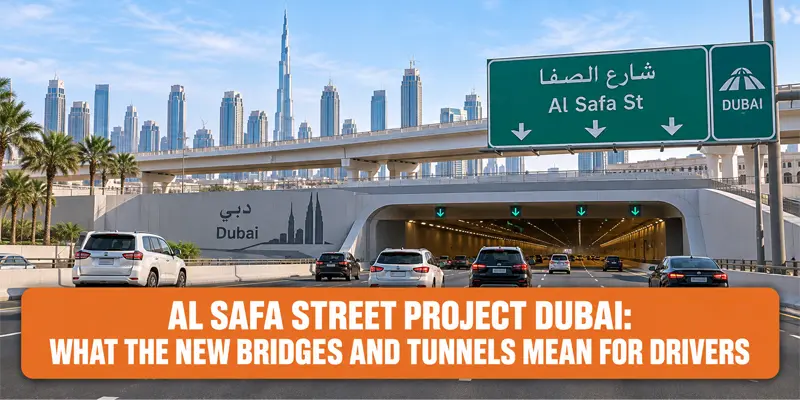
Other projects include upgrades to Umm Suqeim Street, Al Wasl Road and Al Safa Street, along with improvements to several intersections.
These projects demonstrate how Dubai is planning its transport infrastructure around future mobility requirements.
Final Insights
Dubai’s reputation for having some of the world’s most advanced roads is supported by a strategy that goes far beyond constructing highways.
The latest 95% excellent rating for road network assets demonstrates the importance of continuous monitoring and proactive infrastructure management.
Technology plays a central role, with LiDAR, artificial intelligence, automated data extraction and GIS helping RTA understand the condition of road assets across the emirate.
Stay Updated with the Latest UAE Automotive & Traffic News
Stay informed about Dubai road developments, RTA announcements, UAE traffic regulations, road infrastructure projects, road safety, parking updates, vehicle technology, electric mobility, car maintenance and major developments across the UAE automotive and transport sector.
Frequently Asked Questions
What is Dubai's current road quality rating?
RTA reports that 95% of Dubai’s road network assets are rated excellent under its Road Network Asset Condition Index.
How does RTA monitor Dubai's roads?
RTA uses technologies including LiDAR, artificial intelligence, automated data extraction and Geographic Information Systems to monitor road infrastructure.
How often are Dubai roads assessed?
RTA carries out an annual assessment of the entire road network to monitor asset condition and identify maintenance priorities.
What is the Road Network Asset Condition Index?
The ACI is a system used by RTA to measure the structural and operational condition of road assets on a scale from 0 to 100.
Why does Dubai use LiDAR for road inspections?
LiDAR allows RTA to conduct detailed digital surveys of road assets while vehicles are moving, helping identify deterioration without necessarily closing roads for inspection.