Electric vehicles are becoming increasingly common on UAE roads as more motorists switch to cleaner and more energy-efficient transportation. From Dubai and Abu Dhabi to Sharjah and other emirates, the growing adoption of electric vehicles is changing the country’s automotive landscape.

Recently, Dubai Police’s Aman Roads initiative highlighted important safety measures for electric vehicle owners, particularly concerning emergency exits, damaged batteries and post-accident procedures.
Understanding these precautions can help drivers respond appropriately during unexpected situations and reduce potential risks to themselves and other road users.
Whether you own a Tesla, BYD, BMW, Mercedes-Benz or another electric vehicle, here are the essential EV safety rules UAE drivers should know.
Why Do Electric Vehicles Require Different Safety Precautions?
Electric vehicles are generally designed to meet safety standards comparable to those of conventional vehicles. However, their high-voltage electrical architecture introduces additional considerations during accidents, electrical failures and battery-related emergencies.
Unlike conventional vehicles, EVs use large lithium-ion battery packs to power their electric motors. These battery systems contain high-voltage components that should only be handled by appropriately trained professionals.
A collision that damages the battery housing, electrical connections or associated components may create additional safety risks.
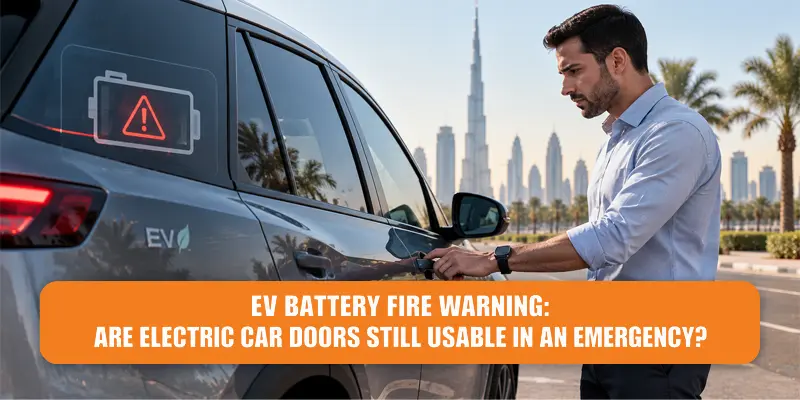
Some electric vehicles also use electronically operated door latches. If the vehicle loses electrical power following an accident, these systems may stop functioning normally.
This makes it important for EV owners to understand their vehicle’s emergency procedures before an incident occurs.
What Should EV Drivers Do After an Accident in the UAE?
Knowing how to respond after a collision is one of the most important aspects of EV accident safety UAE motorists should understand.
Although the initial response is similar to that for conventional vehicles, drivers must pay additional attention to potential battery damage and exposed electrical components.
According to Dubai Police’s Aman Roads guidance, motorists should follow these precautions:
1. Check for Smoke or Fire
Immediately assess the situation for visible smoke, flames or unusual signs of damage. If there is a potential fire risk, do not remain inside the vehicle unnecessarily.
2. Exit the Vehicle Safely
If electronic door locks stop functioning, use the manufacturer’s manual emergency door release. The location and operation of these mechanisms vary between vehicle models.
3. Move Away from the Vehicle
Once outside, move to a safe location away from traffic and the damaged vehicle. Keep other passengers and bystanders at a safe distance.
4. Contact Emergency Services
Call the relevant UAE emergency services if there are injuries, fire risks or other serious dangers. Inform responders that the incident involves an electric vehicle.
5. Avoid High-Voltage Components
Never touch exposed electrical cables, damaged battery components or other high-voltage systems. Do not attempt to inspect or repair the battery yourself.
These precautions can help reduce the risk of electrical injuries and other complications while waiting for professional assistance.
Electric Vehicle Emergency Guidelines: What If the Doors Stop Working?
One important concern highlighted by Dubai Police involves electronic door locking systems.
Some electric vehicles rely on electronically operated door handles and latches. Following a collision or electrical failure, these systems may become unresponsive, potentially making it difficult for occupants to exit.
Most manufacturers provide manual emergency releases to address this situation. However, their locations and operating procedures differ between models.
EV owners should take the following precautions:
- Read the vehicle owner's manual to identify the emergency door release.
- Learn how to operate the manual release for both front and rear seating areas where applicable
- Understand how the vehicle's automatic locking system works.
- Keep emergency instructions accessible inside the vehicle.
- Familiarise yourself with available mobile app functions without depending on them as the only emergency exit option.
Preparing in advance can make a significant difference during unexpected electrical failures.
Are Electric Vehicle Battery Fires More Dangerous?
Lithium-ion battery fires are an important safety consideration for electric vehicle owners.
Although EV battery fires are relatively uncommon, they can present different challenges for emergency responders compared with conventional vehicle fires.
One potential concern is a process known as thermal runaway.
Thermal runaway occurs when a damaged or failing battery cell generates excessive heat, potentially spreading the reaction to neighbouring cells. This can result in a fire that requires specialised firefighting procedures.
There are three important considerations:
Fire Suppression: EV battery fires may require specialised firefighting techniques and equipment.
Risk of Reignition: A damaged battery can continue generating heat and may reignite even after an initial fire has been extinguished.
Professional Inspection: An electric vehicle involved in a serious collision may require specialist battery inspection before it can safely return to the road or be connected to a charging station.
If smoke or flames appear, stop the vehicle at a safe location if possible, evacuate everyone immediately and move away. Never attempt to open the battery compartment or handle damaged electrical components.
Call the fire department on 997 and inform emergency responders that the vehicle is electric.
Electric Car Breakdown UAE: What Should Drivers Do?
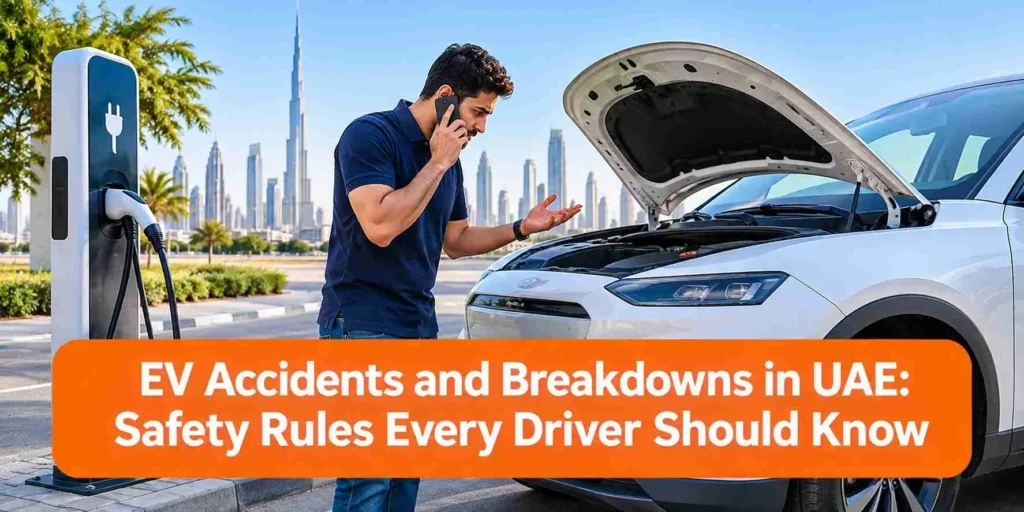
An electric car breakdown UAE motorists experience may involve several issues, including battery depletion, electrical system faults, charging problems or unexpected warning messages.
Unlike conventional vehicles, EVs depend on multiple electronic systems and battery management components. Therefore, drivers should avoid attempting unfamiliar repairs when the vehicle stops functioning.
Here are some important EV breakdown procedures UAE drivers should follow.
1. Move to a Safe Location
If the vehicle develops a fault while driving, safely move away from moving traffic whenever possible.
Switch on the hazard warning lights and park in a suitable location. Avoid stopping in dangerous areas, particularly on highways or busy roads.
2. Assess the Battery and Warning Messages
Check the vehicle’s dashboard for battery warnings, electrical system notifications or other fault messages.
If the vehicle indicates a high-voltage system fault, do not attempt to restart it repeatedly or investigate the electrical components yourself.
3. Contact Electric Car Roadside Assistance
Contact your vehicle manufacturer’s roadside assistance provider or an authorised recovery service.
Explain the nature of the breakdown, the vehicle model and its location. If the battery is completely depleted, ask about available charging or recovery options.
4. Follow the Manufacturer's Towing Instructions
Electric vehicles may require specific recovery procedures to prevent damage to their motors, transmission components and electrical systems.
Do not assume that an EV can be towed in the same way as a petrol-powered car. Request a recovery vehicle suitable for your model and follow the manufacturer’s towing instructions.
5. Stay Away from Dangerous Traffic Areas
If the vehicle stops on a highway, prioritise personal safety. Where possible, exit from the side away from moving traffic and move behind a suitable safety barrier.
Avoid standing directly behind or beside a disabled vehicle in an exposed traffic lane.
Essential EV Safety Features Every Driver Should Understand
Modern electric vehicles come with several advanced driver-assistance and safety technologies. However, drivers should understand how these features operate rather than relying on them completely.
Some important systems include:
Automatic Emergency Braking: This technology can help reduce collision risks by detecting potential obstacles and applying braking assistance when required.
Parking Assistance: Parking sensors and assistance systems help drivers manoeuvre in restricted spaces. Understanding how to activate and disengage these features is important.
Driver Assistance Systems: Features such as adaptive cruise control and automated driving assistance can support driving, but drivers must remain attentive and ready to regain full control.
Electronic Door Locks: Understanding the automatic locking mechanism and manual emergency release can help occupants exit during power failures.
Drivers should also keep their vehicle’s emergency instructions and roadside assistance contact details readily accessible.
UAE Emergency Numbers Every EV Driver Should Save
During an accident, battery fire or serious roadside emergency, contacting the appropriate emergency service is essential.
The following emergency numbers are available across the UAE:
| Emergency Service | Contact Number |
| Police | 999 |
| Ambulance | 998 |
| Fire Department (Civil Defence) | 997 |
Drivers should provide their exact location, explain the nature of the incident and mention whether the vehicle involved is electric.
For non-emergency mechanical issues, contact your vehicle manufacturer’s roadside assistance service or a qualified EV recovery provider.
How Can EV Owners Prepare for Emergencies?
Preventive preparation is an important part of UAE EV driving safety. Knowing how to respond before an accident or breakdown occurs can help drivers avoid unnecessary risks.
Here are some practical recommendations:
- Understand Your Vehicle: Read the owner’s manual and learn about emergency door releases, battery warnings and safety systems.
- Monitor Battery Levels: Check your available driving range and plan charging stops before starting long journeys.
- Keep Emergency Contacts Accessible: Save police, ambulance, fire department and roadside assistance numbers.
- Understand Charging Safety: Follow manufacturer instructions and use compatible charging equipment.
- Check Warning Notifications: Never ignore unusual battery, electrical system or temperature warnings.
- Know Your Recovery Options: Understand the approved towing and transportation procedures for your specific EV model.
- Stay Updated: Follow official UAE road safety guidance and manufacturer recommendations.
Taking these steps can help EV owners manage unexpected situations more confidently.
Final Verdict
Electric vehicles offer several advantages, including efficient performance, reduced tailpipe emissions and lower routine maintenance requirements. However, their high-voltage battery systems and electronic components introduce specific safety considerations during accidents and breakdowns.
Understanding the EV safety rules UAE drivers should follow is essential as electric vehicle adoption continues to grow across the country.
From learning how to use manual emergency door releases to recognising battery fire risks and following the correct EV breakdown procedures UAE motorists should know, preparation plays an important role in road safety.
Drivers should never attempt to inspect damaged high-voltage components or restart a vehicle that may have sustained battery damage. Instead, they should move to a safe location and seek assistance from qualified professionals.
As electric mobility continues to expand across the UAE, responsible driving, emergency awareness and proper vehicle maintenance will remain important for every EV owner.
For more UAE automotive news, electric vehicle updates, road safety advice and industry developments, stay connected with Miss Auto UAE.
Frequently Asked Questions
What are the important EV safety rules UAE drivers should follow?
Drivers should understand emergency door releases, avoid touching high-voltage components, monitor battery warnings, maintain safe charging practices and contact emergency services when necessary.
What should I do if my electric car is involved in an accident in the UAE?
Check for smoke or fire, exit the vehicle safely, move away from traffic and the damaged vehicle, and contact emergency services. Never touch exposed high-voltage cables or damaged battery components.
What should I do during an electric car breakdown UAE?
Move the vehicle to a safe location if possible, switch on the hazard lights, check dashboard warnings and contact authorised roadside assistance. Follow the manufacturer’s recovery and towing instructions.
Can an electric vehicle catch fire after an accident?
Yes. Although EV battery fires are relatively uncommon, damage to lithium-ion battery cells can potentially trigger thermal runaway. Damaged batteries may also reignite after an initial fire has been extinguished.
How can I open an electric car door if the battery loses power?
Many EVs have manual emergency door releases that can operate when electronic locking systems fail. Their locations and procedures vary by manufacturer, so drivers should consult their vehicle owner’s manual.
What are the UAE emergency numbers for electric vehicle accidents?
Drivers can call 999 for police, 998 for ambulance services and 997 for the Civil Defence fire department. Inform emergency responders if the incident involves an electric vehicle.