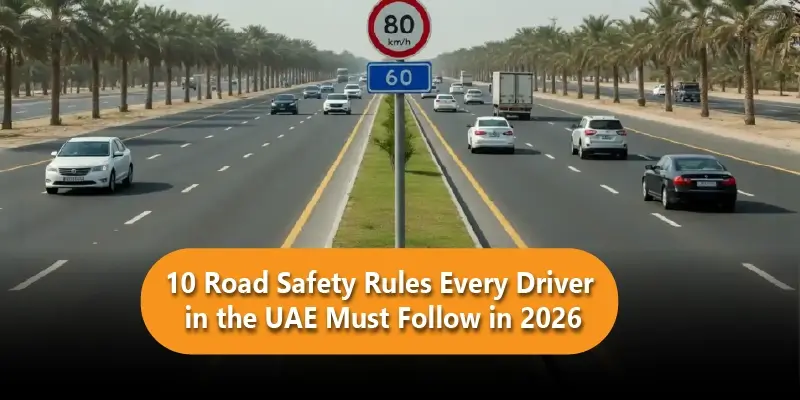
Road safety remains one of the most important priorities across the UAE as authorities continue investing in advanced traffic monitoring systems, intelligent transportation technologies, and stricter enforcement measures. With increasing vehicle numbers and busy urban highways, drivers are expected to follow traffic regulations carefully to ensure the safety of all road users.

Understanding and following the road safety rules UAE 2026 is not only essential for avoiding fines and black points but also for protecting lives. From maintaining safe distances to respecting speed limits and avoiding distractions, responsible driving habits can significantly reduce the risk of accidents. UAE authorities continue to emphasize seatbelt usage, lane discipline, speed compliance, and safe road behavior as part of broader road safety initiatives.
This guide highlights ten essential road safety rules every UAE driver should follow in 2026.
Table of Contents
- Why Road Safety Matters in the UAE
- 10 Essential Road Safety Rules Every Driver Must Follow
- Common Traffic Violations Drivers Should Avoid
- Benefits of Following Road Safety Rules
- How Technology Is Improving Road Safety
- Final Verdict
- FAQ
Why Road Safety Matters in the UAE
The UAE has some of the region’s most advanced road networks, but safe driving remains a shared responsibility among all motorists. Traffic authorities continue strengthening enforcement measures and awareness campaigns to improve road safety and reduce accidents. Recent traffic regulations and enforcement initiatives highlight the government’s commitment to safer roads and stricter compliance standards.
Following proper driving habits helps:
- Reduce road accidents
- Improve traffic flow
- Protect passengers and pedestrians
- Avoid fines and black points
- Enhance overall driving confidence
These principles form the foundation of effective responsible driving UAE initiatives.
10 Essential Road Safety Rules Every Driver Must Follow
1. Always Wear Your Seatbelt
Seatbelts remain one of the most effective safety features in any vehicle. UAE regulations require drivers and passengers to wear seatbelts at all times. Children must also be secured using appropriate child safety seats.
2. Follow Posted Speed Limits
Speeding remains one of the leading causes of serious traffic accidents. Drivers should always obey posted speed limits, which may vary depending on road type, traffic conditions, and location. Authorities have recently adjusted speed limits on certain roads to further enhance safety.
3. Never Use a Mobile Phone While Driving
Driver distraction significantly increases accident risk. Using a mobile phone while driving can reduce reaction time and divert attention away from the road. Keeping phones out of reach is one of the most important UAE driving safety tips for motorists.
4. Maintain a Safe Following Distance
Tailgating is a common cause of rear-end collisions. Drivers should always leave enough space between vehicles to react safely to sudden braking or unexpected road situations.
5. Use Indicators for Every Lane Change
Proper signaling helps other drivers anticipate your movements and reduces the likelihood of collisions. Lane discipline remains a key component of modern traffic rules UAE 2026.
6. Never Drive Under the Influence
The UAE maintains a strict zero-tolerance policy toward driving under the influence of alcohol or prohibited substances. Violations can result in severe penalties, legal consequences, and license-related actions.
7. Respect Traffic Signals and Road Signs
Ignoring traffic lights, stop signs, or road markings can create dangerous situations for all road users. Drivers should remain alert and follow all traffic control devices at all times.
8. Be Extra Cautious Around Pedestrians
Pedestrian crossings, school zones, and residential areas require heightened attention. Drivers must slow down and give priority when required to ensure pedestrian safety.
9. Avoid Aggressive Driving
Sudden lane changes, road rage, reckless overtaking, and aggressive acceleration can significantly increase accident risks. Practicing responsible driving UAE principles promotes a safer road environment for everyone.
10. Stay Focused and Alert
Fatigue and inattention can be just as dangerous as speeding. Remaining fully focused behind the wheel is one of the most valuable safe driving practices UAE drivers can adopt every day.
Common Traffic Violations Drivers Should Avoid
Understanding frequent violations can help motorists stay compliant with UAE traffic regulations.
| Violation | Potential Risk |
| Speeding | Reduced reaction time |
| Tailgating | Rear-end collisions |
| Mobile Phone Use | Driver distraction |
| Running Red Lights | Serious accidents |
| Reckless Driving | Increased crash risk |
| Failure to Signal | Unsafe lane changes |
The UAE’s black points system and enforcement measures are designed to discourage these dangerous behaviors and encourage safer roads.
Benefits of Following Road Safety Rules
Adhering to the road safety rules UAE 2026 offers numerous benefits beyond simply avoiding penalties.
Key Benefits
- Improved personal safety
- Lower accident risk
- Better protection for passengers
- Reduced likelihood of fines
- Enhanced road confidence
- Safer communities
Many road safety experts identify these habits among the most effective UAE driving safety tips for reducing road incidents.
How Technology Is Improving Road Safety
Modern technology continues to transform traffic management throughout the UAE.
Safety Innovations
- Smart traffic cameras
- Automated violation detection
- Variable speed limit systems
- AI-powered traffic monitoring
- Intelligent transportation infrastructure
These technologies support the enforcement of traffic rules UAE 2026 while encouraging better driver behavior. Authorities continue using advanced systems to identify violations and improve overall road safety outcomes.
Safe Driving Habits for Everyday Travel
Developing strong daily habits remains essential for long-term road safety.
Recommended Habits
| Safe Habit | Benefit |
| Wear Seatbelts | Injury reduction |
| Follow Speed Limits | Safer travel |
| Avoid Distractions | Better focus |
| Maintain Distance | Collision prevention |
| Use Indicators | Improved awareness |
| Stay Alert | Faster reactions |
Consistently following these safe driving practices UAE drivers are encouraged to adopt can significantly improve overall safety for everyone on the road.
Final Verdict
Following the road safety rules UAE 2026 is essential for every driver, regardless of experience level. As UAE authorities continue enhancing road infrastructure, implementing advanced enforcement technologies, and strengthening traffic regulations, motorists must do their part by practicing safe and responsible driving habits.
From wearing seatbelts and obeying speed limits to avoiding distractions and respecting traffic signals, these simple yet critical rules contribute to safer roads for drivers, passengers, cyclists, and pedestrians alike. By embracing a culture of safety and responsibility, motorists can help create a more secure driving environment throughout the UAE.
FAQ
Why are road safety rules important in the UAE?
Road safety rules help reduce accidents, protect road users, improve traffic flow, and encourage responsible driving behavior.
Are seatbelts mandatory for all passengers?
Yes. UAE regulations require drivers and passengers to wear seatbelts, and child safety requirements apply to young passengers.
Can I use my phone while driving?
Using a mobile phone while driving is considered a major distraction and can result in penalties.
Why is maintaining a safe following distance important?
Adequate spacing gives drivers more time to react to sudden stops or unexpected situations on the road.
What are some important safe driving habits?
Following speed limits, using indicators, avoiding distractions, wearing seatbelts, and maintaining safe distances are among the most important driving habits.
How does technology improve road safety in the UAE?
Smart cameras, automated enforcement systems, and intelligent traffic management technologies help improve compliance and reduce accident risks.