

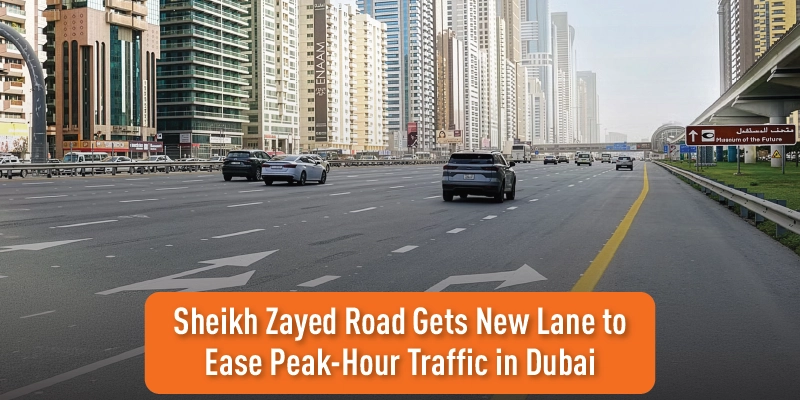

Dubai motorists travelling along one of the emirate’s busiest highways can expect smoother journeys during peak periods following the completion of a major widening project on Sheikh Zayed Road.

Dubai’s Roads and Transport Authority (RTA) has completed a 2-kilometre widening project near Burj Khalifa and Dubai Mall Metro Station, adding a new traffic lane for vehicles travelling from Abu Dhabi towards the World Trade Centre Intersection.
The upgrade increases the number of lanes in this section from six to seven and raises road capacity by 17%. According to the RTA, the improvement is expected to reduce journey times by up to 10% during peak hours.
The latest Sheikh Zayed Road new lane is part of Dubai’s wider programme of road and traffic improvements aimed at increasing capacity, improving connectivity and supporting the movement of motorists along the emirate’s key economic corridors.
Here’s everything you need to know about the latest Sheikh Zayed Road upgrade and what it means for daily commuters.
Sheikh Zayed Road New Lane – Quick Overview
Category | Details |
Project | Sheikh Zayed Road widening |
Widening Length | 2 kilometres |
Location | Near Burj Khalifa/Dubai Mall Metro Station |
New Lane | One additional traffic lane |
Existing Lanes | 6 lanes |
New Configuration | 7 lanes |
Capacity Increase | 17% |
Peak-Hour Journey Time Reduction | Up to 10% |
Direction | Abu Dhabi towards World Trade Centre Intersection |
Authority | Dubai Roads and Transport Authority (RTA) |
Related Project | World Trade Centre Roundabout Development |
What Is the New Sheikh Zayed Road Lane?
The Sheikh Zayed Road new lane is an additional traffic lane created as part of a 2-kilometre road-widening project near Burj Khalifa and Dubai Mall Metro Station.
The lane serves vehicles travelling from Abu Dhabi towards the World Trade Centre Intersection.
The upgrade increases the number of lanes from six to seven, giving more vehicles space to move through this busy section of the road.
The RTA expects the additional capacity to help reduce congestion and improve journey times during Dubai’s busiest commuting periods.
Also Read: Dubai RTA Smart LED Lighting: How 30 Pedestrian Bridges Are Becoming Safer and Smarter
How Much Will Sheikh Zayed Road Traffic Improve?
One of the biggest benefits of the latest upgrade is the expected improvement in traffic flow.
The widening project increases road capacity by 17%, while peak-hour journey times are expected to fall by up to 10%.
For motorists, this means the additional lane should provide greater road capacity when traffic volumes are at their highest.
The improvement is particularly relevant during morning and evening commuting periods, when demand on major Dubai roads can increase significantly.
By providing an additional lane, the RTA aims to make traffic movement more consistent and reduce pressure along this section of Sheikh Zayed Road.
Why Is Sheikh Zayed Road Important for Dubai?
Sheikh Zayed Road is one of Dubai’s most important transport corridors.
The major arterial route connects several commercial, residential, tourism and business districts while carrying large volumes of daily traffic.
The road provides access to important destinations including:
- Dubai World Trade Centre
- Dubai International Financial Centre (DIFC)
- Museum of the Future
- Al Karama
- Al Jafiliya
- Al Mankhool
The route also plays an important role during international exhibitions, conferences and major events, when traffic volumes around central Dubai can increase significantly.
Because of its strategic importance, improving capacity along Sheikh Zayed Road can have a wider impact on Dubai’s road network.
What Are the Major Features of the Dubai Road Improvement?
The latest project focuses on increasing capacity along a strategically important section of Sheikh Zayed Road.
1.Two-Kilometre Road Widening
The RTA has completed approximately 2 kilometres of widening near Burj Khalifa and Dubai Mall Metro Station.
The improvement provides additional road capacity for traffic travelling towards the World Trade Centre Intersection.
2. New Seventh Lane
The key feature is the addition of a new lane.
The road configuration has increased from six lanes to seven, allowing more vehicles to travel through the upgraded section.
3. 17% Capacity Increase
The new configuration increases road capacity by approximately 17%.
Higher capacity can help accommodate growing traffic demand and reduce pressure during peak periods.
4. Up to 10% Faster Peak-Hour Journeys
According to the RTA, the improvement is expected to reduce journey times by up to 10% during peak hours.
This could make daily commutes more predictable for motorists using this section of Sheikh Zayed Road.
How Will the New Lane Reduce Dubai Traffic Congestion?
Traffic congestion often occurs when the number of vehicles using a road approaches or exceeds its available capacity.
Adding another lane creates additional space for traffic and allows more vehicles to move through the corridor.
The latest Sheikh Zayed Road upgrade addresses this challenge by increasing the number of lanes from six to seven.
The improvement can help:
- Increase road capacity
- Improve traffic flow
- Reduce peak-hour delays
- Shorten journey times
- Support growing traffic demand
- Improve movement towards central Dubai
- Strengthen connectivity with surrounding roads
- Reduce pressure at busy sections of the corridor
The new lane is therefore an important component of Dubai’s broader strategy to manage Dubai traffic congestion through targeted infrastructure upgrades.
Also Read: Dubai RTA Road Projects 2026: Major Highway Upgrades, Progress & Expected Completion
What Is the World Trade Centre Bridge Project?
The latest widening project follows the opening of a new second-level bridge as part of the World Trade Centre Roundabout Development.
The bridge measures approximately 1,000 metres and has two lanes, with a capacity of around 3,000 vehicles per hour.
It serves traffic travelling from Sheikh Zayed Road towards Sheikh Khalifa bin Zayed Street in the direction of Al Karama and Deira.
The bridge is designed to significantly improve traffic movement through this important central Dubai corridor.
How Much Time Does the New Bridge Save?
The second-level bridge is expected to provide a major improvement for motorists travelling between Sheikh Zayed Road and Sheikh Khalifa bin Zayed Street.
According to the RTA information reported by Gulf News, the journey between the two roads has been reduced from approximately six minutes to just one minute.
That represents a substantial improvement for motorists using this connection.
The bridge also helps reduce congestion around the World Trade Centre Roundabout by allowing traffic to move through a dedicated grade-separated route.
How Does the Sheikh Zayed Road Upgrade Fit Into Dubai Road Projects 2026?
The latest lane widening is part of a broader programme of road infrastructure improvements being implemented across Dubai.
The RTA is focusing on strategic road corridors where relatively targeted upgrades can improve capacity and traffic movement.
Rather than relying only on major highway construction, these projects can include:
- Lane widening
- New bridges
- Improved intersections
- Additional ramps
- Better road connections
- Traffic-flow optimisation
- Capacity enhancements
The Sheikh Zayed Road project demonstrates how a relatively focused widening project can support traffic movement along one of Dubai’s busiest arterial routes.
Which Areas Could Benefit From the Sheikh Zayed Road Upgrade?
The project is particularly relevant to motorists travelling towards central Dubai and the World Trade Centre area.
Potential beneficiaries include commuters travelling towards:
Dubai World Trade Centre
The World Trade Centre is one of Dubai’s major business and events destinations. Improved traffic flow along Sheikh Zayed Road can help motorists travelling to and from the area.
DIFC
Dubai International Financial Centre is located along the Sheikh Zayed Road corridor, making reliable road connectivity important for employees, businesses and visitors.
Downtown Dubai
The upgraded section is located near Burj Khalifa and Dubai Mall Metro Station, supporting traffic movement around one of the city’s busiest urban areas.
Al Karama and Deira
The new second-level bridge provides a direct connection towards Sheikh Khalifa bin Zayed Street and onward towards Al Karama and Deira.
Al Jafiliya and Al Mankhool
These established central Dubai districts also benefit from improved connectivity through the wider road network.
What Does This Mean for Peak-Hour Traffic in Dubai?
Peak-hour congestion remains one of the biggest challenges for motorists in a rapidly growing city.
Morning commuters, evening workers, commercial vehicles, tourists and event traffic can all contribute to increased demand on major roads.
The additional capacity on Sheikh Zayed Road is designed to provide more space during these high-demand periods.
With road capacity increasing by 17% and peak-hour journey times expected to fall by up to 10%, motorists could experience smoother traffic movement through the upgraded section.
However, actual journey times can still vary depending on traffic volume, accidents, weather, roadworks and major events.
How Will the Upgrade Benefit Daily Drivers?
For everyday motorists, the most important benefits are likely to be improved traffic flow and reduced delays.
Shorter Peak-Hour Journeys
The RTA expects journey times to fall by up to 10% during peak periods.
Higher Road Capacity
The additional lane increases capacity by 17%, allowing more vehicles to move through the corridor.
Smoother Traffic Flow
The seventh lane provides additional space for traffic travelling towards the World Trade Centre Intersection.
Better Central Dubai Connectivity
The project supports connections between Sheikh Zayed Road and important business and residential districts.
Improved Event-Day Traffic Movement
Sheikh Zayed Road carries significant traffic associated with exhibitions and major events at Dubai World Trade Centre.
Additional capacity can help manage increased demand during busy periods.
What Should Motorists Know About the RTA Road Updates?
Drivers should continue to pay attention to road signs, lane markings and traffic directions when travelling through upgraded sections.
Road configurations can change as infrastructure projects progress, and motorists should avoid sudden lane changes or last-minute exits.
Drivers should also maintain safe following distances and follow posted speed limits, particularly when approaching major intersections and bridges.
Staying updated with RTA road updates can help motorists plan their journeys more effectively.
Also Read: Planning to Get a Dubai Licence? RTA Adds New High-Tech Driving Test Features
Why Are Dubai Road Improvements Important?
Dubai’s population, tourism sector, business activity and vehicle numbers continue to create demand for efficient road infrastructure.
Road improvements help the emirate accommodate this growth while maintaining reliable mobility between residential, commercial and economic districts.
The Sheikh Zayed Road upgrade demonstrates the importance of capacity improvements on existing roads.
Instead of completely rebuilding the corridor, a targeted 2-kilometre widening has added another lane and increased capacity by 17%.
Combined with new bridges and intersection improvements, these measures can create a more efficient overall road network.
What Can Drivers Expect Next?
The latest lane addition is part of a wider programme of improvements around Sheikh Zayed Road and the World Trade Centre area.
Motorists can expect Dubai’s transport authorities to continue focusing on traffic-flow improvements, road capacity and connectivity across major corridors.
The new lane should help improve movement along the upgraded section, while the recently opened bridge provides another dedicated connection towards Al Karama and Deira.
As additional Dubai road improvements are delivered, the wider objective is to create a road network that can better handle future traffic demand.
Sheikh Zayed Road New Lane: What Drivers Should Remember
The latest upgrade adds one more lane to an important section of Sheikh Zayed Road, increasing the road from six to seven lanes.
The 2-kilometre widening near Burj Khalifa and Dubai Mall Metro Station increases capacity by 17% and is expected to reduce peak-hour journey times by up to 10%.
The improvement also complements the recently opened 1,000-metre, two-lane bridge connecting Sheikh Zayed Road towards Sheikh Khalifa bin Zayed Street.
Together, these projects are designed to improve traffic flow around one of Dubai’s busiest central corridors.
Final Remarks
The Sheikh Zayed Road new lane represents another targeted step in Dubai’s continuing effort to improve mobility and manage traffic congestion.
By widening a 2-kilometre section and increasing the number of lanes from six to seven, the RTA has raised road capacity by 17%. The authority expects the upgrade to reduce peak-hour journey times by up to 10%.
The improvement is also supported by the new second-level World Trade Centre bridge, which provides a faster connection towards Al Karama and Deira and reduces the journey between Sheikh Zayed Road and Sheikh Khalifa bin Zayed Street from around six minutes to one minute.
For daily commuters, the combination of additional lanes, bridges and targeted infrastructure upgrades could mean smoother journeys and fewer delays during busy periods.
As Dubai continues implementing its Dubai road projects 2026, upgrades such as this will remain important in supporting the emirate’s growing population, business activity and transport needs.
Stay Connected with the Latest UAE Transport & Automotive News
Stay informed with the latest updates on Dubai RTA projects, Sheikh Zayed Road traffic, road infrastructure, traffic improvements, smart mobility, road safety, electric vehicles, autonomous transport, public transportation and automotive developments across the UAE.
Guest Blog Submission
Have a Voice in the Future of Mobility & Automotive?
Are you passionate about Dubai’s roads, smart mobility, transportation or the UAE automotive industry? We’d love to hear your ideas.
We invite industry professionals, entrepreneurs, marketers, automotive experts and enthusiasts to share original, insightful and engaging articles with our growing contributor community.
From Dubai road developments and traffic management to EVs, vehicle technology, road safety, autonomous mobility and emerging automotive trends, we welcome fresh perspectives on the topics shaping the future of transportation in the UAE.
Share your expertise. Start meaningful conversations. Get your insights in front of an engaged audience.
Frequently Asked Questions
1. What is the new Sheikh Zayed Road lane?
The new lane is part of a 2-kilometre widening project near Burj Khalifa and Dubai Mall Metro Station. It serves traffic travelling from Abu Dhabi towards the World Trade Centre Intersection.
2. How many lanes does the upgraded section now have?
The number of lanes has increased from six to seven following the widening project.
3. How much does the new lane increase road capacity?
The upgrade increases road capacity by approximately 17%.
4. How much will journey times be reduced?
According to the RTA, the upgrade is expected to reduce journey times by up to 10% during peak hours.
5. Where is the new Sheikh Zayed Road lane located?
The upgraded section is near Burj Khalifa and Dubai Mall Metro Station, serving traffic travelling from Abu Dhabi towards the World Trade Centre Intersection.
6. What other recent road project is connected to the area?
The widening follows the opening of a 1,000-metre, two-lane second-level bridge as part of the World Trade Centre Roundabout Development.
7. How much time does the new World Trade Centre bridge save?
The bridge reduces the journey between Sheikh Zayed Road and Sheikh Khalifa bin Zayed Street from approximately six minutes to one minute.
8. Which areas benefit from the Sheikh Zayed Road improvements?
The upgrades support traffic movement around major destinations including Dubai World Trade Centre, DIFC, Downtown Dubai, Al Karama, Deira, Al Jafiliya and Al Mankhool.
9. Why are these Dubai road improvements important?
The upgrades increase road capacity, improve connections and help the transport network accommodate growing traffic demand across Dubai.


